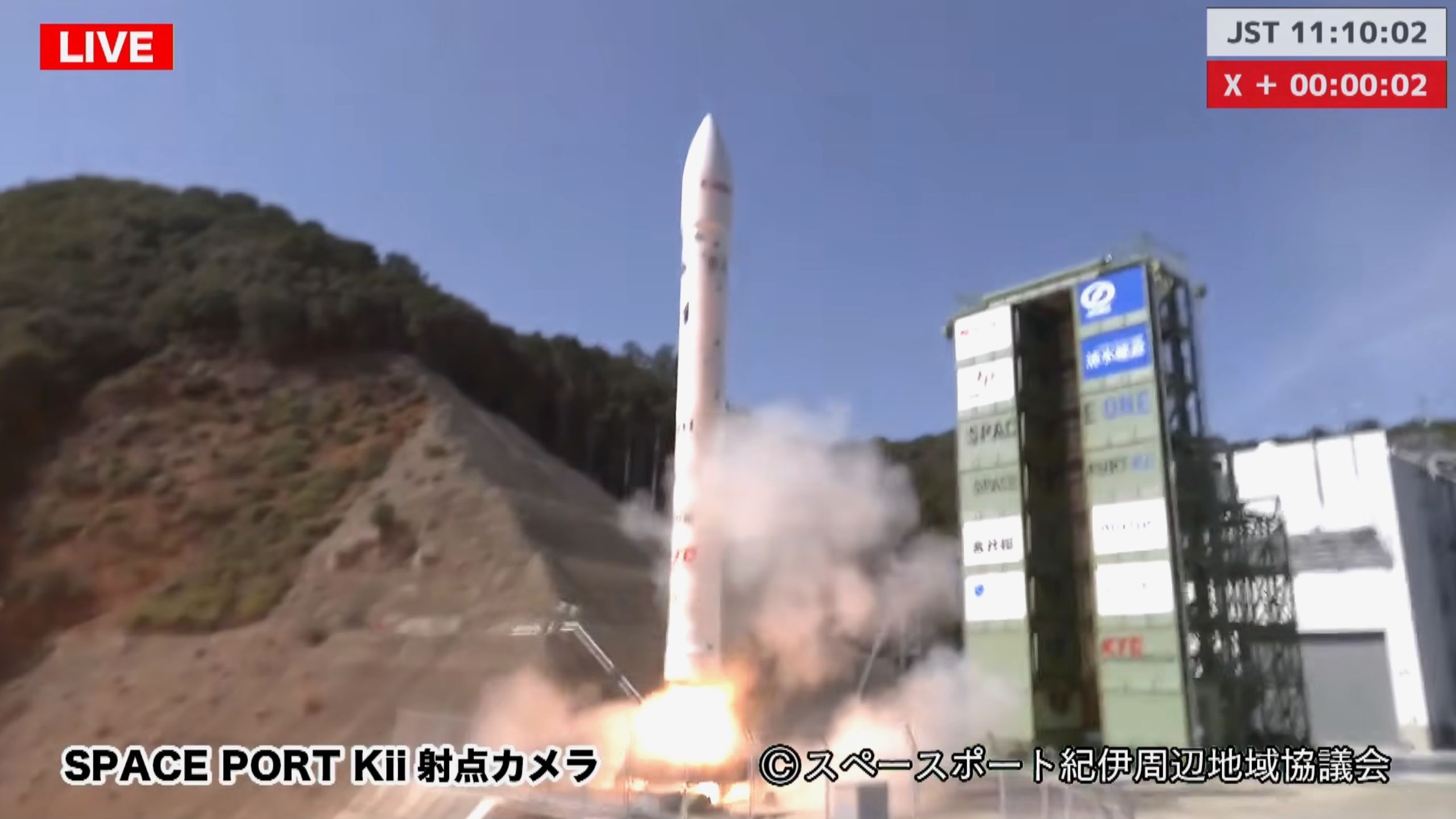
Space One's Kairos rocket experienced a third consecutive launch failure on March 5, 2026 (local), with flight termination initiated roughly two minutes after liftoff from Spaceport Kii; five customer small satellites were lost that had been scheduled for deployment to a 500 km sun-synchronous orbit. This follows prior failures in March 2024 (terminated five seconds after liftoff) and December 2024 (terminated ~3 minutes in at ~100 km), underscoring persistent technical and reliability issues for the 18 m, three-solid-stage/ liquid upper-stage vehicle that aims to carry up to 150 kg to SSO. The string of failures will likely strain Space One’s credibility with customers and challenge its stated growth targets (20 missions/year by decade-end) while details on root causes and corrective actions remain pending.
Market structure: The Kairos failure tightens near-term supply of agile small-sat launch capacity and favors proven operators (Rocket Lab RKLB, SpaceX (private)) and national launch contractors. Expect 6–12 month pricing power for reliable providers to rise ~10–25% as customers rebook, and satellite OEMs face 1–3 month deployment postponements that compress revenue timing. Insurers and payload integrators will capture some of the margin shift via higher premiums and fees.
Risk assessment: Tail risks include a Japanese regulatory probe or insurance capacity withdrawal (high‑impact, low‑probability) that could freeze launches for 1–3 months and force write-offs for startups; several VC-backed launchers could face insolvency within 6–12 months if funded runway <12 months. Hidden dependencies: satellite constellations’ financing covenants tied to launch schedules and insurers’ aggregated loss models — a systemic spike in claims could widen spreads on smallspace high-yield debt by 200–400bps. Catalysts that will change the narrative in 30–90 days: investigation root-cause, insurer filings, and any government support packages.
Trade implications: Tactical longs: take concentrated exposure to reliable launch/commanders (RKLB) and to aerospace primes (LMT, NOC) for a 6–12 month re-rate; tactical shorts: small-cap launchers with weak balance sheets (ASTR) or space-heavy ETFs overweighting them (UFO). Use options to express asymmetric views: buy 3–6 month RKLB call spreads if implied vol <40%, or buy protective puts on small-cap rocket names if vol >40%. Rotate 150–300bps from speculative space names into defense‑prime equities or IG aerospace bonds.
Contrarian angles: The consensus treats all space names as binary losers; that misses inelastic demand for assured access — survivors consolidate and earn economic rents. Historical parallel: post‑failure consolidation (early 2010s) led to 2–4x outperformance for incumbents over 12–36 months. If the market oversells high‑beta space names by >30% in 1–3 months without evidence of fleet‑level design defects, opportunistic long positions will have asymmetric upside.
AI-powered research, real-time alerts, and portfolio analytics for institutional investors.
Request TrialOverall Sentiment
strongly negative
Sentiment Score
-0.60
