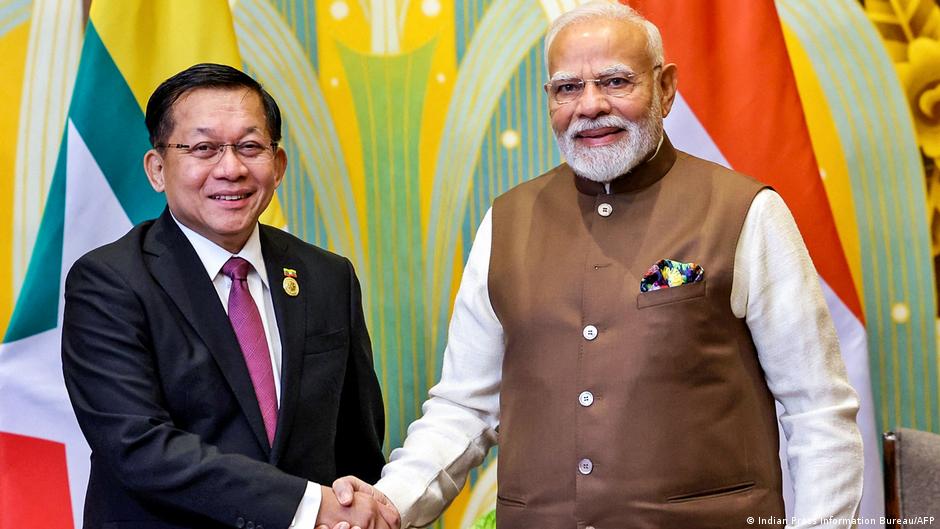
Myanmar President Min Aung Hlaing is in India for a five-day visit and is scheduled to meet Prime Minister Narendra Modi on 1 June to discuss strengthening bilateral ties, border security, and regional influence. The article also highlights a new report warning that India’s coastal regions could face an imminent climate crisis as temperatures rise by about 1.5°C over 2021-2040. Separately, Karnataka’s Congress Party is preparing to elect DK Shivakumar as the next chief minister, with the swearing-in expected on Sunday or Monday.
The market read-through is less about headline geopolitics than about India’s willingness to accept higher strategic frictions to secure its eastern flank. That favors domestic defense, border infrastructure, logistics, and select metals inputs over anything directly exposed to Myanmar demand; the bigger second-order effect is potential tightening of scrutiny on Chinese-linked projects in the Northeast and Bay of Bengal corridor if New Delhi decides to harden the border regime.
The climate report is the cleaner medium-term equity signal. If coastal and Himalayan adaptation capex is forced forward by even 1-2 years, the beneficiaries are not just obvious utilities and water names but contractors, specialized building materials, drainage, cooling, and disaster-response infrastructure. The risk is that the spend is fragmented across states, which delays earnings realization and makes the opportunity better suited to basket exposure than single-name conviction.
Karnataka politics is a near-term volatility event for local government contractors, urban infra, and discretionary retail sentiment, but the bigger implication is policy continuity risk rather than outright reversal. Any cabinet churn that slows capex approvals for 1-2 quarters should be fadeable, but if factional bargaining broadens into coalition-style concessions, it can pressure execution across housing, roads, and municipal projects. Weather alerts add a tactical reminder that India’s monsoon-sensitive sectors can gap on short notice, especially power, insurers, and agri-inputs.
Contrarian view: the consensus is likely overpricing the Myanmar visit as a bilateral growth catalyst and underpricing climate-driven capex as a multi-year demand driver. The Myanmar angle is strategically important but economically small in the near term; the real P&L opportunity is in firms that monetize adaptation and resilience spending before it shows up in consensus estimates.
AI-powered research, real-time alerts, and portfolio analytics for institutional investors.
Request TrialOverall Sentiment
neutral
Sentiment Score
0.05
