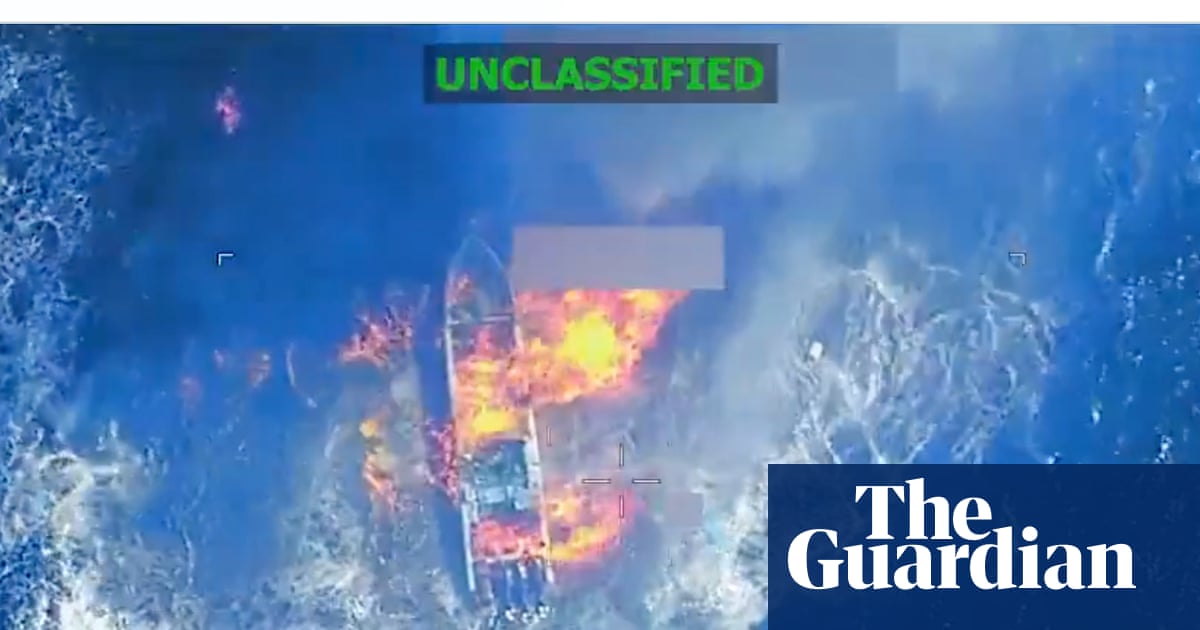
The US military said it killed 3 men in a Friday strike on an alleged drug boat in the eastern Pacific, bringing the total death toll from the campaign to 202 since early September. The Trump administration says it is in armed conflict with Latin American cartels, but it has not provided definitive evidence that the targeted vessels were trafficking drugs. Rights groups including Human Rights Watch, Amnesty International, and the ACLU have condemned the strikes as unlawful extrajudicial killings, raising legal and reputational risk.
This campaign is less about narcotics interdiction than about normalizing low-visibility, low-accountability force projection in the Western Hemisphere. The second-order market impact is a modest but real rise in policy entropy: insurers, logistics operators, and EM sovereign allocators will increasingly price a wider tail of US kinetic activity near shipping lanes, ports, and coastal infrastructure, even if the current strikes are operationally narrow. That matters because the legal overhang is now converging with executive precedent; once a tool is used repeatedly, the barrier to expanding the target set falls faster than consensus expects.
The near-term winner is the defense and surveillance stack, not the kinetic munition makers alone. Persistent maritime targeting implies more spend on ISR, maritime domain awareness, comms, and unattended sensor networks, which tend to accrue to prime contractors and niche software/integration vendors with higher margin durability than one-off strike suppliers. The bigger second-order beneficiary could be border-security and domestic homeland programs, as political framing shifts budget gravity toward detection, interdiction, and base protection rather than only overseas deterrence.
The main risk is escalation through misclassification: any strike that hits a non-cartel vessel, or evidence that parcels are not contraband, would convert a policy debate into a litigation and congressional oversight event within days. That creates a sharp asymmetry for adjacent transportation and marine services names with Latin America exposure, where even a small probability of route disruption can compress multiples before fundamental damage appears. Over a 1-3 month horizon, the key catalyst is whether this becomes a campaign issue or a quiet normalization; the former caps expansion, the latter supports a broader defense re-rating.
Contrarian view: the market may be underpricing how much of the spend leaks into non-kinetic budgets and how little goes to the platforms most investors instinctively buy. If this remains an open-ended mission, the durable trade is not a pure missile/munitions basket but layered exposure to ISR, border tech, and marine security software. The flip side is that if the administration faces even one high-profile legal setback, the entire thematic trade can unwind quickly because the policy premium is built on executive discretion, not statutory certainty.
AI-powered research, real-time alerts, and portfolio analytics for institutional investors.
Request TrialOverall Sentiment
strongly negative
Sentiment Score
-0.55
