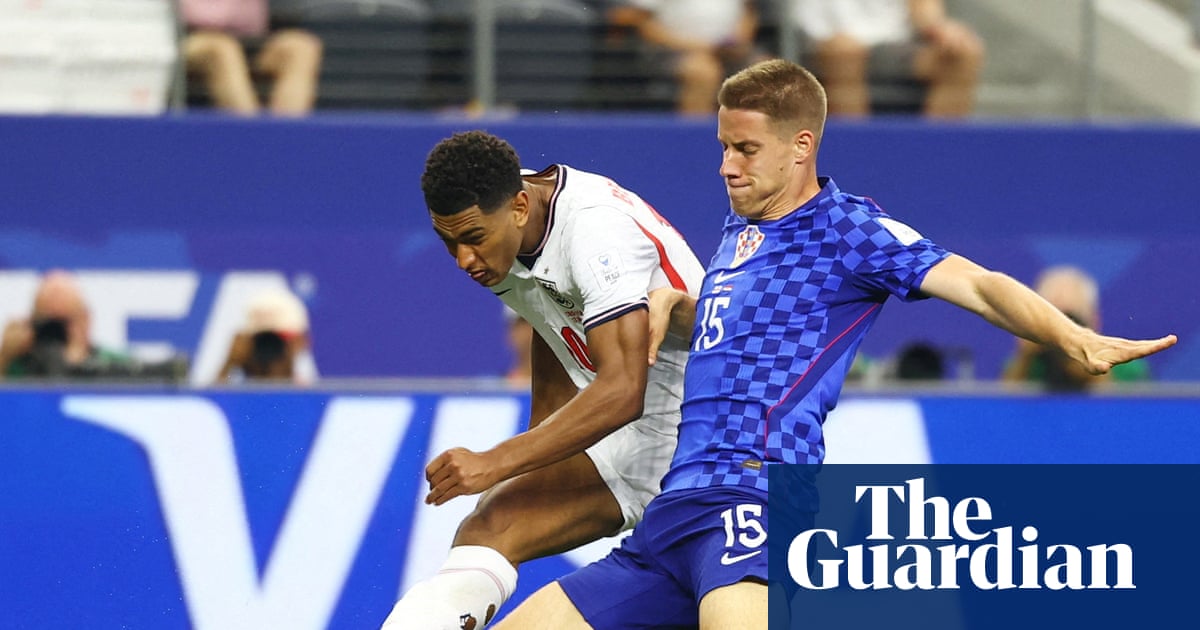
England beat Croatia 4-2 in Dallas after trailing 2-2 at half-time, with Jude Bellingham scoring the decisive goal and Marcus Rashford adding a fourth. The match narrative is strongly positive for England’s team confidence and Tuchel’s in-game adjustments, highlighting a more energetic and free-flowing second half. Market impact is minimal because this is sports coverage rather than financial news.
The market implication is not the scoreline; it is the regime shift in how the team is being priced. A side that can win ugly through dead-ball efficiency and then, crucially, unlock a second gear through high-intensity transition play is a different asset class than a purely possession-dependent favorite. That matters because tournament pricing usually overweights headline talent and underweights repeatable set-piece edges; here the set-piece base plus a credible open-play pressure phase creates a broader path to advancing than consensus likely had before kickoff.
The second-order beneficiaries are not just the national team brand but the adjacent content and event ecosystems: broadcasters get more inventory from a deeper run, sponsors gain a more marketable narrative, and the host venue’s premium hospitality product becomes more valuable if England remain must-watch. The downside is that the first-half fragility is a reminder that the team still carries high variance — if opponents can force them into slow buildup or early defensive errors, the whole thesis reverts to “set pieces or bust.” That makes their next two matches especially important for confirming whether the halftime surge was a one-off emotional spike or the beginning of a sustainable tactical compression.
The contrarian miss is that the obvious takeaway may be too simplistic: this is not about one player “saving” the side, but about a roster that finally has a credible transition engine. If that holds, the ceiling is materially higher than a set-piece merchant narrative suggests, because knockout football rewards teams that can create 2-3 high-value chances per game without needing sustained open-play dominance. The risk is that physical intensity decays over a multi-week tournament; if legs go, the transition game disappears faster than the dead-ball edge.
From a positioning standpoint, the setup argues for buying into renewed England visibility only on confirmation, not ahead of it. The move is modestly under-owned because sentiment was still anchored to caution and past tournament failure, but the upside from a sustained run is nonlinear: one more convincing win can re-rate expectations, while a poor first 30 minutes in the next round could quickly unwind it.
AI-powered research, real-time alerts, and portfolio analytics for institutional investors.
Request DemoOverall Sentiment
moderately positive
Sentiment Score
0.55
