





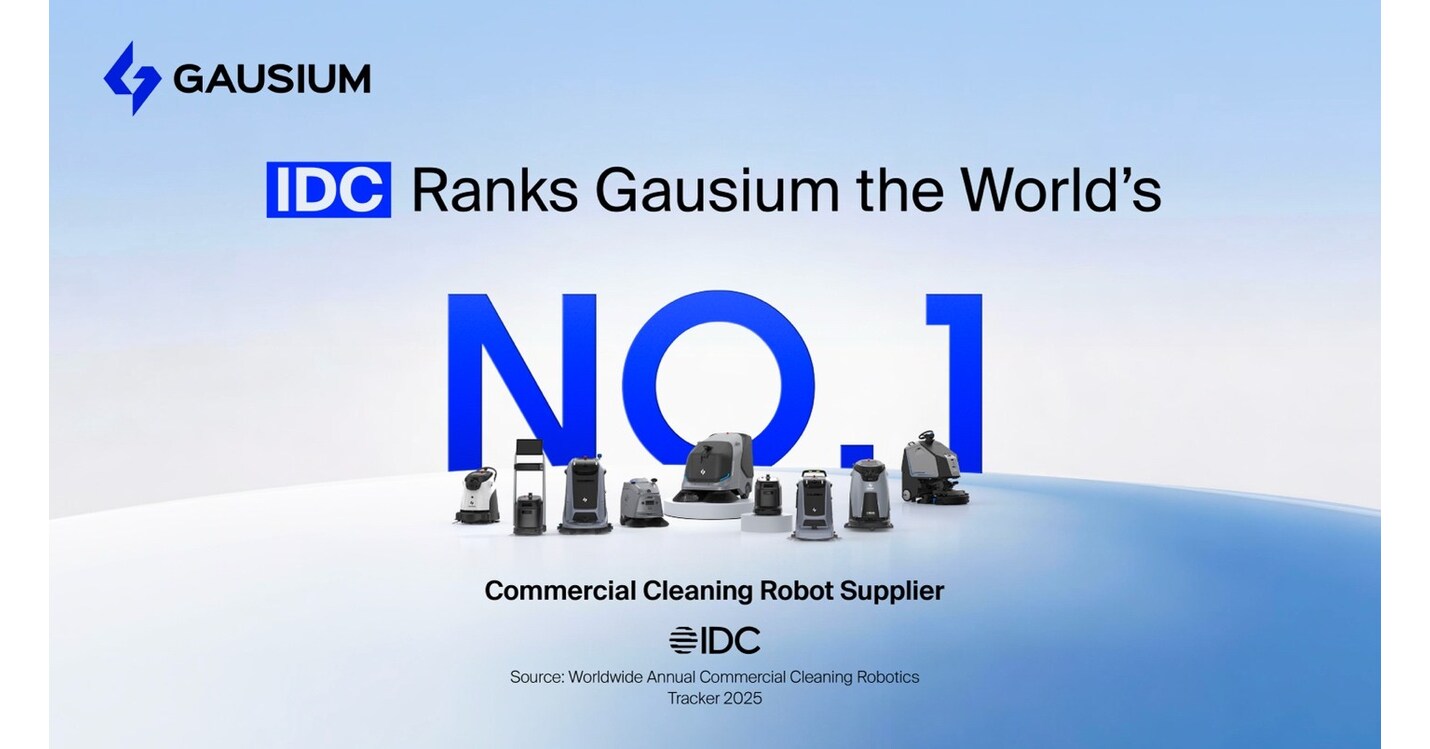
Gausium was ranked the world No.1 commercial cleaning robot supplier by both shipments and revenue in IDC’s Worldwide Annual Commercial Cleaning Robotics Tracker (2025), a position it has held for several consecutive years. IDC estimates the commercial cleaning robot market at $760M in global shipments, up 48.5%, and highlights Gausium’s leading positions across core application segments and international markets. The company cites serving 6,500+ flagship customers across 70+ countries and moving into a “scale-replication phase” with standardized hardware/software and faster fleet rollouts. Overall, the news is supportive but presented via a ranking/market-tracker update rather than financial results.
This is more category validation than investable single-name evidence. In a fragmented, still-small market, the first-order implication is not that one vendor “wins,” but that chain buyers are moving from pilots to repeatable fleet rollouts; that tends to favor the ecosystem with the best software/service layer and the lowest deployment friction. In public markets, that argues for broad robotics/automation exposure rather than chasing a single private winner, because hardware leaders often get commoditized once procurement standards harden.
The contrarian risk is that shipment leadership can coincide with margin compression. As the category scales, customers will push for lower ASPs, better uptime guarantees, and local service SLAs, which can erase the economics that made the story compelling. The real catalyst path is over the next 1-3 quarters: watch enterprise budget cycles, renewal activity at airports/retail/logistics, and any evidence that fleet utilization or maintenance costs are outperforming. If growth slows or gross margins slip, the market will likely re-rate the whole theme rather than just one vendor.
Second-order winners are less the robot vendors than the labor-intensive facility-service operators that can absorb automation and defend margins; second-order losers are janitorial-heavy contractors that cannot pass through pricing. That said, the public-market read-through is modest today, so this is a watch item unless adoption data starts to show meaningful substitution at scale. The thesis would be falsified by weak sequential orders, falling utilization, or any sign that “AI” differentiation is not translating into durable pricing power.
AI-powered research, real-time alerts, and portfolio analytics for institutional investors.
Request TrialOverall Sentiment
mildly positive
Sentiment Score
0.25
Ticker Sentiment
