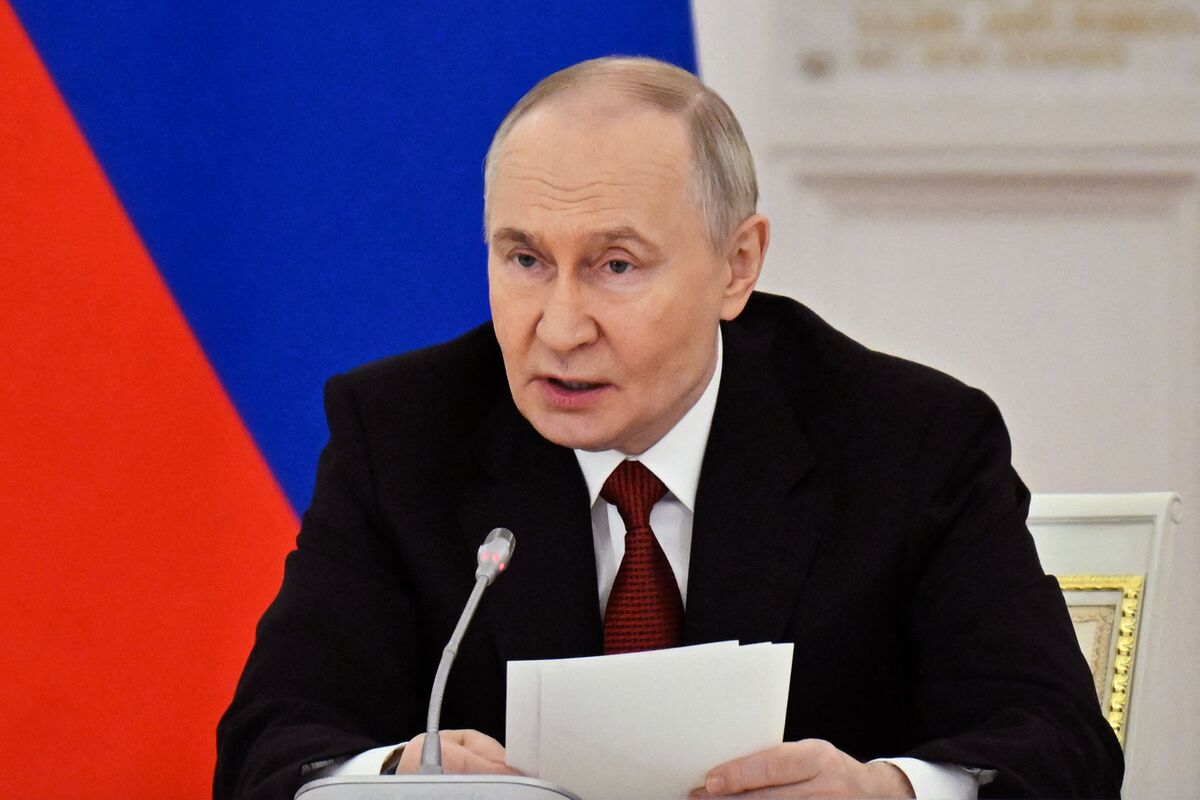
At Russia’s St. Petersburg International Economic Forum, members of Putin’s political and business elite publicly voiced rare concern over rising state intervention and pressure on business in the wartime economy. Speakers warned that renewed Soviet-style practices could undermine innovation, entrepreneurship, and long-term growth, though they stopped short of criticizing Putin directly. The article signals policy and governance risks rather than an immediate market event.
The signal here is not immediate policy change but rising internal friction inside a system that has relied on tight control and informal deal-making to keep capital allocation efficient. When business elites start airing concerns publicly, it usually means private channels are already saturated; that raises the odds of more intrusive oversight, arbitrary enforcement, and lower-quality investment decisions over the next 6-18 months. The first-order hit is to private capex, but the second-order effect is worse: once managers assume rules can change ex post, they hoard cash, defer maintenance, and underinvest in productivity-enhancing projects.
The beneficiaries are state-linked incumbents, security-adjacent contractors, and firms with balance-sheet strength plus political protection. The losers are mid-sized domestic operators that depend on licenses, procurement access, or flexible labor/capital decisions; these names typically feel the pain before headline macro data shows it. In emerging markets terms, this is a classic institutional decay trade: headline stability can coexist with a slow erosion of innovation intensity, which eventually shows up in lower trend growth and weaker local equity multiples.
The key catalyst is whether the state responds to wartime pressures by deepening controls or by tolerating selective liberalization to preserve investment. If fiscal stress remains manageable, the regime may let elites vent while keeping the policy mix unchanged; if revenue or labor constraints tighten, intervention can intensify quickly and become self-reinforcing. Over a multi-quarter horizon, the market should increasingly discount Russia-linked assets for governance risk rather than just sanctions risk.
The contrarian point is that this is not necessarily bearish for all Russia-exposed assets: tighter control can temporarily improve extraction of rents and stabilize cash flows for favored names. But the consensus may be underestimating how much growth damage comes from a decline in entrepreneurial activity, especially in technology, consumer, and services sectors where compulsion is a poor substitute for incentives. The move is therefore less about a near-term crash and more about a gradual but durable compression in private-sector optionality.
AI-powered research, real-time alerts, and portfolio analytics for institutional investors.
Request DemoOverall Sentiment
mildly negative
Sentiment Score
-0.25
