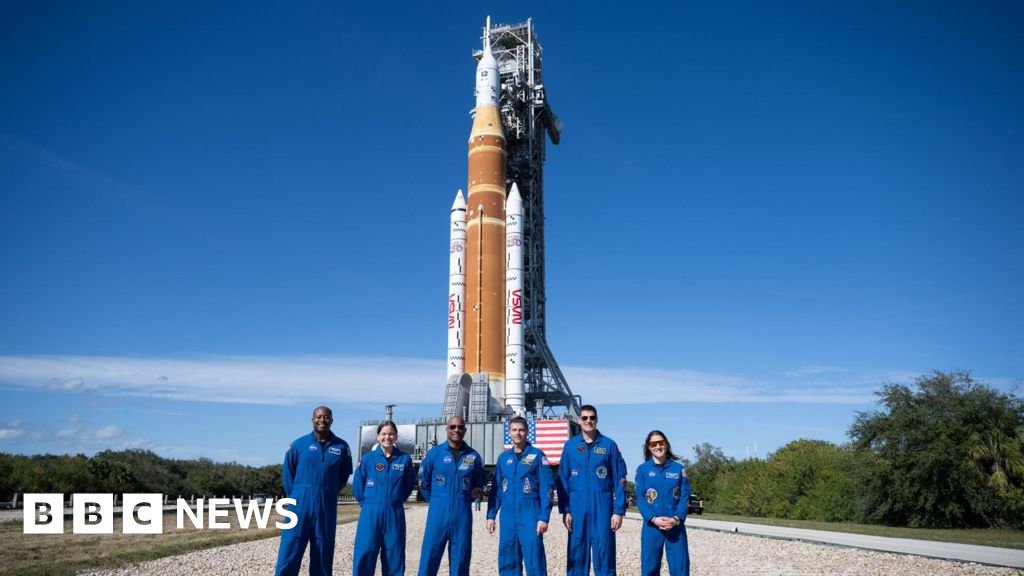
Artemis II's 98m Space Launch System and Orion were rolled out to Pad 39B after engineers fixed a helium-system fault and performed repairs; Nasa is targeting an earliest launch at 18:24 EDT on 1 April. The 5,000-tonne stack completed a four-mile crawl that can take up to 12 hours and will undergo helium pressure tests and countdown rehearsals before mission managers meet to decide to proceed. The crewed mission (four astronauts) is a ~10-day lunar flyby with backup windows 2–6 April and a final contingency on 30 April.
This rollout is a live test of processes more than propulsion: the market should price winners as companies that supply ground‑support, diagnostic valves, batteries and test services rather than only prime integrators. Expect an outsized, durable revenue tail for specialists (ground‑systems OEMs and industrial gas suppliers) if NASA reduces pad fixes by increasing spares inventories and redundant telemetric valves — that’s a structural procurement shift that can sustain incremental aftermarket revenue for 12–36 months.
From a risk/catalyst perspective, treat the April windows as a near‑term binary catalyst with a 30–45% implicit chance of another scrub given complexity of helium circuits and human‑in‑the‑loop tests; a scrub would not only delay revenue recognition tied to program milestones but also raise probability of cascading slips for Artemis III (moving multi‑hundreds of millions in milestone payments into later fiscal years). Medium‑term (6–24 months) catalysts are telemetry showing stabilized helium pressure cycles, successful countdown rehearsals, and official milestone signoffs; any negative telemetry or unexpected hardware swaps would reprice execution risk quickly.
For trading, monitor short‑dated vol and skew across primes and suppliers: successful launch clears a path for re‑rating of integration contractors and specialty suppliers; a rollback or second repair spikes idiosyncratic downside. Key market signals to watch in the next two weeks are contractor earnings language about milestone timing, inventory orders for valves/helium bottles, and government program office statements — these will be leading indicators for revenues slipping or accelerating into FY27–28.
AI-powered research, real-time alerts, and portfolio analytics for institutional investors.
Request DemoOverall Sentiment
mildly positive
Sentiment Score
0.15
