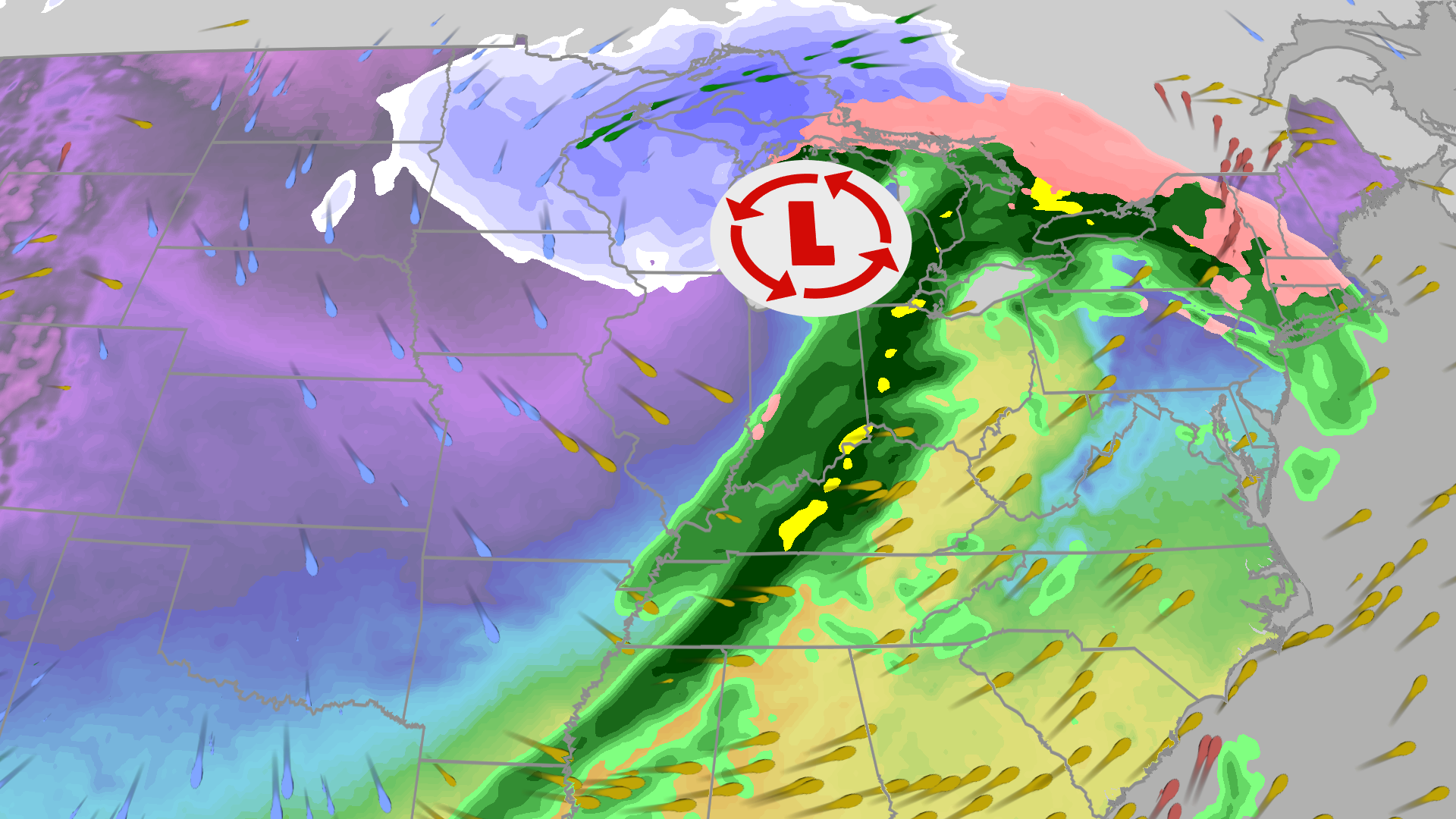
Winter Storm Ezra is moving from the Upper Midwest through the Great Lakes into the Northeast, bringing blizzard conditions, heavy snow (several feet possible near Marquette, MI; 3–12 inches across the Upper Midwest) and ice accumulations of roughly 0.25"–0.5" in interior New England through Monday. The storm will produce strong winds, hazardous holiday-travel disruptions and localized power outage risk while forcing a rapid temperature drop (30–40°F in places) that could briefly elevate heating demand and strain regional utilities and transportation/logistics networks. Timing: snow/tapering in the Upper Midwest Monday, storm reaching north of Maine by Tuesday; southern cold impacts are short-lived but northern cold persists.
Market structure: Short-term winners are natural gas and heating-fuel exposures (spot Henry Hub and heating oil/ULSD) and winter-supply vendors (road salt, e.g., CMP) from immediate heating demand and lake-effect snow; losers are air carriers, airport services and time-sensitive parcel networks facing cancellations and delays over the next 72 hours. Expect spot natural gas moves of +15–30% intramonth if cold persists and localized ULSD/heating-oil spikes of 5–15%; airline and airport volumes could fall 10–25% in affected metro areas for 3–7 days, pressuring short-dated equity returns and lifting implied volatility on related options. Risk assessment: Tail risks include prolonged multi-day power outages causing meaningful retail holiday sales misses or a pipeline freeze that generates multi-week fuel constraints—low probability but high impact (20–50% price shocks in localized energy markets). Time horizons: immediate (0–7 days) travel/logistics disruption; short (2–6 weeks) commodity and industrial-stock revenue reallocation; medium (quarter) possible earnings hits for airlines/parcel providers and upside for utilities and materials. Trade implications: Direct plays: tactical long natural gas exposure via 2–4 week NG call spreads or UNG (2–3% portfolio max) and 1–2% longs in CMP for salt demand into Q1. Short airlines tactically: buy 30–45 day put spreads on DAL and UAL (size 0.5–1% each) to capture near-term disruption and elevated IV. Cross-asset: expect modest Treasury safe-haven bids (2–5bp rally in near-dated paper) and rising equity implied vol in transportation and regional banks exposed to outage risk. Contrarian angles: Consensus focuses on a short shock; missing is the asymmetric regional nature—severe lake-effect snow (Marquette-level) can reroute freight for weeks, benefiting rail/ground carriers with capacity (CSX, KSU) after initial disruption. The market may overprice permanent demand loss for airlines; position sizes should be short-duration/option-based because travel rebounds in 2–6 weeks typically, so avoid large outright equity shorts.
AI-powered research, real-time alerts, and portfolio analytics for institutional investors.
Request DemoOverall Sentiment
mildly negative
Sentiment Score
-0.25
