
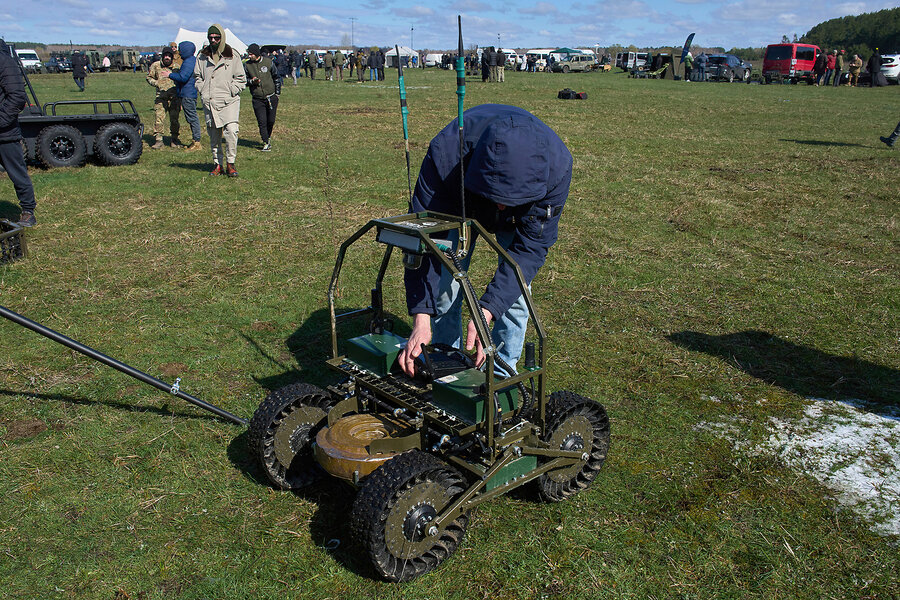
Ukraine is rapidly expanding the use of unmanned ground vehicles, with Brave1 saying UGVs now account for almost 40% of its grants and roughly 270 manufacturers producing about 550 models. About 90% of current robot use is in logistics, while reconnaissance, evacuation, mining/demining, and weapons applications are growing. The article highlights a meaningful battlefield technology shift, but the direct market impact is limited to defense-tech and robotics suppliers.
The market implication is not “robots are coming,” but that Ukraine is turning unmanned systems into a consumable layer of military infrastructure. That shifts procurement from one-off hardware purchases toward recurring demand for electronics, comms, autonomy software, batteries, ruggedization, and field repair — a much broader industrial stack than headline drone manufacturers alone. The second-order winner is the ecosystem around rapid prototyping and battlefield iteration, which should structurally favor small, software-agnostic suppliers over legacy primes with slower procurement cycles.
The key constraint is not demand, it is survivability and integration. Ground systems face a harsher unit-economics test than aerial drones because terrain, EW, recovery, and maintenance degrade fleet availability; the real metric is mission-hours per deployed unit, not units shipped. That argues for a near-term arms race in anti-jam communications, autonomous navigation, and modular repair kits, while also creating a hidden beneficiary set in satellite comms and edge compute.
From a defense-capex perspective, this reinforces the multi-year reallocation toward unmanned and expendable systems in NATO procurement, but with a lag: battlefield proof-of-concept can accelerate budgets within 6-12 months, while revenue conversion for listed suppliers likely takes 12-24 months. The contrarian risk is overestimating how quickly land robotics scales beyond logistics, because casualty-avoidance doctrine encourages substitution first in low-risk support roles and only later in offensive roles. If ceasefire talks or funding fatigue reduce frontline urgency, the marginal growth rate in UGV demand could decelerate sharply even if the strategic trend remains intact.
AI-powered research, real-time alerts, and portfolio analytics for institutional investors.
Request TrialOverall Sentiment
neutral
Sentiment Score
0.15
Ticker Sentiment
