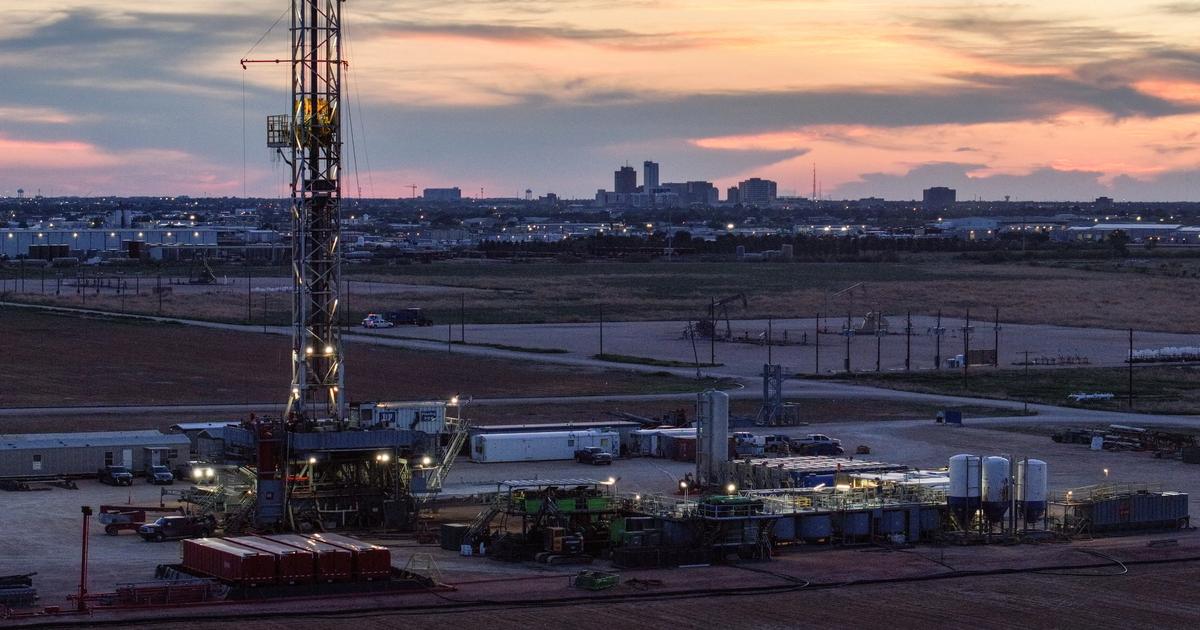
US shale producers are responding to the Iran-related oil price spike, with Diamondback Energy lifting capex and raising its annual production target by about 3%. The nationwide frac spread count has risen to 184 from 166 at the start of April, and industry trackers expect US output to exceed 14 million barrels per day this year. The article implies firmer near-term oil prices and a tighter supply backdrop, though larger producers like Exxon and Chevron remain cautious and production gains are still measured.
The key market signal is not the current price move in crude, but the change in shale capital discipline at the margin: when smaller E&Ps begin paying up for frac crews and accelerating budgets, it tells you the forward curve has shifted enough to force higher near-term supply response. That usually caps the upside in front-month crude faster than headline geopolitics suggests, but it also creates a lagged oversupply risk 2-4 quarters out if prices normalize while new wells still come online. The second-order effect is a tightening of oilfield services capacity before production meaningfully rises, which should support service pricing even if E&Ps later retrench.
FANG is the cleaner beneficiary versus majors because it has more operating leverage to incremental drilling economics and a faster willingness to translate price into volume. CVX, by contrast, looks more like a volatility absorber: its scale and integrated mix blunt the upside from a supply shock while preserving downside resilience if prices fade. The broader winner set likely extends into the service chain — frac, sand, trucking, pressure pumping — where utilization can re-rate before barrel growth shows up in reported production.
The contrarian risk is that the market is overestimating persistence of the war premium. If the Strait-of-Hormuz risk de-escalates or diplomatic noise cools, the late-cycle capex impulse could unwind while the cost base remains elevated, squeezing 2025 returns on new wells. Another underappreciated risk is export leakage: incremental U.S. barrels may do less for domestic fuel prices than investors expect, which reduces political pressure to sustain aggressive drilling and makes the current production target revisions vulnerable to a 30-60 day fade in crude.
For trading, the best expression is to own the fast beta in shale versus the low-beta integrated names while the capex rerating is still early. The setup looks better in single-name FANG than in the broader energy complex because the market can still underprice a modest production guide-up, but that edge narrows once frac-spread data keeps printing higher for another month. The trade should be treated as a tactical, not secular, long: the upside is a near-term earnings and sentiment rerate, while the downside is a curve rollback that leaves service-cost inflation behind.
AI-powered research, real-time alerts, and portfolio analytics for institutional investors.
Request DemoOverall Sentiment
mildly positive
Sentiment Score
0.15
Ticker Sentiment
