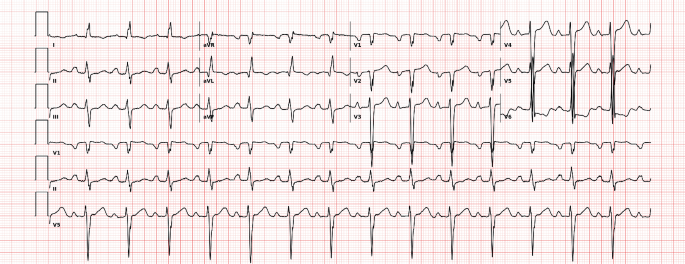
A case report highlights AI-enhanced ECG screening that identified severe left ventricular dysfunction and ultimately contributed to a heart transplantation. The article underscores clinical utility for artificial intelligence in structural heart disease detection, but it is a single-case medical publication rather than a market-moving corporate event. Overall impact is limited and primarily relevant to healthcare AI and diagnostic innovation.
This is not a direct catalyst for the named device/pharma names, but it is a credible commercialization signal for AI-native diagnostics in cardiology. The important second-order effect is that screening workflows move one step closer to becoming reimbursable, physician-accepted, and longitudinally monetizable: if AI can reliably surface occult structural disease that changes management all the way to transplant, hospitals will start treating AI triage as a budget line item rather than a pilot. That shifts value toward platforms with embedded distribution, imaging adjacency, and enterprise sales leverage rather than pure-model vendors.
The more interesting read-through is to the echo and monitor ecosystem. AI-ECG-to-echo pipelines create incremental demand for confirmatory imaging, so the near-term economic beneficiary is whichever vendor sits closest to the follow-on test, not the algorithm itself. In practice that supports the installed-base leaders in ultrasound and hospital workflow integration, while putting pressure on smaller point-solution startups whose moat is a single-screening use case. Over a 12–24 month horizon, the bigger winner is the company that can own the referral loop from screening to imaging to treatment pathway optimization.
From a risk standpoint, the main constraint is not model accuracy but adoption friction: false positives, liability, and reimbursement will dictate whether this becomes a broad workflow shift or remains a publication-driven anecdote. The market may overestimate near-term revenue contribution to the named stockholders and underestimate the lag between clinical validation and budgeted purchasing. If payers or large IDNs push back on screening utilization, the enthusiasm could fade within quarters even if the science remains directionally positive.
Contrarian view: the event is bullish for the category but likely not enough to move fundamentals for ABT/BAX/PFE/EW by itself. The better trade is to own the picks-and-shovels of diagnostic adoption rather than the AI story, because the latter may be capitalized too quickly while the former can compound through procedure volume and enterprise standardization.
AI-powered research, real-time alerts, and portfolio analytics for institutional investors.
Request DemoOverall Sentiment
mildly positive
Sentiment Score
0.20
Ticker Sentiment
