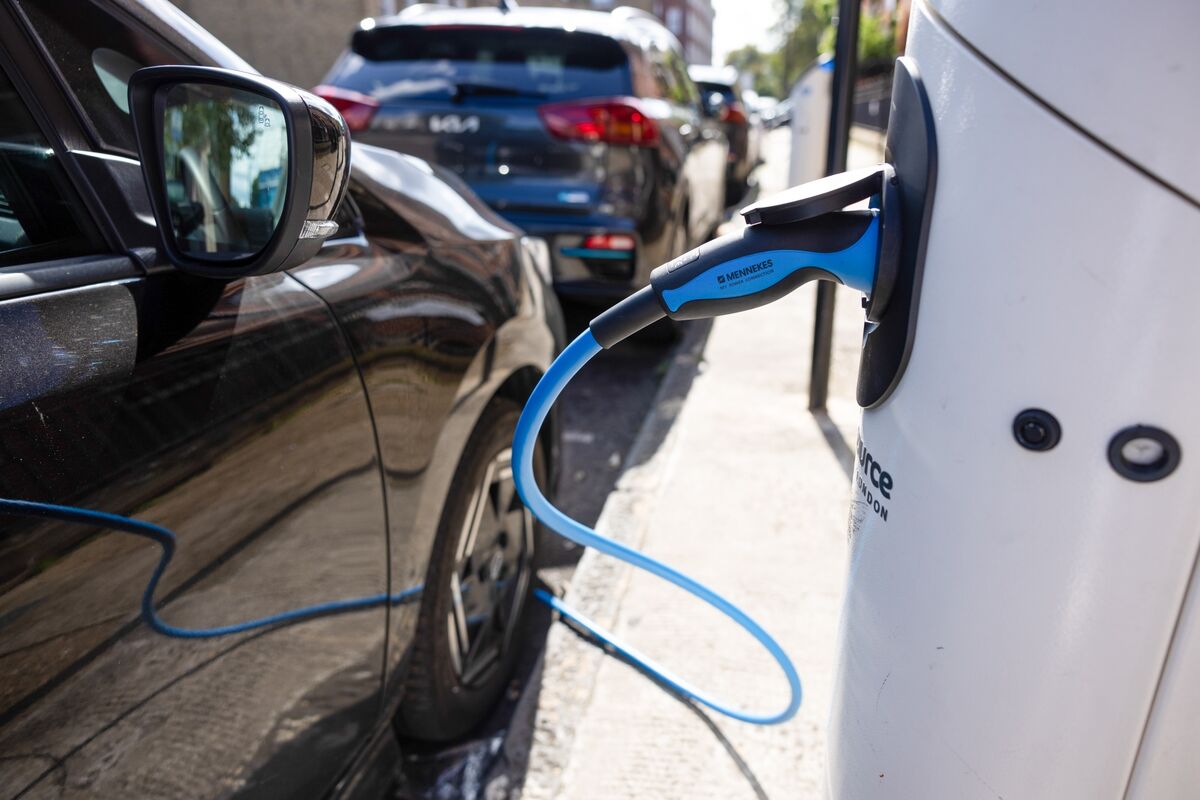
The UK will introduce a pay-per-mile tax on electric and plug-in hybrid cars from April 2028, charging 3 pence per mile for EVs and 1.5 pence per mile for plug-in hybrids, a measure the Office for Budget Responsibility forecasts will raise £1.4 billion a year by the end of the decade. The policy is expected to damp vehicle demand at a sensitive moment for automakers who must meet statutory EV sales mandates, potentially pressuring UK EV market growth and manufacturer sales forecasts.
Market structure: The 3p/mile (EV) and 1.5p/mile (PHEV) levy equals ~£240/yr for a 8,000-mile driver and is budgeted to raise £1.4bn by 2030 — a meaningful recurring ownership cost that will depress UK new-EV demand vs baseline by an estimated 5–15% through 2028–2030, boosting short-term used-EV supply and reducing public-charging throughput. Winners: ICE/efficient-hybrid sellers, used-car platforms (higher turnover), and municipal budgets; losers: high-valuation pure-play EV growth names and charging-network throughput volumes. Cross-asset: modest downward pressure on GBP and potential mild gilt rally if growth expectations are trimmed; oil demand impact is negligible but charging operator equities (CHPT/BLNK) may reprice downward.
Risk assessment: Tail risks include extension of per-mile levies to commercial fleets or retroactive application (high-impact, low-probability) and political reversal ahead of elections (catalyst for rapid repricing). Timeline: immediate (days) — sentiment shock to EV/charger equities; short-term (3–12 months) — dealer ordering/fleet tender changes and used-vehicle price dislocation; long-term (2028+) — structural slower EV adoption in UK, possible manufacturer product mix adjustments. Hidden dependency: corporate fleet contracts and manufacturer UK pricing strategies can amplify or mute demand shock.
Trade implications: Reduce convex exposure to EV growth names and charging pure-plays now; favor short-dated put spreads (3–9 months) on pure charging plays and reallocate into UK-listed traditional OEMs with hybrid/ICE inventories (e.g., TTM) and auto aftermarket/used-car platforms. Size initial allocations small (0.5–3% portfolio) and scale if UK registrations fall >5% y/y over next 12 months or OBR updates estimate >£2bn impact. Use pair trades (long ICE/aftermarket, short chargers/EV retailers) to hedge macro beta.
Contrarian angles: Consensus misses that government may recycle proceeds into targeted EV incentive or charging subsidies, which would blunt downside — creating a mean-reversion trade in beaten-down charging names. Historical parallels (UK EV grant cuts) show short-term selloffs then recovery once incentives or tax clarity returned. Unintended consequence: faster shift to cost-efficient hybrids and retrofit/aftermarket services, producing asymmetric risk for long-term pure-battery supply-chain bets.
AI-powered research, real-time alerts, and portfolio analytics for institutional investors.
Request DemoOverall Sentiment
moderately negative
Sentiment Score
-0.40
