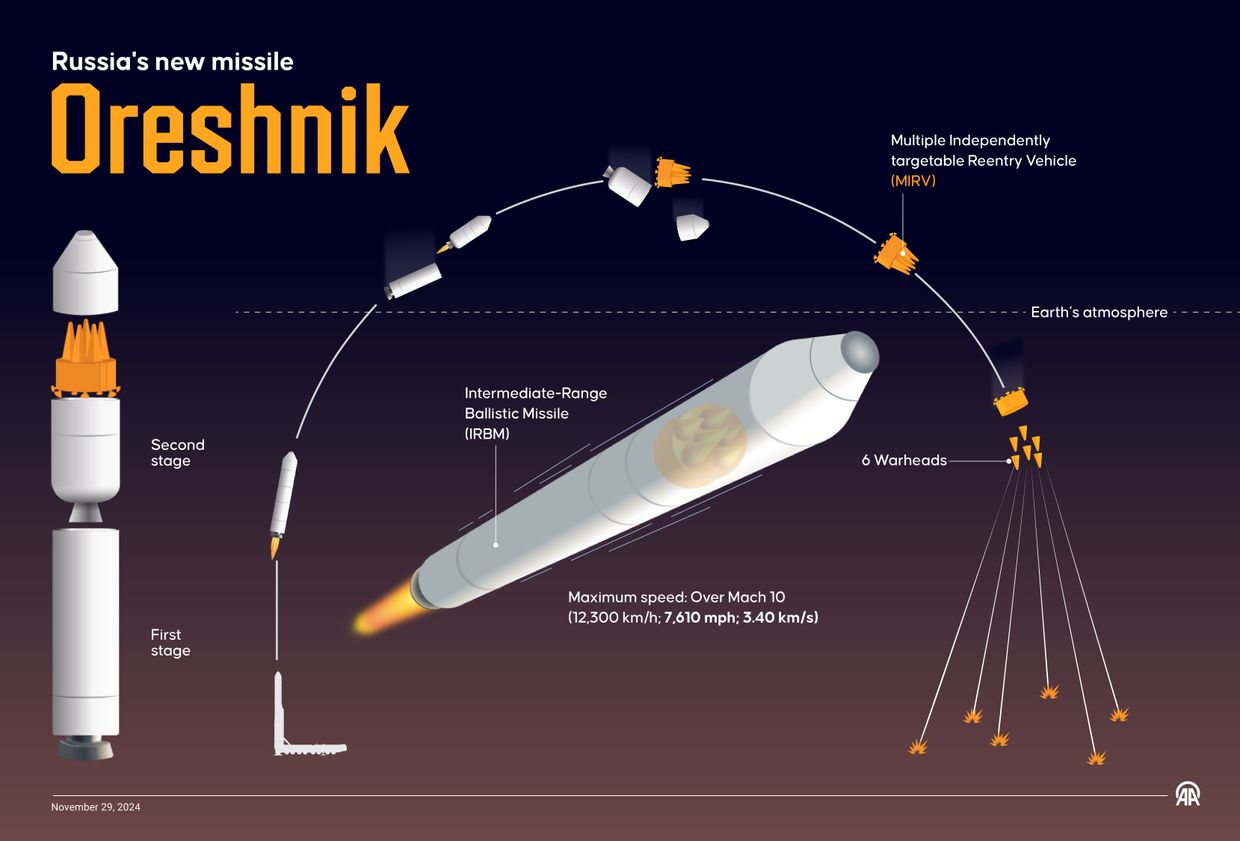
Zelensky warned on May 23 that Russia may be preparing a combined strike on Ukraine, potentially including Kyiv, and that the Oreshnik intermediate-range missile could be used. He cited intelligence from Ukrainian, U.S., and European partners and urged citizens to heed air-raid alerts and use shelters. The warning underscores elevated geopolitical and defense risk, with potential implications for regional markets and global risk sentiment.
This reads less like a one-off battlefield update and more like a sequencing signal for the next leg of the war premium: the market should treat the probability of a near-term escalation spike around Kyiv as materially higher, which tends to compress risk appetite in Europe before it shows up in broad U.S. indices. The second-order effect is that air-defense readiness becomes the relevant bottleneck, not just munitions volume. That shifts attention toward systems with short reaction times, integrated command-and-control, and interceptor replenishment capacity rather than headline rocket/MLRS exposure alone.
The clearest winners are the firms with either Patriot/IRIS-T-class exposure or the industrial base behind them, because the marginal demand here is not speculative—it is inventory replacement under time pressure. That supports a multi-month re-rating for missile-defense primes and selected European defense contractors, especially those with backlogs that can expand faster than capacity. Less obvious beneficiaries are logistics, hardening, and critical infrastructure security vendors: every credible escalation raises capex on shelters, grid resilience, and dispersed operations, which can be sticky even if the immediate strike threat passes.
The key risk is that the market may be over-discounting immediate kinetic damage while underpricing policy response. If allied air-defense transfers accelerate or Russia’s threat is judged credible enough to trigger stronger sanctions/enforcement, the trade can pivot from pure risk-off to defense-capex-on. Timeline matters: the highest convexity is in the next 1-4 weeks around strike windows; the structural winners are a 6-18 month story tied to replenishment cycles and procurement.
Contrarian view: the headline may be more useful as a deterrence/psychological operation than as a prediction of a successful strike, and markets often overshoot on the first escalation headline. If the attack fails to materialize or is intercepted, the immediate risk premium could unwind quickly. The better expression is not a naked short on broad Europe, but a relative-value tilt toward defense and away from economically sensitive cyclicals that are more exposed to a transient sentiment shock.
AI-powered research, real-time alerts, and portfolio analytics for institutional investors.
Request DemoOverall Sentiment
strongly negative
Sentiment Score
-0.70
