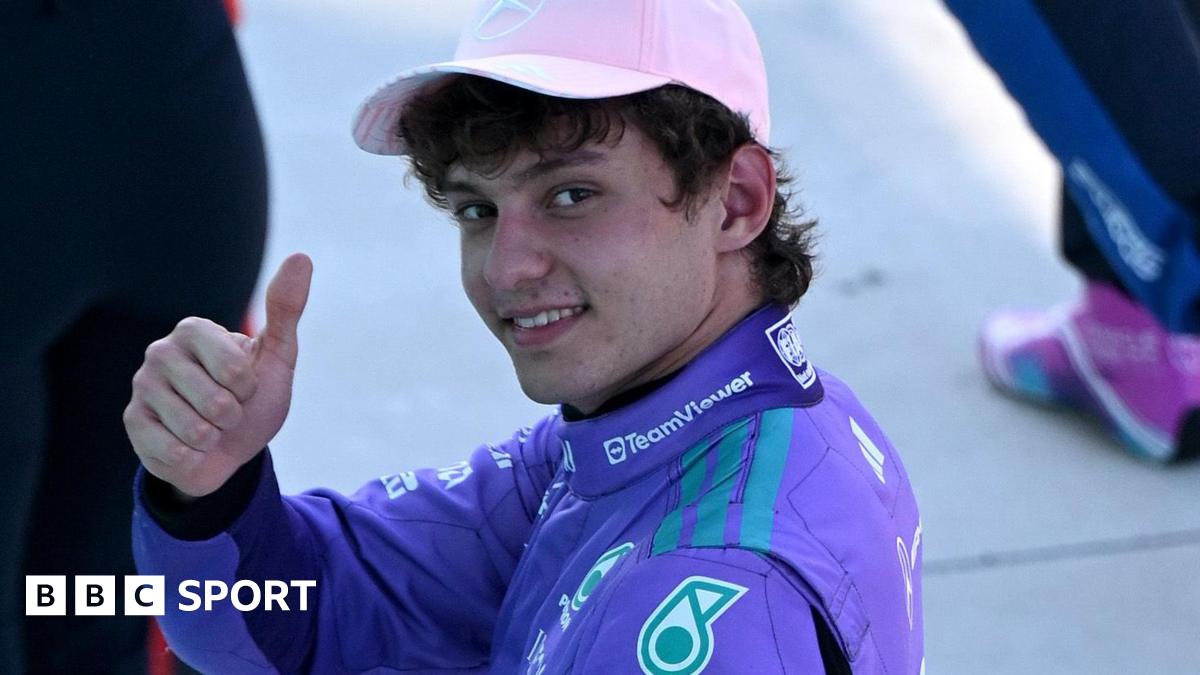
Kimi Antonelli took pole position for the Miami Grand Prix with a 1:27.798 lap, finishing 0.166 seconds ahead of Max Verstappen and 0.345 seconds ahead of Charles Leclerc. The race start was moved up by three hours to 18:00 BST because of a forecast of heavier thunderstorms later in the afternoon. The report is primarily race coverage and is unlikely to have material market impact.
The bigger market signal is not the pole itself but the dispersion it creates across the grid: upgrade effectiveness is now a much cleaner differentiator than pure baseline pace. Teams that brought meaningful aero/mechanical changes appear to have shifted from simulation promises to real qualifying gain, which should translate into better in-race tire positioning and higher odds of converting mid-pack starts into points. In a sport where marginal gains are usually noise, a visible step-function from Red Bull/Mercedes versus a regression in McLaren’s relative advantage suggests the next 2-4 races may see more volatile podium allocation than the season-to-date pattern implied.
For Ferrari and McLaren, the second-order issue is not just one bad session; it is whether their upgrades are more temperature- and wind-sensitive than the headline numbers suggest. That matters because Miami is a high-variance environment, and if performance degrades in hot/dirty-air conditions, it hints at an underlying setup window problem that tends to recur at street circuits and high-degradation tracks over the next 1-2 months. Mercedes looks like the cleaner beneficiary: even without dominant outright pace, converting qualifying strength into race control should improve title-defense optics and reduce strategic dependence on chaos.
The weather change is the hidden catalyst. A shorter gap to the afternoon thunderstorm window increases the probability of race interruptions, which historically favors the car starting near the front and punishes teams needing long, clean tire stints to work forward. That skews upside toward Verstappen/Mercedes and caps the expected value of McLaren’s raw race pace; if the track stays dry, McLaren can still outperform the grid slot, but the margin for error is thinner than usual.
Consensus may be overreacting to the apparent Red Bull resurgence as if it instantly restores full dominance. The more likely read is a partial repair of the car's operating window, which improves weekend-to-weekend floor but not necessarily peak advantage; that usually narrows the gap enough to matter in qualifying without fully solving race degradation. In other words, the market should price a more competitive title fight, not a clean reversion to early-season Red Bull control.
AI-powered research, real-time alerts, and portfolio analytics for institutional investors.
Request DemoOverall Sentiment
neutral
Sentiment Score
0.05
Ticker Sentiment
