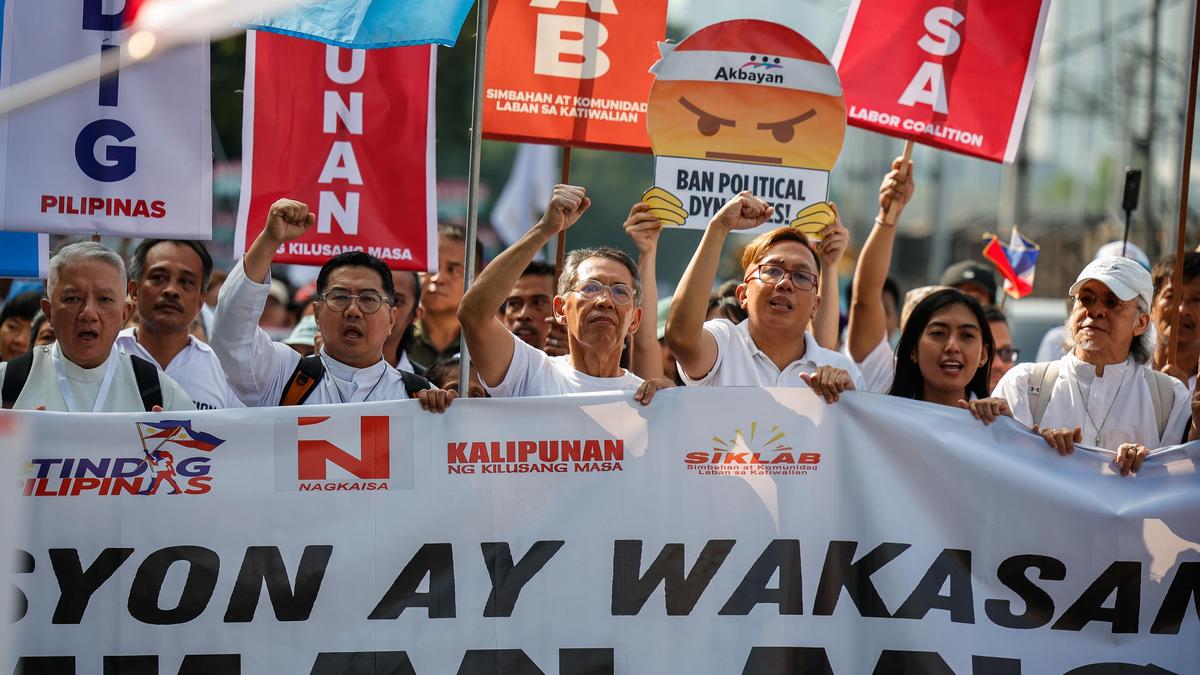
Thousands of protesters gathered in Manila on November 30, 2025 demanding accountability over a multi‑billion‑dollar 'ghost' flood‑control infrastructure scandal that has implicated scores of officials, lawmakers and construction firm owners. Authorities announced the first arrests — eight members of the Department of Public Works and Highways — amid pledges more senior figures will be pursued; more than 17,000 police were deployed and past clashes led to over 200 arrests. The scandal, tied to urgent typhoon-driven flood damage, raises risks to public‑works contractors, fiscal credibility and political stability in the Philippines, warranting close monitoring of government procurement, potential legal actions and sentiment toward Filipino sovereign and construction-sector exposures.
Market structure: Direct losers are Philippine construction contractors and their lenders—expect implicated names (e.g., Megawide MWIDE, EEI, DMCI) to underperform by ~15–30% within 1–3 months as contracts are cancelled and new bids freeze; steel/cement suppliers lose 5–15% revenue visibility. Winners include non-Philippine regional contractors and ASEAN exporters that can pick up delayed projects; sovereign liquidity providers (short-term USD funding desks) will benefit from widening PHP funding spreads.
Risk assessment: Tail risks include a large-scale political purge, IMF/credit-rating scrutiny, or a sovereign credit downgrade causing 100–200bps widening in sovereign spreads and a >5% PHP devaluation; probability in next 6 months is moderate (20–30%) given protests and arrests. Immediate (days) effects: FX and front-month construction equities volatility spike; short-term (weeks–months): contract cancellations, budget reallocation; long-term (quarters–years): potential capex reduction trimming GDP growth by 0.2–0.8 percentage points if federal procurement tightens.
Trade implications: Tactical short exposure to implicated contractors (2–4% NAV shorts in MWIDE, EEI, DMCI) and 1–2% directional USD/PHP long via forwards or FX options for 1–3 months; reduce Philippine bank exposure (BDO, BPI) by 2–3% and hedge remaining exposure with 3-month put protection. Opportunistic buys: if 5y sovereign spreads widen >75bps, deploy up to 3% NAV into 5–10y PHP sovereigns for 12–36 months to capture carry; use put spreads on contractor equities to limit premium.
Contrarian angles: The market may overprice systemic reform—histor precedents (2013–2016 scandals) show selloffs are often shallow and recover within 6–12 months if prosecutions stall. If spreads overshoot by >100bps, consider disciplined accumulation of banks and sovereigns (mean-reversion play) sized 2–4% NAV with stop-loss triggers; beware unintended consequences such as capital controls or extended legal paralysis which would favor staying hedged.
AI-powered research, real-time alerts, and portfolio analytics for institutional investors.
Request DemoOverall Sentiment
moderately negative
Sentiment Score
-0.50
