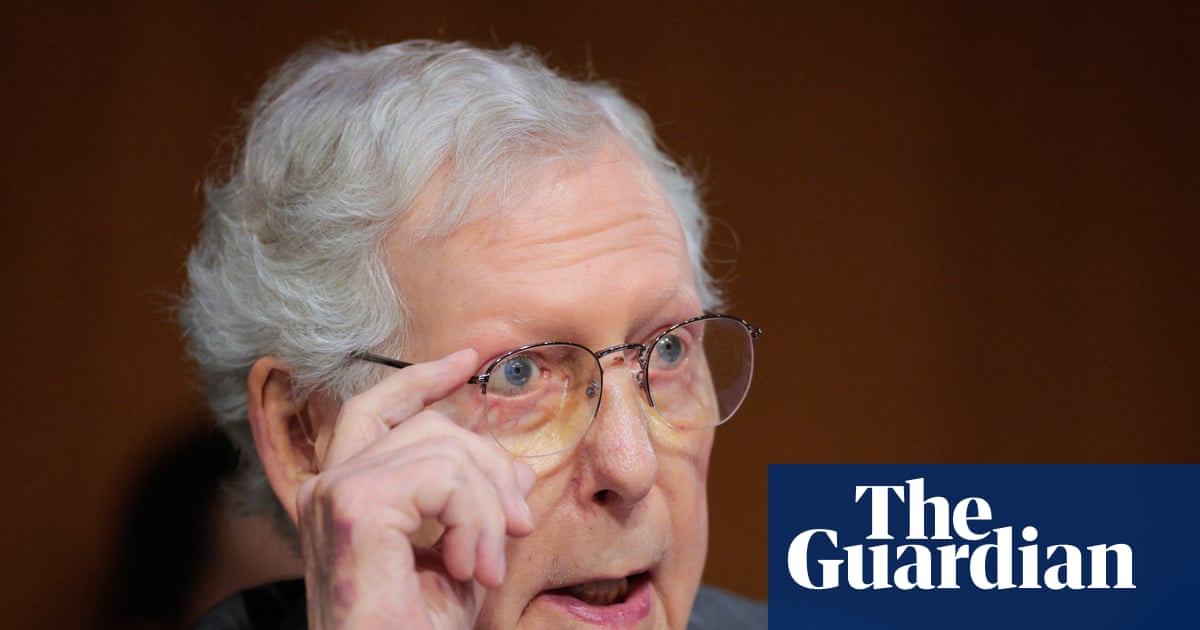
Mitch McConnell, nearing retirement, expressed significant concern over the current global environment, likening it to the 1930s due to a resurgence of isolationist trade tariffs and a perceived lack of U.S. preparedness against rising authoritarian regimes. He criticized the Trump administration's trade policies, drawing parallels to the Smoot-Hawley Tariff Act and warning of potential global economic instability. McConnell also underscored the strategic and financial benefits of U.S. military aid to Ukraine, noting that over $130 billion in support has significantly modernized domestic industrial bases and utilized older U.S. weaponry, while emphasizing the critical need to prevent a Russian victory to avert broader global implications.
Senior Republican Mitch McConnell's recent comments signal significant macroeconomic and geopolitical headwinds, drawing a direct parallel between the current environment and the 1930s. His primary concern centers on the potential re-imposition of Trump-era trade tariffs, which he likens to the Smoot-Hawley Tariff Act of 1930, a policy widely blamed for exacerbating the Great Depression. This suggests a heightened risk of global trade wars, supply chain disruptions, and retaliatory measures that could dampen global economic growth. Concurrently, McConnell highlights a growing axis of authoritarian adversaries—Russia, China, North Korea, and Iran—and characterizes U.S. preparedness as inadequate, implying a need for increased defense investment. He frames the over $130 billion in Ukraine aid not only as a geopolitical necessity but also as a domestic industrial stimulus, noting that approximately half of these funds are spent within the U.S. across 38 states to modernize the nation's own defense industrial base. The commentary, carrying a strongly negative sentiment score of -0.6, points towards a future political landscape potentially defined by protectionism, heightened geopolitical conflict, and a fiscally demanding defense posture.
AI-powered research, real-time alerts, and portfolio analytics for institutional investors.
Overall Sentiment
strongly negative
Sentiment Score
-0.60
