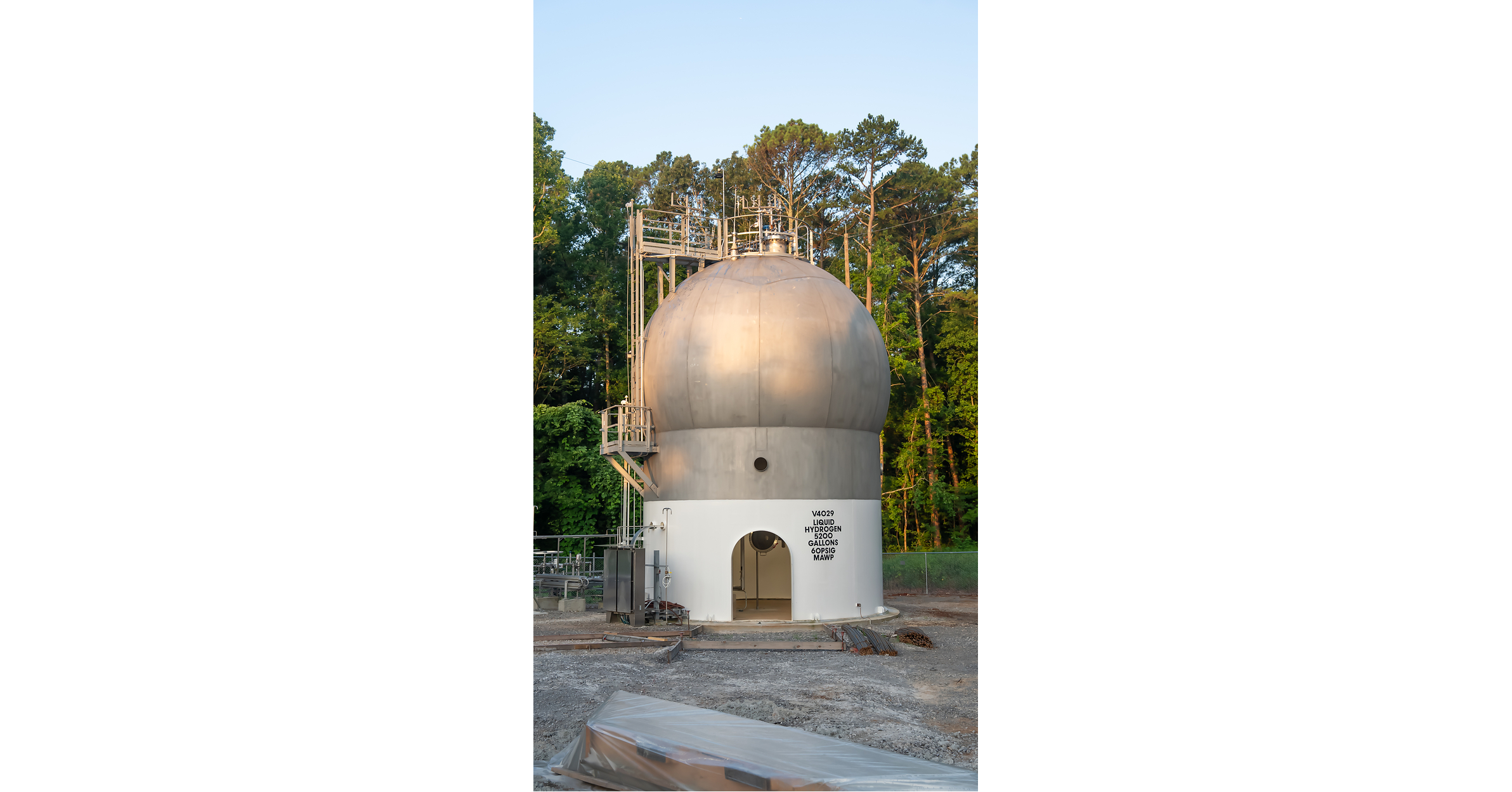
CB&I completed the first fill of a 20 m3 liquid hydrogen (LH2) test tank using non-vacuum insulation at NASA’s Marshall Space Flight Center Hydrogen Test Facility, tripling the facility’s LH2 storage capacity. The tank is designed for frequent refills—up to once per day—to accelerate insulation testing via repeated thermal cycles. Over coming months, NASA, CB&I, and Shell will evaluate performance to generate data aimed at reducing capex and supporting commercialization of large-scale LH2 storage.
This is best read as a de-risking event for the hydrogen infrastructure stack, not a fundamental re-rating of the molecule itself. If non-vacuum LH2 storage genuinely lowers capex and improves thermal-cycle performance, the first beneficiaries are integrated sponsors and infrastructure owners that can aggregate demand across multiple end markets; Shell is the cleanest listed proxy in the data because it can monetize optionality across trading, project origination, and downstream offtake. The bigger second-order winner may be industrial gases and EPC/terminal operators with the balance sheet to standardize projects; the loser is any standalone hydrogen developer whose economics depended on expensive bespoke storage hardware.
The market should be careful not to extrapolate a lab-to-commercial bridge too far. Over the next 1-3 months, this is mostly a sentiment catalyst: useful validation for grant-backed and JV-backed projects, but not enough to change earnings power absent signed storage orders or a reference-scale deployment. Over 6-18 months, if the data hold, the bottleneck shifts from storage cost to utilization and offtake, which favors large incumbents with trading books and project financing capacity over pure-play hydrogen startups.
Contrarian view: consensus tends to celebrate any hydrogen milestone as evidence of an imminent adoption curve, but storage is only one variable and not usually the binding constraint. The more likely failure mode is that the technology works technically yet still fails commercially because delivered LH2 remains too expensive versus gray/blue alternatives plus compression-based logistics. Falsifier: if follow-on tests show higher boil-off, maintenance, or integration costs, the narrative reverses quickly and the speculative hydrogen buildout gets pushed out another 12-24 months.
AI-powered research, real-time alerts, and portfolio analytics for institutional investors.
Request DemoOverall Sentiment
mildly positive
Sentiment Score
0.25
Ticker Sentiment
