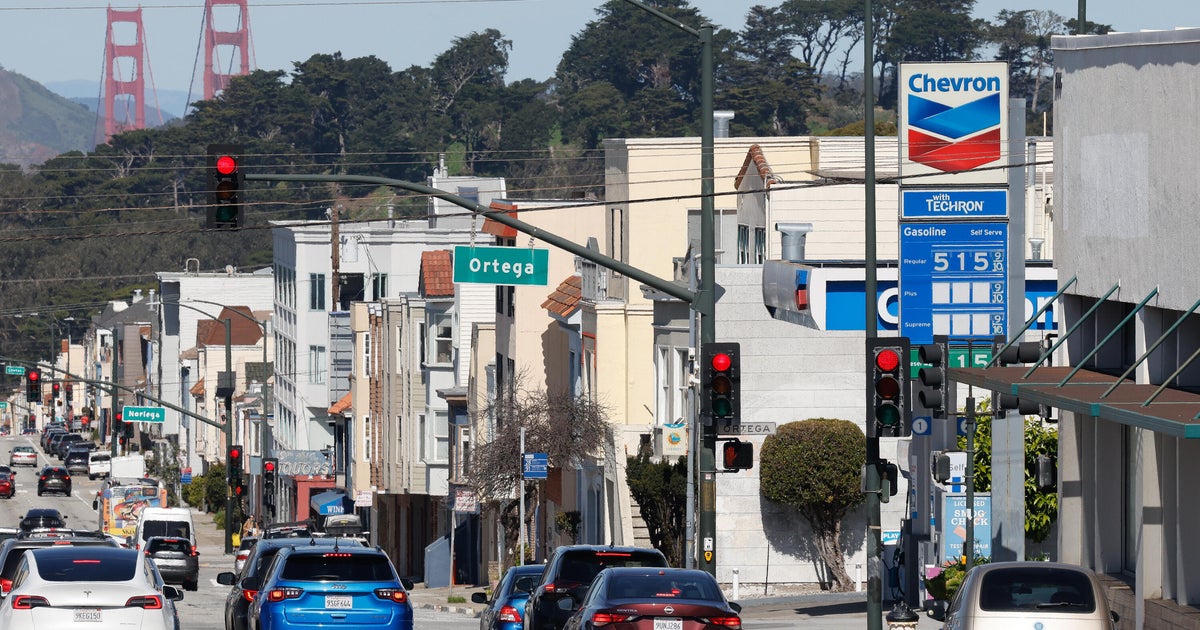
Oil topped $100/barrel (nearly $120 intraday), driving the U.S. average gas price to $3.48/gal, up $0.48 week/week and $0.58 month/month; diesel rose about $0.89 week/week to $4.66/gal. State extremes: California $5.20/gal, Washington $4.63/gal, Kansas $2.92/gal. Analysts and strategists (JPMorgan, GasBuddy, Eurasia Group, Capital Economics) warn prices could remain elevated into summer/fall and may rise another $0.20–$0.50/gal as Strait of Hormuz disruptions persist; U.S. announced up to ~$20B in maritime reinsurance to ease supply pressure.
The market is pricing a persistent risk premium into crude that will cascade unevenly across real economy sectors over the next 1–6 months. Tight diesel markets will push spot freight rates materially higher before producers can reroute or re-contract volumes; expect LTL and full‑truckload contract negotiations to show 10–25% rate jumps within 4–12 weeks, pressuring margins for grocers, food processors and export‑dependent ag companies.
Beyond headline winners (upstream cashflow), the non‑obvious beneficiaries are firms that monetize disruption risk rather than commodity exposure: maritime reinsurers, private security contractors, and short‑duration drillers with hedged production can scale returns quickly. Conversely, asset owners with long duration fuel exposure — legacy airlines, delivery fleets with little hedging, and regional retailers concentrated in high pump‑price states — face two‑way risk (higher fuel opex + softer discretionary sales) that will pressure free cash flow and credit metrics into year‑end.
Key catalysts to watch are binary and time‑staggered: (1) diplomatic de‑escalation or coordinated SPR releases can remove the premium in days–weeks; (2) structural damage to regional infrastructure or prolonged insurance premiums will extend the shock into quarters–years by permanently raising shipping costs and redirecting trade lanes; (3) demand destruction from a macro slowdown is a 2–6 month risk that would undercut the current carry in forward curves.
Market structure is favorable for convex trades: futures are likely to flip between contango/backwardation as headline risk ebbs and flows, creating roll opportunities for discretionary traders and forcing producers to choose between locking higher realized prices or preserving volume. Prefer option structures and paired trades that buy convex upside while capping premium, and size trades to weather headline volatility spikes.
AI-powered research, real-time alerts, and portfolio analytics for institutional investors.
Request DemoOverall Sentiment
moderately negative
Sentiment Score
-0.40
Ticker Sentiment
