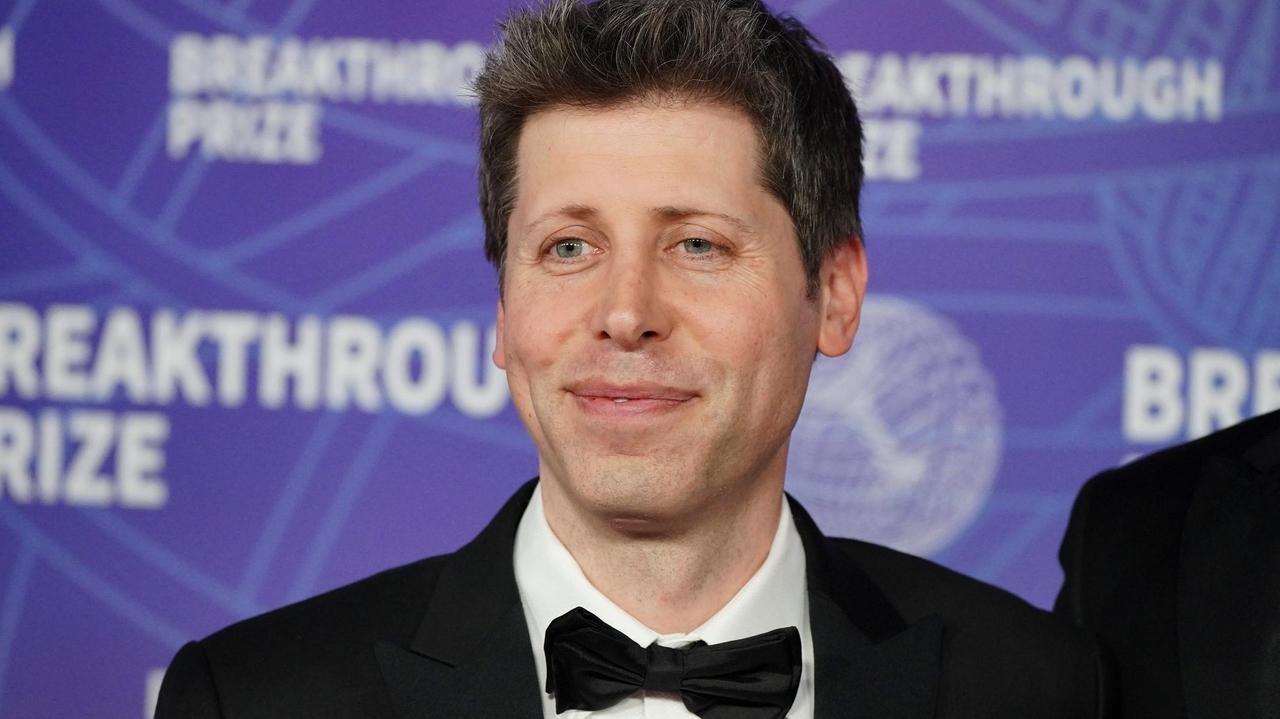
Elon Musk and OpenAI CEO Sam Altman are heading to trial over allegations that OpenAI strayed from its nonprofit mission and shifted to a money-making model, with the case involving OpenAI’s 2015 founding, Musk’s roughly $38 million investment, and a jury-selected proceeding starting Monday. The dispute could affect governance and control at OpenAI, where the company is now valued at $852 billion, while also bringing scrutiny to Musk’s conduct and his competing xAI venture. The outcome is unlikely to move broad markets, but it is material for AI-sector sentiment and OpenAI-related competitive positioning.
This trial is less about a binary legal outcome than about forcing the market to reprice governance risk across the AI stack. The immediate winners are the incumbents with the deepest distribution moats and capital access: a protracted public fight makes it harder for smaller frontier labs to raise on pure narrative and strengthens the case for Microsoft’s ecosystem control as the de facto commercialization layer. The loser is the “clean mission” premium embedded in OpenAI-linked private-market marks; even without a monetary judgment, any court finding that governance was opportunistic raises the cost of capital for AI ventures that rely on trust-based fundraising.
The second-order effect is on talent and partner retention. Enterprise buyers care less about courtroom theater than about continuity of roadmap, but a governance headline cycle can slow procurement for copilots and model migrations by 1-2 quarters as legal teams re-open vendor risk reviews. That creates a tactical opening for adjacent platforms with less narrative overhang—especially Google’s Gemini stack and, more indirectly, legacy cloud vendors selling “multi-model” tooling—because CFOs will favor diversification when one flagship AI vendor looks politically and legally unstable.
For Tesla, the direct read-through is small, but the optics are negative because this keeps Musk’s credibility in the spotlight while he is trying to reframe his identity around AI and autonomy. More importantly, if the market starts discounting his time allocation and governance style again, it can widen the valuation gap between Tesla’s multiple and execution clarity at peers, even absent any fundamental change. The contrarian point is that the lawsuit may ultimately be a relative positive for OpenAI if it hardens the case that the company needs a clearer for-profit structure and stronger board controls, which could actually de-risk future fundraising over a 6-12 month horizon.
The biggest tail risk is that discovery surfaces internal communications that make the governance critique look materially worse than a typical founder dispute. That would not just hit OpenAI’s reputation; it could accelerate regulatory scrutiny of AI capitalization structures broadly, slowing private-market velocity across the sector for months. Conversely, if the trial devolves into personal credibility theater with no actionable governance finding, the market will likely fade the noise quickly and refocus on product traction.
AI-powered research, real-time alerts, and portfolio analytics for institutional investors.
Request DemoOverall Sentiment
mildly negative
Sentiment Score
-0.15
Ticker Sentiment
