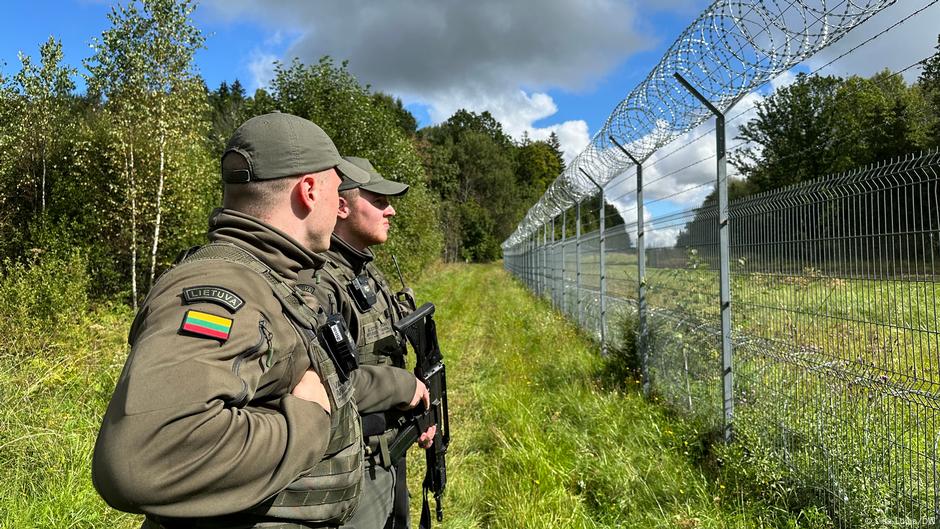
Upcoming Russo-Belarusian Zapad 2025 military drills, scheduled for September 12-16 and featuring new nuclear-capable Oreshnik missiles, are significantly escalating security concerns across the Baltic states. Lithuania is responding by increasing border security, conducting joint military exercises with regional allies involving 40,000 troops, and plans to boost its defense budget to over 5% of GDP by 2026. The region fears potential hybrid provocations, including migrant and drone incursions, and long-term Russian strategic encroachment, though some analysts suggest Russia's ongoing military engagement in Ukraine might limit the drills' immediate scale, and NATO's increased presence offers reassurance.
The upcoming Russo-Belarusian 'Zapad 2025' military drills represent a significant escalation of geopolitical risk in the Baltics, primarily driven by the inclusion of Russia's new nuclear-capable Oreshnik missiles. This has triggered a direct and material response from Lithuania, which is conducting its own joint exercises with 40,000 allied troops and plans to more than double its defense budget to over 5% of GDP by 2026, up from under 2% in 2021. This fiscal shift signals a structural increase in defense expenditure across the region. While analysts cited in the report believe the immediate threat of a conventional invasion is mitigated by Russia's engagement in Ukraine, the primary concerns are long-term strategic positioning and the use of 'hybrid attacks,' such as drone incursions and engineered migrant flows. The key indicator for long-term risk will be whether Russian forces remain stationed in Belarus after the exercises conclude, a pattern observed prior to the 2022 invasion of Ukraine. The heightened tension introduces a distinct risk premium for the region, although the presence of NATO forces provides a degree of security reassurance.
AI-powered research, real-time alerts, and portfolio analytics for institutional investors.
Request DemoOverall Sentiment
strongly negative
Sentiment Score
-0.65
