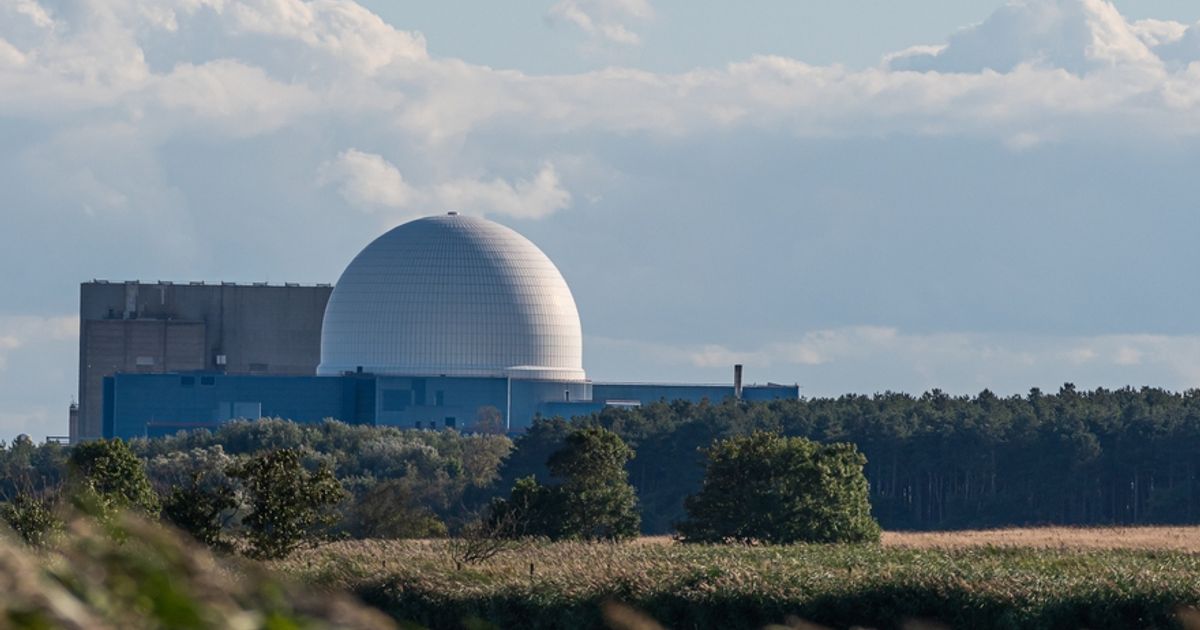
JP Morgan has reiterated an 'overweight' on Centrica with a street-high 224p price target (c.19% upside) arguing a 14% EPS CAGR and a shift from zero to ~25% of group EBITDA from regulated/contracted infrastructure by 2030 justifies a re-rating. The bank flags a transformation cost up to £600m and acknowledges execution risk, models below consensus for 2026–27 but is ~7% above for 2028–29 and ~15% above for 2030, and expects Centrica to remain net cash in 2030 with >£2bn headroom for M&A or buybacks; near-term catalysts include gas-storage remuneration clarity, nuclear life extensions and AMR progress. Shares were trading at 191.71p, up 1.8% in late morning trade.
Market structure: Centrica's pivot toward ~25% regulated/contracted EBITDA by 2030 shifts it from a volatile retail/trading profile to utility-like cashflow, directly benefiting Centrica (LSE:CNA), nuclear services contractors, and gas-storage asset owners while hurting pure-play retail traders and short-duration wholesale generators whose relative valuation should compress. Pricing power will move toward contracted returns (lower beta, higher multiple); expect Centrica's equity volatility to fall and credit spreads to tighten if JPM's cash-positive 2030 scenario holds (net cash >£2bn headroom). Cross-asset: sterling could firm modestly on a clearer UK energy earnings stream, corporate bonds (CNA) may tighten by 50–150bp over 12–24 months, and short-term gas trading revenues remain a commodity sensitivity.
Risk assessment: Key tail risks are regulatory reversals on gas-storage remuneration (policy risk), failed nuclear life extensions or major capex overruns on AMR (operational), and a UK political push to curb buybacks (sovereign/regulatory). Immediate (days-weeks) sensitivity centers on JP Morgan headlines and Ofgem comments; short-term (3–12 months) depends on remuneration framework and nuclear decisions; long-term (to 2030) hinges on execution of the £600m programme and realized shift to contracted EBITDA. Hidden dependencies include wholesale price assumptions for trading earnings and government support for AMR—both amplify upside or sink valuation if outcomes diverge.
Trade implications: Direct play: long CNA equity exposure sized 2–3% of portfolio with a 6–12 month horizon for the 224p JPM target; complement with a Dec-2026 200/260 call spread (0.5–1% notional) to lever upside while capping premium. Pair trade: long CNA vs short SSE (LSE:SSE) to express re-rating to infrastructure — size to be delta-neutral and target relative outperformance of 20–30% over 12–24 months. Options: buy puts (stop-loss hedge) at ~165p if downside protection required; consider corporate bond buys on secondary if spreads exceed 200bp and balance sheet confirms net cash trajectory.
Contrarian angles: Consensus may be underpricing execution and policy risk—JPM is optimistic on nuclear life extensions and AMR policy which are not guaranteed; markets may be underestimating trading-earnings cannibalization during restructuring. The re-rating to infrastructure could be underdone if Centrica secures regulated returns and confirms buybacks, but equally overdone if Ofgem curtails returns or political pressure caps capital returns. Historical parallel: utility re-ratings (eg National Grid/North American utilities) show multiple expansion of 2–4x EV/EBITDA over 3–5 years after durable regulated earnings are proven, but only after 1–2 major regulatory/capex milestones confirm the thesis.
AI-powered research, real-time alerts, and portfolio analytics for institutional investors.
Request DemoOverall Sentiment
moderately positive
Sentiment Score
0.45
Ticker Sentiment
