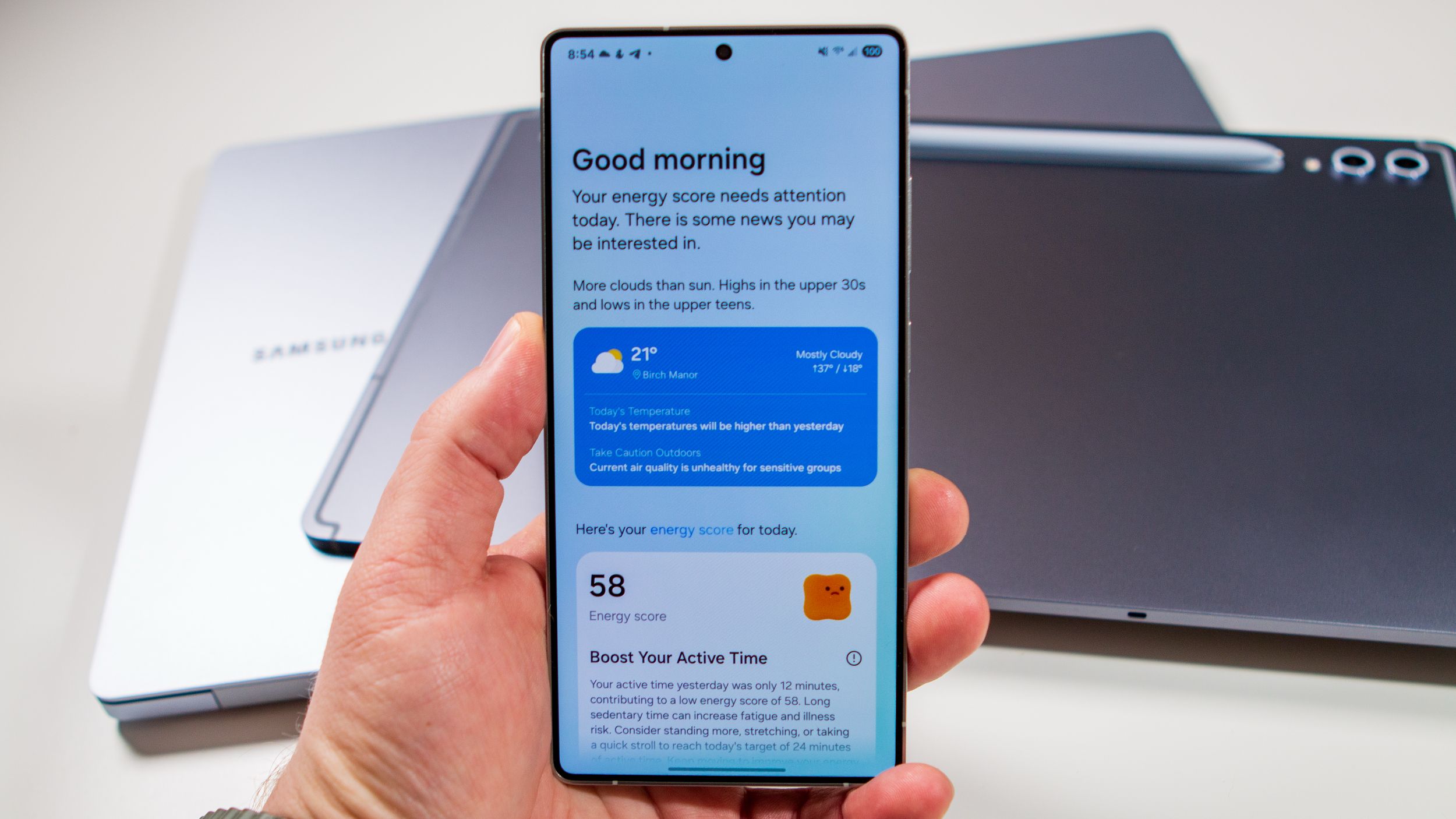
Samsung is rolling out Now Brief integration in SmartThings, bringing Galaxy AI recaps to Samsung TVs from 2024 or later and Family Hub refrigerators from 2021 or later. The update expands coverage across Home Security, Family Care, Pet Care, Home Insight, Energy, and Sleep Environment, with a phased rollout and automatic activation when users approach supported TVs. Samsung also enhanced Family Care with more actionable activity, temperature, humidity, and device-usage insights for monitoring aging parents.
This is less about a single feature and more about Samsung turning the TV into the control plane for the home, which nudges the consumer electronics stack toward a recurring-software model. The incremental revenue may be small near term, but the strategic value is that Samsung can raise switching costs across appliances, mobile, and TV ownership by making the ecosystem feel predictive rather than reactive. That matters because the real moat is not the AI summary itself; it is the growing surface area for data capture and cross-sell across devices already in the home.
The second-order winner is Samsung’s appliance and TV attach rate, while the losers are standalone smart-home app ecosystems that rely on fragmented user engagement. If the “home brief” becomes habitual, Samsung gets a higher-frequency interaction layer that can subtly improve retention and reduce churn at replacement cycles measured in 3-7 years for TVs and 7-12 years for major appliances. The advertising and subscription monetization angle is still embryonic, but once the TV is the morning dashboard, there is a path to premium service tiers, partner integrations, and local offers.
The contrarian risk is that this is a feature that sounds sticky in a demo but is easily ignored in practice, especially if privacy concerns or notification fatigue rise. In the near term, the market may overestimate immediate monetization and underestimate execution risk around latency, false positives, and household-specific setup friction. Over a 6-18 month horizon, the key catalyst is whether Samsung can show measurable engagement uplift and attach this layer to more devices without making it feel intrusive.
From a portfolio perspective, the cleaner trade is not a direct AI-name long, but a relative-value bet on ecosystem depth versus pure hardware exposure. If Samsung can successfully drive more SmartThings usage, the upside is incremental margin expansion through services and lock-in, but if adoption disappoints, this is likely to remain a low-ROI feature with limited financial impact. The setup favors waiting for evidence of engagement before assigning meaningful multiple expansion.
AI-powered research, real-time alerts, and portfolio analytics for institutional investors.
Request DemoOverall Sentiment
mildly positive
Sentiment Score
0.25
