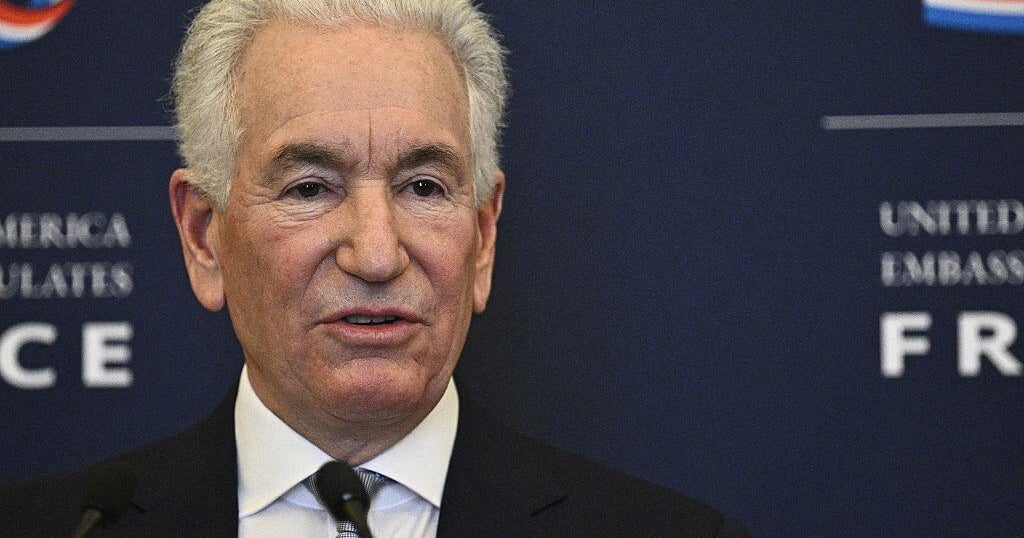
France has summoned U.S. Ambassador Charles Kushner to protest a U.S. State Department Counterterrorism Bureau statement linking the death of far-right activist Quentin Deranque in Lyon to left-wing militants, escalating a diplomatic spat. Seven people face preliminary charges (six charged with intentional homicide, aggravated violence and criminal conspiracy; a seventh with complicity and related counts), while French Foreign Minister Jean-Noel Barrot also raised U.S. sanctions on Thierry Breton and ICC judge Nicolas Guillou as additional grievances. The move, the second summoning of the ambassador since last year, underlines rising political tensions ahead of France's presidential vote and creates modest transatlantic political risk but is unlikely to be directly market-moving.
Market structure: This is a localized geopolitical/diplomatic shock with asymmetric market winners — U.S. safe-haven assets (USD, USTs) and gold should see near-term inflows while French domestic equities and banks (high home bias) face downside pressure if political tensions widen; expect a 2–6% knee-jerk move in EWQ and a 10–25bp move in France 10y OATs on sustained headlines. Competitive dynamics: no immediate global market-share shifts, but technology/regulation cooperation risk (Breton sanction talk) raises execution risk for Europe–US digital policy coordination, increasing uncertainty (and discount rates) for EU tech/regulatory-exposed names. Cross-asset: EURUSD vulnerability (−1–3%), modest widening in French CDS, small bid for gold/GC (1–3%), marginal steepening in French curve vs. German bunds.
Risk assessment: Tail risks include a tit‑for‑tat enlargement of U.S.–EU sanctions or escalation into trade frictions (5–10% probability over 3–12 months) that would widen EU equity risk premia by 100–200bp; operational risks for border/air travel firms are low-probability but high-impact regionally. Time horizons: days for FX and flows, weeks for credit spread repricing, and quarters across election-driven policy uncertainty. Hidden dependencies: ETF flows (EWQ) amplify moves; corporate earnings sensitive to domestic demand (retail, travel) could surprise down if political protests persist. Catalysts: upcoming formal meeting with the ambassador (days–weeks), any new U.S. sanctions within 30–90 days, and election messaging cycles.
Trade implications: Direct plays: short EWQ and French bank names, long USD and gold as hedges; prefer options to limit tail risk. Pair trades: short EWQ vs. long STOXX 600 (EU broad) to isolate France-specific political risk. Options: buy 3‑month EURUSD puts and 3‑month EWQ put spreads to cap losses while capturing headline volatility. Sector rotation: reduce French domestic cyclicals (airlines, leisure) by 2–5% overweight; increase defensive (utilities/defense) and FX-hedged USD exposure.
Contrarian angles: Consensus may overprice permanent rupture — historical transatlantic spats (2018 trade skirmishes) resolved within 3–9 months and equities recovered; if no new sanctions within 30 days, France-specific discounts >7% create buying opportunities. Mispricing: large passive outflows from EWQ can overshoot fundamentals; consider mean-reversion sized buys if EWQ falls >8% or France 10y OATs widen >30bps. Unintended consequence: aggressive short on French banks could be crowded and vulnerable to rapid squeezes if ECB liquidity or political de-escalation arrives.
AI-powered research, real-time alerts, and portfolio analytics for institutional investors.
Request DemoOverall Sentiment
moderately negative
Sentiment Score
-0.30
