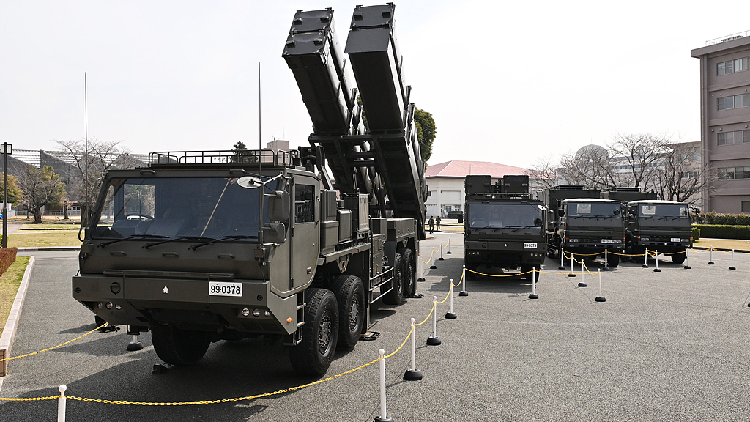
Japan approved revisions to its defense equipment transfer rules, effectively allowing the export of lethal weapons in principle and easing long-standing arms export restrictions. The policy expands eligibility to tanks, fighter jets and missiles, includes exceptions for exports to conflict countries, and centralizes approval with senior officials, drawing backlash from domestic critics, South Korea and regional analysts. The move is seen as a major shift in Japan's postwar security posture and could intensify regional militarization and arms competition.
The market takeaway is not the headline policy change itself but the funding-and-industrial base it unlocks. Easing export constraints effectively turns Japan’s defense buildup from a purely domestic budget story into a scale story: fixed-cost absorption, longer production runs, and greater pricing power for prime contractors with exportable platforms. The second-order beneficiary set is broader than obvious prime names; domestic electronics, guidance, propulsion, and precision-machining suppliers should see a multi-year order backstop as export programs require localization, certification, and lifecycle support.
The key risk is political durability. This is a consensus-increasingly aware shift, but Japan’s policy architecture still faces meaningful reversal risk through domestic elections, coalition friction, and judicial/administrative constraints if exports to conflict zones become politically toxic. In the near term, the market can overprice a straight-line expansion in order flow; the bigger monetization lag is 12-24 months because export wins need government-to-government contracts, end-user approvals, and production ramp capacity.
The contrarian angle is that the biggest near-term winners may be outside Japan. Regional tension can translate into sustained demand for missile defense, radar, EW, and anti-ship systems across South Korea, Taiwan, and parts of Southeast Asia, while also benefiting U.S. primes that sit inside allied procurement ecosystems. If investors focus only on Japanese suppliers, they may miss that the policy change can catalyze a broader Asian rearmament cycle, with higher-multiple defense electronics names outperforming hardware-heavy platforms.
Tail risk is an export case tied to an active conflict, which could trigger reputational blowback, sanctions-style scrutiny, or procurement delays from partner governments. That would likely hit sentiment first, but if it becomes a recurring political issue, it could compress valuation multiples even as revenues grow. The setup is therefore better expressed as a basket trade than a single-name bet, with the upside coming from a longer-duration defense cycle and the downside from policy reversals or headline shocks.
AI-powered research, real-time alerts, and portfolio analytics for institutional investors.
Request DemoOverall Sentiment
strongly negative
Sentiment Score
-0.55
