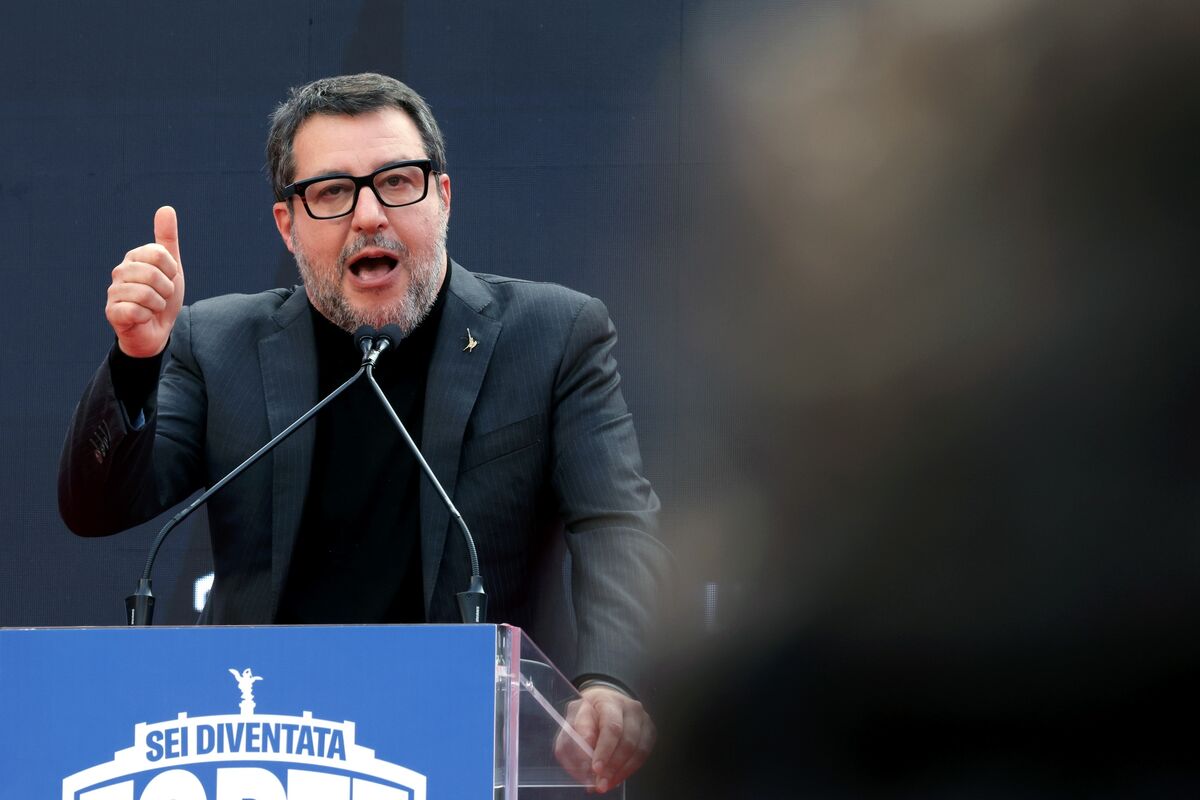
Italy’s Deputy Prime Minister Matteo Salvini renewed pressure on Intesa Sanpaolo and UniCredit to contribute more to the economy, citing combined profits of €20 billion this year. The comments reinforce the coalition’s willingness to pursue higher bank taxes or levies, which is a modest negative for Italian lenders. The headline is politically relevant but does not indicate an immediate policy change.
This is less about near-term bank earnings and more about regime risk: once the state frames bank profitability as a funding source, it raises the probability of recurring, discretionary levies that compress the sector’s terminal multiple. The immediate market effect is usually modest on day one, but the second-order effect is a higher equity risk premium for domestic lenders and a wider valuation gap versus European peers with less political overhang. That matters because both large banks are already being asked to finance the real economy through lending; any additional tax burden can slow credit growth exactly when policymakers want it to accelerate.
The distributional winner is the sovereign and any coalition-facing fiscal agenda that can be funded without spending cuts. The losers are bank shareholders first, but the more important spillover is to bank management behavior: expect more conservative capital return policies, a preference for low-beta fee income, and tighter underwriting in cyclical SME/consumer segments if managements anticipate an earnings grab. Over months, that can feed into weaker loan growth and lower net interest income, making the policy self-defeating if credit transmission is the intended channel.
The key catalyst is whether this stays rhetoric or becomes budget language. If tax proposals progress into draft fiscal plans, the underpricing of political intervention in Italian financials will correct quickly, likely in a 1-3 month window, not years. The contrarian risk is that markets may be too complacent about coalition discipline: if bank levies become a recurring bargaining chip, the uncertainty discount can expand even if the absolute tax size remains manageable.
For banks, the risk/reward is asymmetric to the downside because the headline hit is less important than the multiple compression from policy uncertainty. For the sovereign, however, there is a short-lived funding benefit with medium-term growth costs if credit creation slows. The best setup is to express this as a relative-value trade rather than a naked short, because the whole European banking complex can be buoyed by rates and capital returns while Italy-specific names absorb the political premium.
AI-powered research, real-time alerts, and portfolio analytics for institutional investors.
Request DemoOverall Sentiment
mildly negative
Sentiment Score
-0.15
