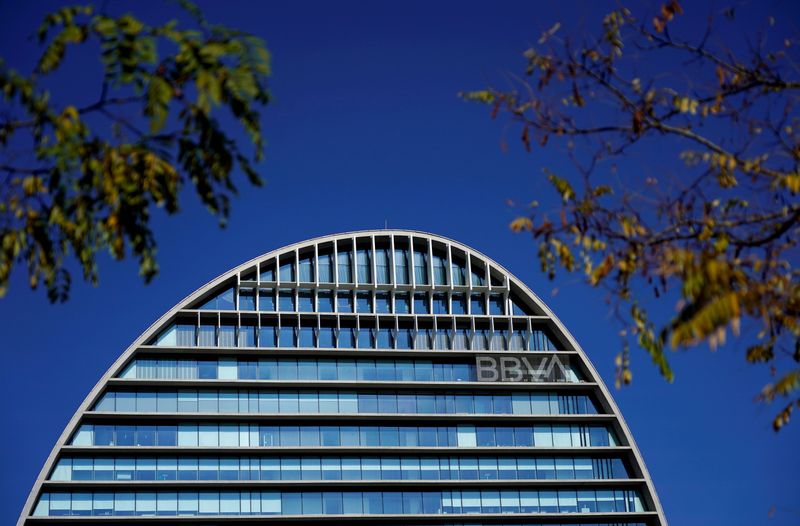
BBVA cancelled 52,800,888 treasury shares, cutting share capital by €25,872,435.12 to €2,734,790,209.90 and reducing the share count to 5,581,204,510. The move follows completion of the second tranche of its buyback program and does not involve a cash return to shareholders. The announcement is largely procedural and should have limited direct market impact.
The market should treat this as a signal of capital discipline rather than a balance-sheet event. At the margin, shrinking the share count after an already-completed buyback tightens BBVA’s equity base and mechanically lifts per-share optics, but the bigger effect is on capital allocation credibility: management is signaling that excess capital is not being hoarded for a low-return expansion plan. That tends to support valuation multiple stability in European banks, especially when investors are already hunting for firms that can return capital without sacrificing solvency.
Second-order, this is mildly negative for competitors still defending capital in slower-growth markets because it raises the bar for “good enough” payout policy. If BBVA can keep buying back stock while maintaining flexibility, peers with similar capital ratios but weaker execution will look less attractive on tangible book accretion and dividend growth. The more important readthrough is not to other banks’ near-term earnings, but to relative capital-return credibility across the sector.
The main risk is that the market may extrapolate buybacks into a straight-line rerating even though the upside is usually front-loaded and can fade if credit costs or regulatory pressure rise over the next 2-4 quarters. A reversal would likely come from any sign that reserve strength is being depleted faster than expected, or that management pivots from repurchases to balance-sheet preservation if macro growth softens. In that scenario, the stock can give back a meaningful portion of the buyback premium quickly because the thesis is centered on excess capital durability, not just headline EPS accretion.
Contrarian view: this is probably not a catalyst for a large re-rating on its own. The consensus may be overestimating the durability of the mechanical EPS lift and underestimating how little the cancellation changes intrinsic value unless it is followed by another tranche or improved operating leverage. The better trade is to separate capital-return winners from banks that are simply shrinking shares to mask slower organic growth.
AI-powered research, real-time alerts, and portfolio analytics for institutional investors.
Request DemoOverall Sentiment
neutral
Sentiment Score
0.15
Ticker Sentiment
