






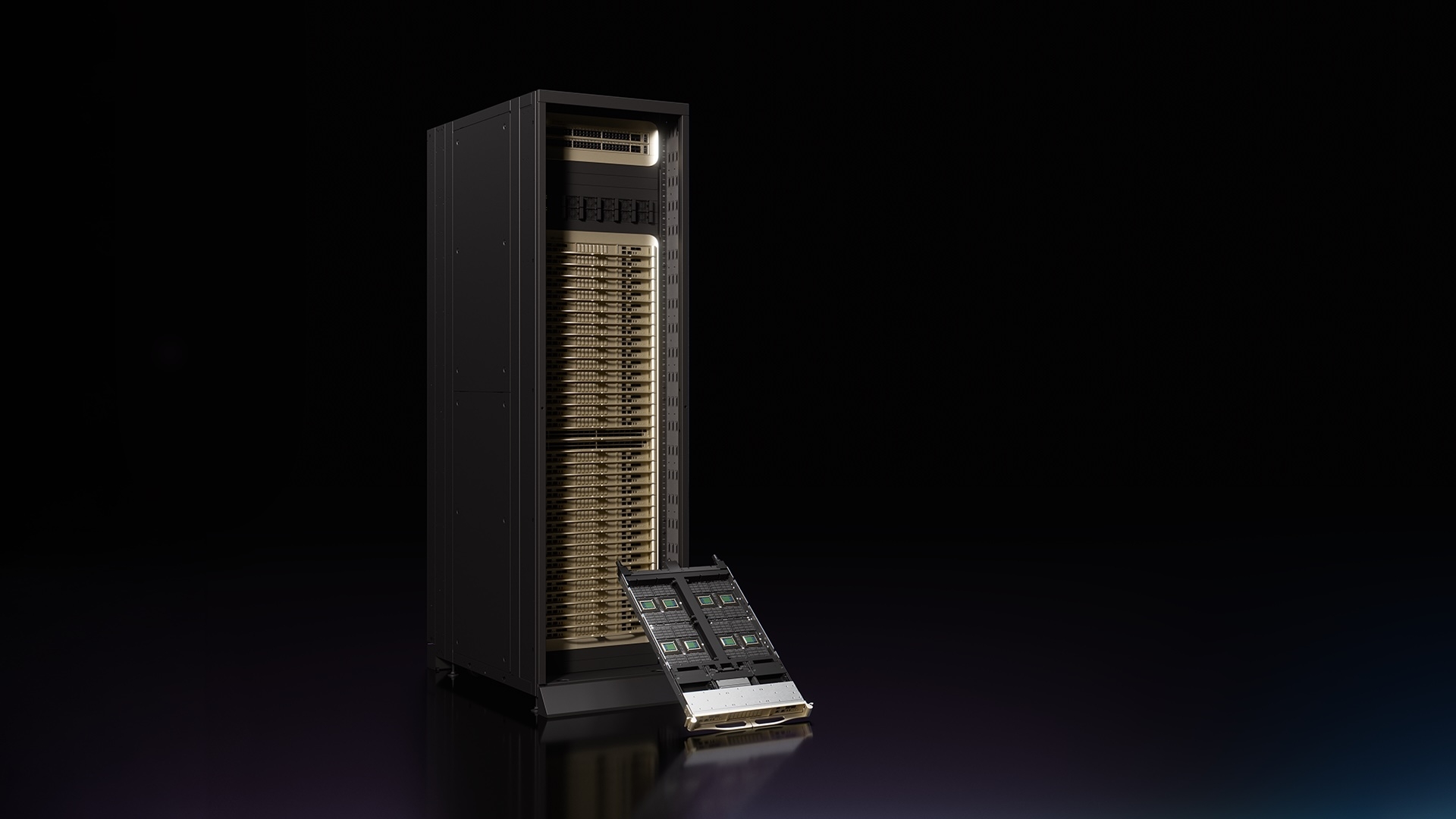
NVIDIA launched Vera, its first CPU built for AI agents, now in full production and positioned to deliver 1.8x faster task completion than x86 CPUs. The company says Vera is being explored by customers including NYSE, Anthropic, OpenAI, Oracle Cloud Infrastructure, ByteDance and CoreWeave, while Dell, HPE, Lenovo and Supermicro are building systems around it. The product extends NVIDIA’s AI factory stack and could expand data-center token economics and platform adoption across standalone servers, Vera Rubin systems and BlueField-4 STX platforms.
This is less about one more CPU launch and more about NVIDIA trying to re-price the economics of the AI stack at the orchestration layer. If Vera actually reduces agent-side CPU bottlenecks, the incremental winner is not just NVDA silicon revenue but GPU utilization: faster host-side execution should raise effective accelerator occupancy and make high-cost inference/training clusters look less idle. That creates a second-order pull-through for networking, memory bandwidth, storage, and rack-scale systems, while commoditizing the standalone x86 host role over a 12-24 month horizon.
The most important competitive read-through is that the value pool is shifting away from generic server CPU vendors toward tightly integrated platform sellers. DELL and HPE can benefit near term as preferred enterprise distribution channels, but they also risk margin dilution if customers increasingly buy “NVIDIA-native” platforms rather than differentiated OEM hardware. For CRWV and NBIS, the product matters less than the financing mix: any capex cycle that improves token throughput can support utilization, but if supply is constrained or deployment slips, these names may be forced to raise more equity before the revenue step-up is visible.
The contrarian risk is timing. Adoption headlines are easy; workload migration is not. Agentic workloads are still early, and the market may be extrapolating a 2026+ architecture shift into the next two quarters, leaving room for a sell-the-news reaction if near-term revenue contribution is immaterial. The other risk is substitution: if customers can get 70-80% of the benefit from software optimization on existing x86 fleets, then the “first CPU for AI agents” narrative becomes more strategic than immediately monetizable. That gap is where the short opportunity may emerge if NVDA outperforms while the ecosystem names lag.
AI-powered research, real-time alerts, and portfolio analytics for institutional investors.
Request TrialOverall Sentiment
strongly positive
Sentiment Score
0.72
Ticker Sentiment
