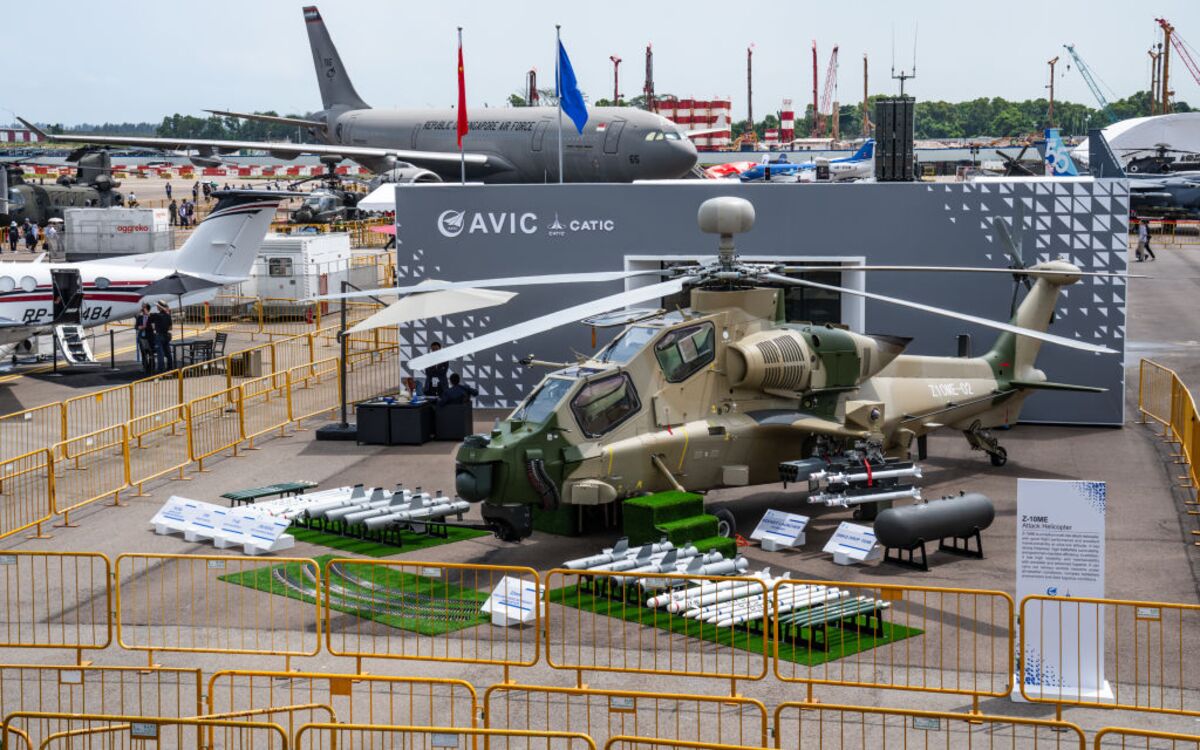
Pakistan has officially inducted new Chinese Z-10ME attack helicopters into its military, a strategic acquisition aimed at upgrading its aging fleet. These 'state-of-the-art' aircraft enhance Pakistan's precision strike capabilities with advanced radar and electronic warfare systems, signaling ongoing defense modernization efforts and strengthening military procurement ties with China.
Pakistan's military has officially inducted an undisclosed number of Chinese-made Z-10ME attack helicopters, a strategic move to modernize its aging aviation fleet. The acquisition enhances Pakistan's military capabilities, as the helicopters are described as "state-of-the-art, all-weather" platforms equipped with advanced radar, electronic warfare systems, and precision strike capabilities. This procurement deepens the defense and technological ties between Pakistan and China. The fact that this model is similar to one used by China along its border with India introduces a significant geopolitical dimension, potentially altering the regional military balance and signaling a stronger alignment between Islamabad and Beijing's defense postures.
AI-powered research, real-time alerts, and portfolio analytics for institutional investors.
Request DemoOverall Sentiment
neutral
Sentiment Score
0.00
