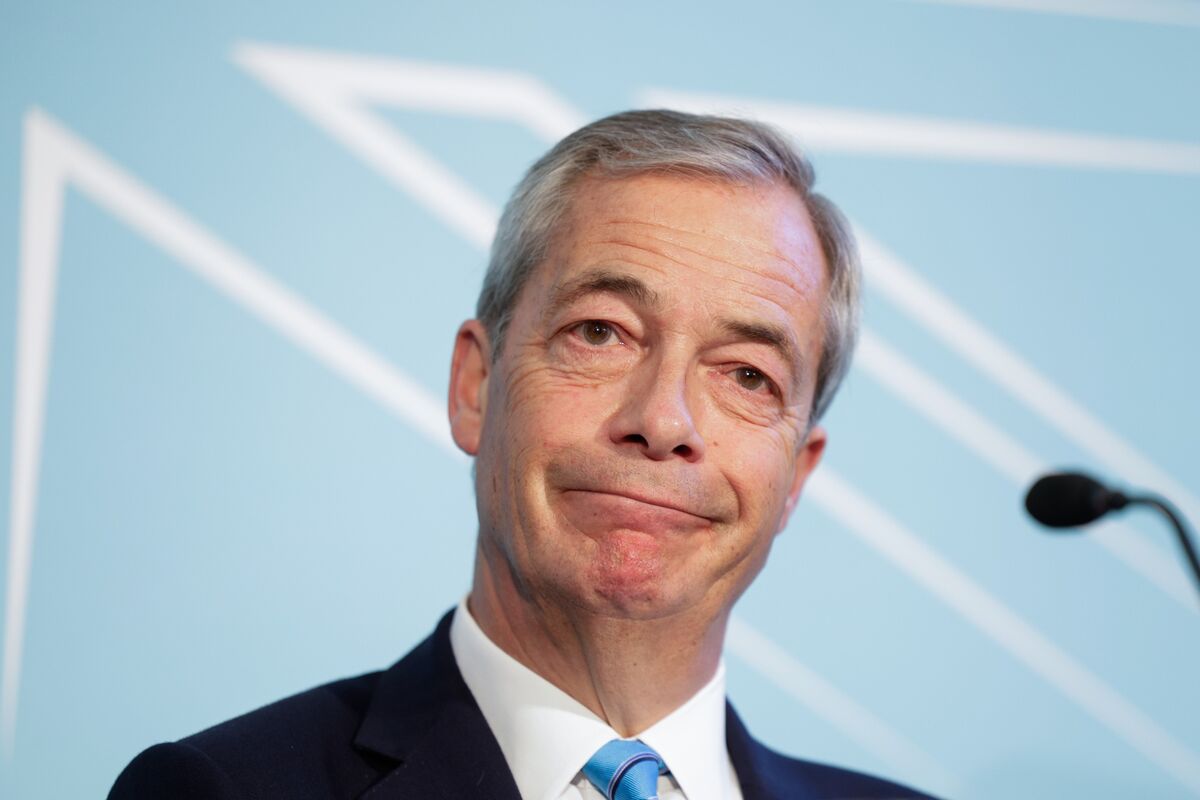
Nigel Farage announced a U-turn, saying the UK should not get involved in the Iran war while staging a publicity stunt at a Derbyshire gas station where he subsidized motorists’ fuel and unveiled a plan to cut fuel duty. He criticized Prime Minister Keir Starmer's cautious response but also suggested he would not have acted much differently.
Farage’s tactical pivot — coupling an anti-war posture with a fuel-duty giveaway — is designed to convert foreign-policy signaling into immediate domestic pocketbook politics, increasing the odds of short-term headline-driven policy moves (tax giveaways or consumer rebates) ahead of local/national votes. Markets should treat this as a political volatility signal rather than a pure geopolitics shock: in the near term (days–weeks) FX and front-end gilt markets will price changes to credibility and fiscal impulse, while over months the bigger lever is whether the government concedes to visible tax cuts that widen the deficit by hundreds of millions-to-low-billions annually.
Second-order winners are cash-constrained consumers and high-frequency retail-oriented businesses (convenience stores, supermarket forecourts) that capture immediate margin benefit from lower pump prices; losers are defense suppliers and insurers priced for UK operational involvement. If the UK publicly commits to non-involvement and the US/partners take the lead, risk of UK-specific supply-chain or sanction spillovers falls — a subtle negative for cyclical “war-premium” plays and a positive for domestic cyclicals and travel sectors over 1–6 months.
Tail risks: a rapid escalation that draws the UK in despite current rhetoric would sharply re-rate defense names and reverse any sterling/gilt moves; conversely, a sustained domestic fiscal loosening (fuel duty cut >5–10p) would force higher gilt yields and weigh on sterling over 3–12 months. Watch two catalysts closely: (1) any fiscal announcement tying a fuel-duty cut to a near-term Treasury hit, and (2) a measurable polling swing (>2–3 pts) toward Reform or away from the incumbent — both have outsized market reaction probabilities within 1–8 weeks.
AI-powered research, real-time alerts, and portfolio analytics for institutional investors.
Request DemoOverall Sentiment
neutral
Sentiment Score
0.00
