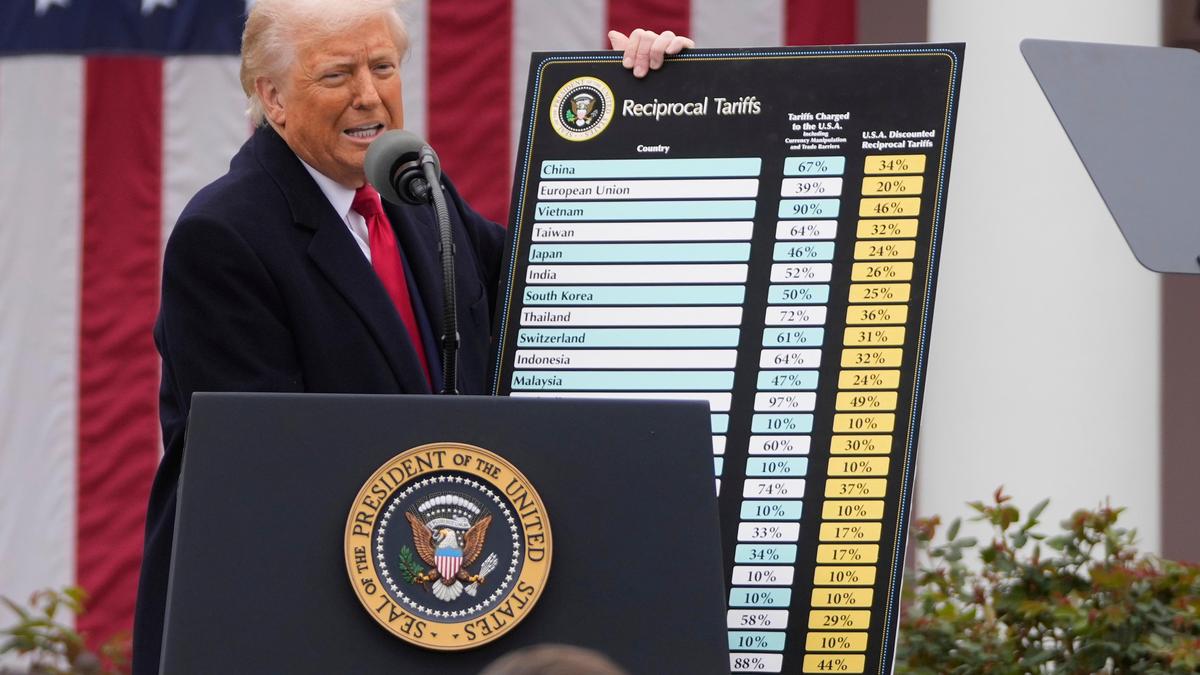
Top U.S. executives, including Elon Musk and Tim Cook, will accompany President Trump on a China visit from Wednesday to Friday as Washington and Beijing seek more stability after months of tensions over tariffs, Taiwan, AI chip access and broader trade issues. Trump is set to meet Xi Jinping, with a one-year tariff truce from October still in place after duties on many goods previously exceeded 100%. The trip underscores ongoing supply-chain and export-control risks for major U.S. tech, industrial and financial firms with deep China exposure.
This is less a clean diplomatic positive than a selective de-risking event for companies with the most fragile China dependency. The market should treat the trip as a temporary volatility suppressant for firms that can credibly frame themselves as “systemically important” to both sides; that favors a narrow set of mega-cap tech and industrial franchises over broad China beta. The bigger second-order effect is bargaining power: executives with large installed bases or critical supply chains gain leverage to lobby for carve-outs, delayed enforcement, or softer export-control implementation.
The asymmetry is most interesting in semis and hardware. Names with China exposure but limited pricing power face the best-case scenario of status quo preservation, while the worst-case remains a sudden tightening on AI chip access or retaliatory customs friction that hits orders with a 1-2 quarter lag. In contrast, payment networks and banks are more insulated operationally, but could benefit from even modest thawing if cross-border transaction flows, deal activity, or capital-market reopenings improve into year-end.
A less obvious winner is TSLA, not because the meeting changes fundamentals immediately, but because Musk’s presence creates optionality around regulatory signaling and local operating latitude. That said, the market may be overpricing symbolism: one trip cannot unwind the structural policy split on tariffs, Taiwan, and advanced technology controls. The real catalyst window is 30-90 days after the visit, when follow-through language, licensing decisions, and customs enforcement determine whether this is a headline event or a durable easing.
Contrarian view: the consensus may underappreciate that public executive alignment with the administration can backfire for firms if Beijing reads it as political capture. That raises the odds of “quiet retaliation” via procurement, antitrust, or administrative delay rather than overt tariff moves. Net-net, this is a tradeable volatility event, not a regime change.
AI-powered research, real-time alerts, and portfolio analytics for institutional investors.
Request DemoOverall Sentiment
neutral
Sentiment Score
-0.05
Ticker Sentiment
