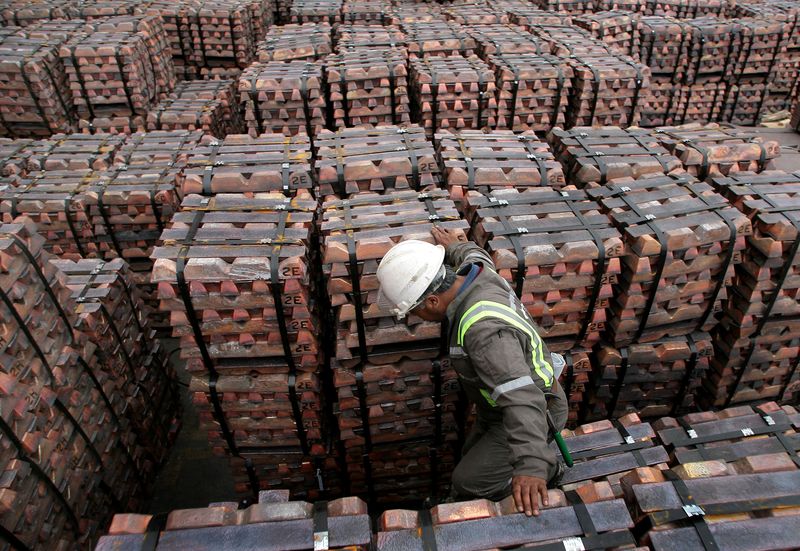
Copper futures hit a fresh all-time high of $14,191 per tonne on the London Metal Exchange before settling near $14,158, lifting UK mining shares across the FTSE 100 and FTSE 250. The move was driven by supply disruptions tied to Middle East tensions, tighter sulphuric acid flows through the Strait of Hormuz, and strong Chinese industrial demand, with Grasberg’s phased recovery also constraining supply. Antofagasta rose 3.67%, Anglo American 3.49%, Rio Tinto 3%, and Glencore 1.8%, while Atalaya Mining Copper gained 3.78% ahead of earnings.
RIO is benefiting from a classic supply-shock re-rating, but the larger implication is that the market is starting to price copper more like an energy-linked strategic commodity than an industrial metal. If Chinese refineries are forced to run below optimal utilization while a major mine outage persists, the bottleneck shifts from mine supply to smelting/refining capacity, which tends to amplify near-dated price spikes and delay any relief even if mine output improves. That matters for diversified miners because the incremental earnings torque is highest in the names with the cleanest copper beta and least offset from weaker bulk commodities.
The second-order winner is not just copper producers but any balance sheet that can convert spot strength into cash flow faster than peers. RIO is somewhat less levered than pure copper names, but the move still improves near-term free cash flow, supports capital return optionality, and gives management more room to defend distributions if iron ore softens. The more interesting competitive effect is on mid-tier copper developers and smelter-exposed supply chains: sustained high prices will pull forward financing windows, M&A interest, and hedging pressure from producers that need to lock in margins after several years of capex inflation.
The main risk is that the market is extrapolating a supply disruption story that could partially unwind on a days-to-weeks horizon if geopolitical headlines de-escalate, while the demand story is more elastic over months. China industrial demand is supportive, but if prices stay near record levels, restocking may pause and downstream fabricators can cut order books quickly, causing a sharp air pocket even without a major supply recovery. On a 3-6 month view, the bigger concern is that policy responses—export rules, strategic stock drawdowns, or diplomatic pressure—can ease the squeeze faster than mine supply can ramp, making outright long copper a crowded expression unless paired with a relative-value hedge.
Consensus seems to be underestimating how much of the current move is a margin event for refiners versus a pure commodity event for miners. That argues for staying long the highest operating leverage copper equities, but not chasing the metal itself after a record print. The trade is in names where realized pricing can re-rate estimates before consensus has time to model the full pass-through.
AI-powered research, real-time alerts, and portfolio analytics for institutional investors.
Request DemoOverall Sentiment
mildly positive
Sentiment Score
0.34
Ticker Sentiment
