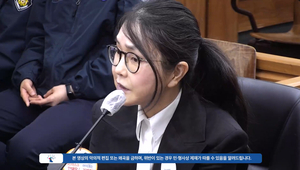
A Seoul High Court appeals ruling is pending on corruption charges against former first lady Kim Keon Hee, after a lower court sentenced her to 1 year and 8 months in prison and ordered confiscation of a Graff diamond necklace plus forfeiture of 12.8 million won. Prosecutors are seeking a 15-year term over alleged stock manipulation in Deutsch Motors, receipt of luxury gifts from the Unification Church, and violation of campaign-finance and bribery laws. The case is politically significant but likely limited in direct market impact.
The immediate market read is not about direct economic exposure, but about governance risk migrating from a political event into a broader Korean “institutional discount.” Even if no listed company is named, high-profile judicial scrutiny around a former first family raises the probability of renewed compliance reviews, parliamentary brinkmanship, and headline volatility in domestically sensitive sectors such as banks, defense contractors, conglomerates with regulatory touchpoints, and firms tied to government procurement. The second-order effect is a wider spread between Korea’s exporters with mostly offshore earnings and domestically leveraged names that rely on policy stability.
The most important catalyst path is timing: a harsh outcome likely creates days-to-weeks of noise, but the medium-term impact depends on whether it triggers additional investigations or reshuffles inside the conservative political network. If the legal process widens beyond this case, the risk premium can linger for months because foreign capital tends to demand a cleaner governance narrative before re-rating Korea. Conversely, a lenient outcome or procedural reversal would relieve some headline pressure, but it would not fully erase the governance overhang if investors conclude that political entanglement is still unresolved.
The contrarian angle is that this may actually be more positive for select Korean equities than the first reaction implies. Clean-up events can strengthen long-run investability by forcing disclosure, accelerating board independence, and reducing the shadow premium embedded in chaebol governance. The market may be underestimating how quickly global allocators rotate back into Korea if they believe the episode marks a durable anti-corruption reset rather than a one-off scandal.
AI-powered research, real-time alerts, and portfolio analytics for institutional investors.
Request DemoOverall Sentiment
moderately negative
Sentiment Score
-0.40
