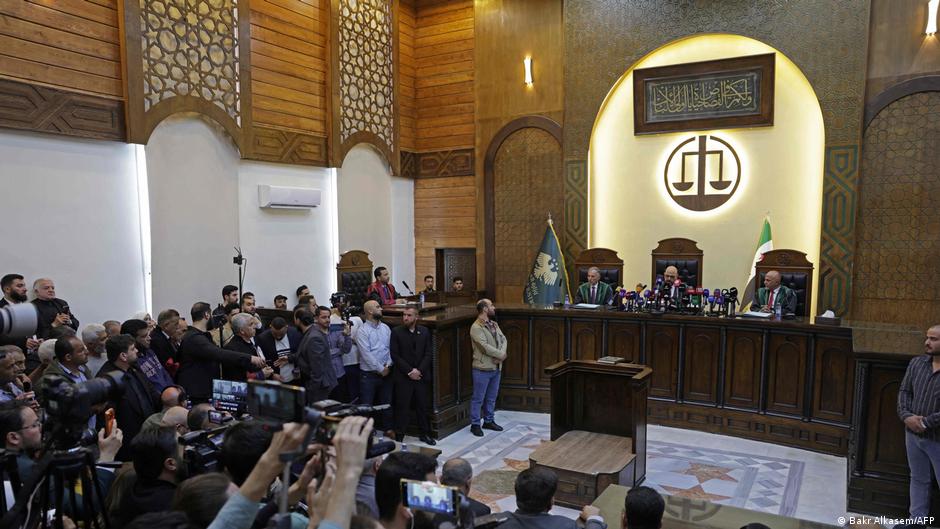
Syria held a preparatory court session on April 26, 2026 for the first trials of former Assad-era officials, including Atef Najib in custody and Bashar Assad and Maher Assad in absentia. The new government says the process marks the start of transitional justice, but it has faced criticism for delays after the December 2024 ouster of Assad's government. The article highlights ongoing instability and mass wartime losses, including roughly 500,000 deaths and millions displaced.
The market relevance is not the courtroom optics; it is whether this process becomes a credible mechanism for reducing residual regime-linked violence or instead hardens factional politics. A disciplined, visible prosecution pipeline could lower the probability of localized revenge attacks and make reconstruction finance marginally more bankable over a 6-18 month horizon, because external donors and Gulf capital tend to require at least a veneer of legal normalization before committing. But if the process is seen as victor’s justice, it can re-ignite militia cohesion among displaced networks and keep security premia embedded in every Syrian risk asset, from energy logistics to border trade.
The second-order effect is on regional stabilization rather than Syria alone. Jordan, Lebanon, and Turkey benefit most from any reduction in cross-border smuggling, refugee flows, and sporadic security incidents; even a small decline in incident frequency can improve trucking, telecom, and consumer activity at the margin. The flip side is that high-profile in absentia cases keep the Russia channel open as an external pressure point, increasing the chance that Moscow uses asylum, debt, or security guarantees as leverage in wider regional negotiations.
The key contrarian point is that investors may underprice the speed at which legitimacy can deteriorate if these trials stall or are perceived as selective. Transitional justice narratives can lose political support quickly; a 4-8 week delay or visibly politicized charging decisions would likely matter more than the initial ceremony. That creates a classic headline-vs-implementation gap: near-term sentiment can improve on symbolism, but the real tradeable signal is whether the government can sustain process credibility through the next 2-3 hearings and convert it into a broader security normalization story.
AI-powered research, real-time alerts, and portfolio analytics for institutional investors.
Request DemoOverall Sentiment
mildly negative
Sentiment Score
-0.15
