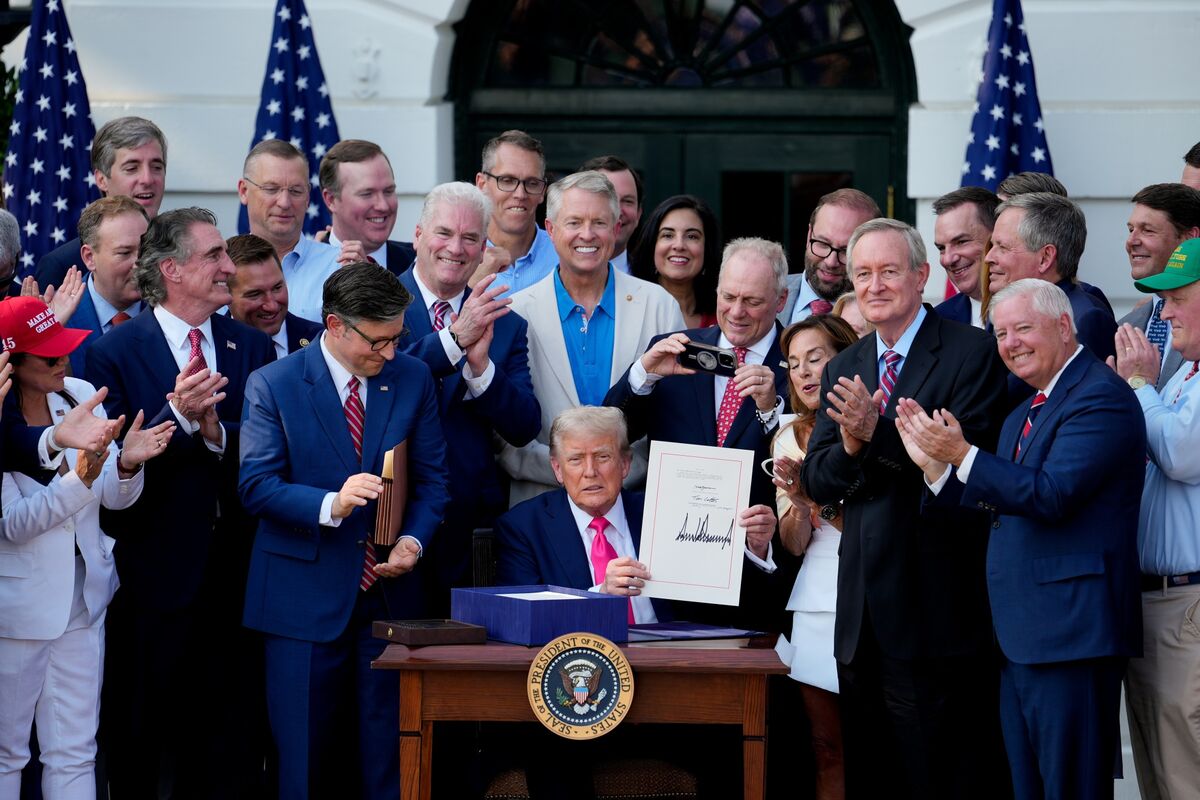
President Trump's $3.4 trillion fiscal package, encompassing sweeping tax cuts and social safety-net reductions, narrowly passed Congress but faces significant public opposition, with 61% of voters reportedly against it. This disconnect between legislative success and public sentiment poses a considerable challenge for the administration in securing broad acceptance for the law, potentially signaling future political headwinds and uncertainty regarding its long-term stability and economic impact.
A significant $3.4 trillion fiscal package, combining substantial tax cuts with reductions in social safety-net programs, has been enacted despite facing considerable public opposition. The legislation's narrow passage through Congress, which required direct presidential intervention, stands in stark contrast to polling data indicating that 61% of voters disapprove of the law. This disconnect between legislative success and public sentiment introduces a material level of political risk and uncertainty regarding the policy's durability. The administration's struggle to effectively market the package suggests that these political headwinds may persist, potentially impacting future fiscal policy and creating an unstable environment for forecasting long-term economic impacts tied to tax and spending regimes. The associated moderate-to-high market impact score (0.65) underscores that the scale of the fiscal changes and the political instability surrounding them are significant factors for markets.
AI-powered research, real-time alerts, and portfolio analytics for institutional investors.
Request DemoOverall Sentiment
moderately negative
Sentiment Score
-0.50
