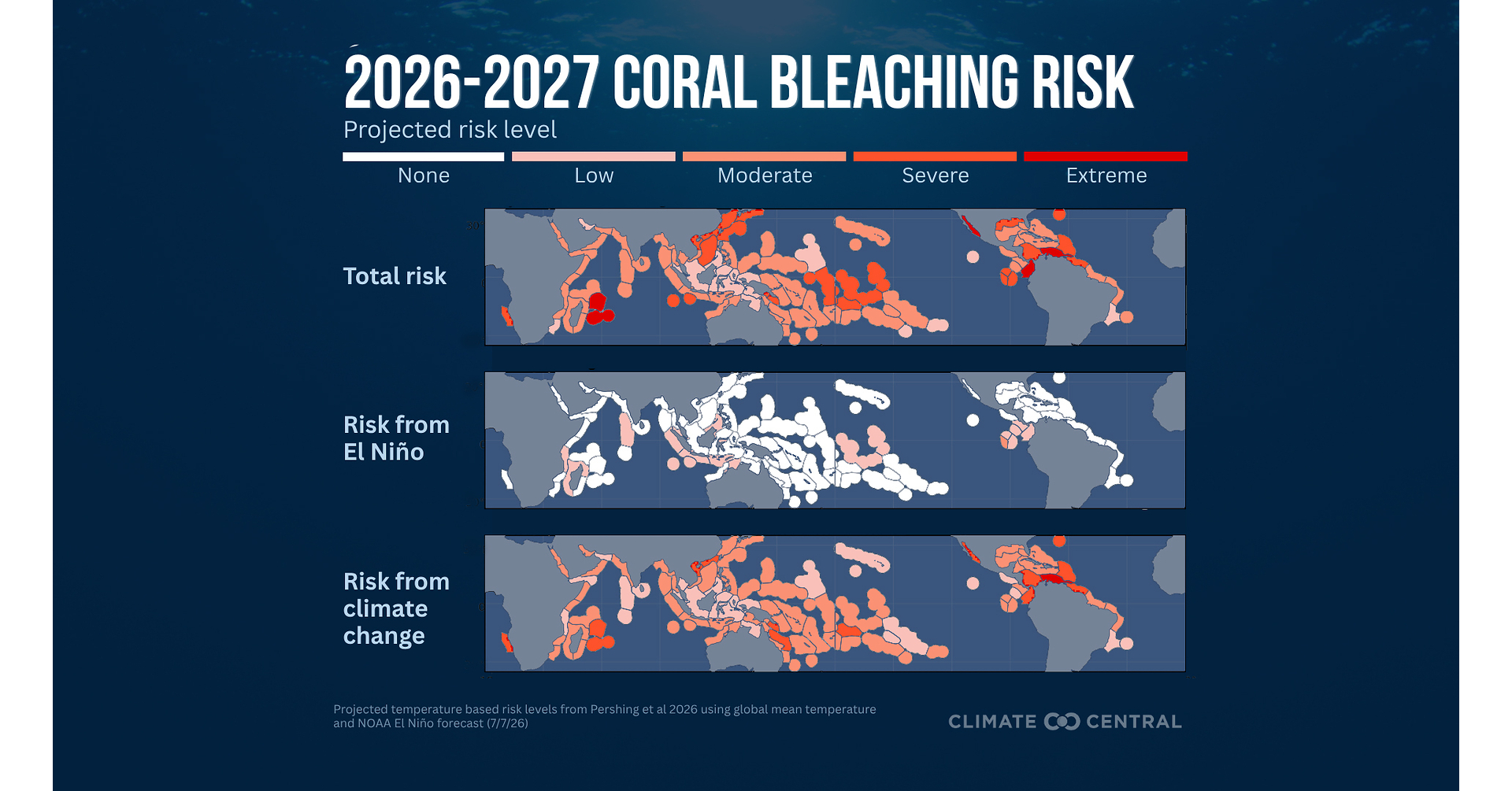
A Climate Central-led study in Oceanography finds human-caused climate change was necessary for nearly every coral bleaching event over the past 40 years—while El Niño may trigger timing, fossil-fuel ocean heat is the driver. For the 2018–2025 event, the analysis indicates bleaching would be essentially absent globally without human-caused warming, with only 1 of 71 observed regions showing moderate risk absent climate change. Projecting the current 2026–2027 El Niño, low bleaching risk may occur in a few areas, but human-caused warming is expected to drive global bleaching risk by 2028 across coral regions.
This is more of a valuation and policy signal than a direct earnings driver for SO. The market mechanism is that climate attribution work strengthens the odds of tougher disclosure, permitting, and decarbonization scrutiny around utility capex, which can pressure allowed-return narratives before it changes cash flow. For a regulated name, the near-term P&L hit is limited; the bigger risk is multiple compression if investors assign a higher political/regulatory beta to carbon-intensive asset plans.
The second-order effect is on capital allocation: utilities with more gas buildout or weaker transition credibility become more exposed to longer rate-case timelines and higher financing spreads if ESG-focused holders rotate out. That is a months-to-years story, not a days story. In contrast, the outright beneficiaries are less the obvious climate winners and more the advisory, monitoring, and grid-modernization supply chain that monetizes the policy response rather than the weather event itself.
Contrarian view: this may be over-interpreted as a catalyst for utilities. Coral-reef research rarely translates into immediate trading pressure unless it feeds into a concrete policy proposal, an SEC disclosure rule, or state commission action. If SO underperforms only on the headline and then stabilizes versus XLU after the next earnings call, that would argue the market is using the news as a generic ESG excuse rather than pricing a real fundamental change.
AI-powered research, real-time alerts, and portfolio analytics for institutional investors.
Overall Sentiment
mildly negative
Sentiment Score
-0.25
Ticker Sentiment
