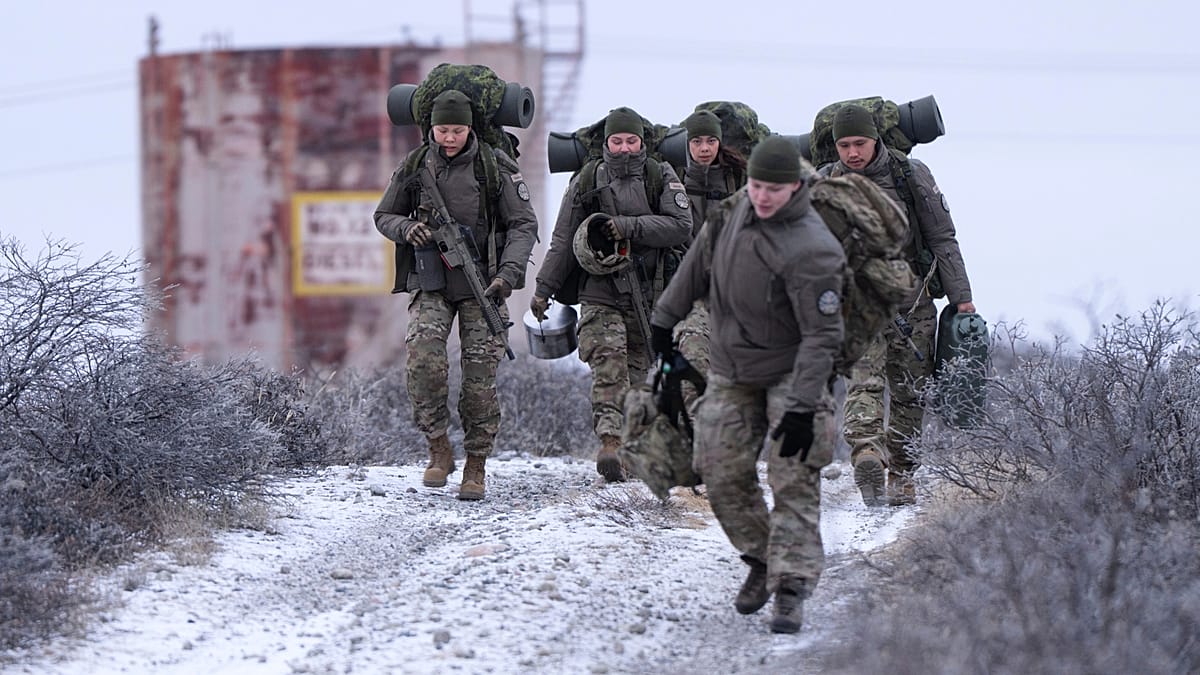
A military operations order dated 13 January prompted deployment of Danish and allied troops to Greenland amid fears of a potential US move tied to President Trump’s comments; several EU nations (France, Germany, Sweden, the Netherlands) participated. Sources told DR the deployment was a real defence operation (troops carried blood for transfusions and explosives), and NATO subsequently launched its Arctic Sentry mission with Danish and US participation. Politically, Prime Minister Mette Frederiksen’s Social Democrats saw a post-crisis 'Greenland bounce' with polls around 21% (approximately six percentage points below their 2022 election result) ahead of an early general election next week.
An abrupt re‑rating of Arctic/sovereignty risk usually benefits firms that capture program-level sustainment and logistics spend (shipyards, long‑lead avionics, polar-survivability systems) rather than one‑off equipment vendors. Expect procurement committees to prioritize surge‑ready suppliers; historically a 0.1–0.3% of GDP reallocation to defense capex translates into meaningful multi‑year revenue for a small set of contractors (single‑digit percentage revenue uplifts for majors, +20–40% backlog growth for niche specialists) once RFPs are issued.
The channel to markets is slow and lumpy: political decisions and NATO funding moves typically take 3–24 months to convert into awarded contracts and 12–48 months to hit revenue, creating a window for event‑driven returns (elections, budget votes, export licences). Tail risks are asymmetric — a diplomatic de‑escalation or fiscal squeeze can remove follow‑through quickly, while a persistent deterrence posture will lock in multi‑year order books and higher multi‑national interoperability spending.
Consensus is likely to overestimate near‑term earnings impact and underestimate supply‑side friction (specialised shipyard slots, radar/EO sensor lead times, export control timelines). The cleanest alpha is therefore not a market‑cap weighted bet on defense broadly but concentrated exposure to Arctic‑capable sustainment, polar logistics, and small/ mid‑cap suppliers with backlog optionality, implemented with option structures or pairs to limit drawdowns if the political tail fades.
AI-powered research, real-time alerts, and portfolio analytics for institutional investors.
Request DemoOverall Sentiment
mildly negative
Sentiment Score
-0.25
