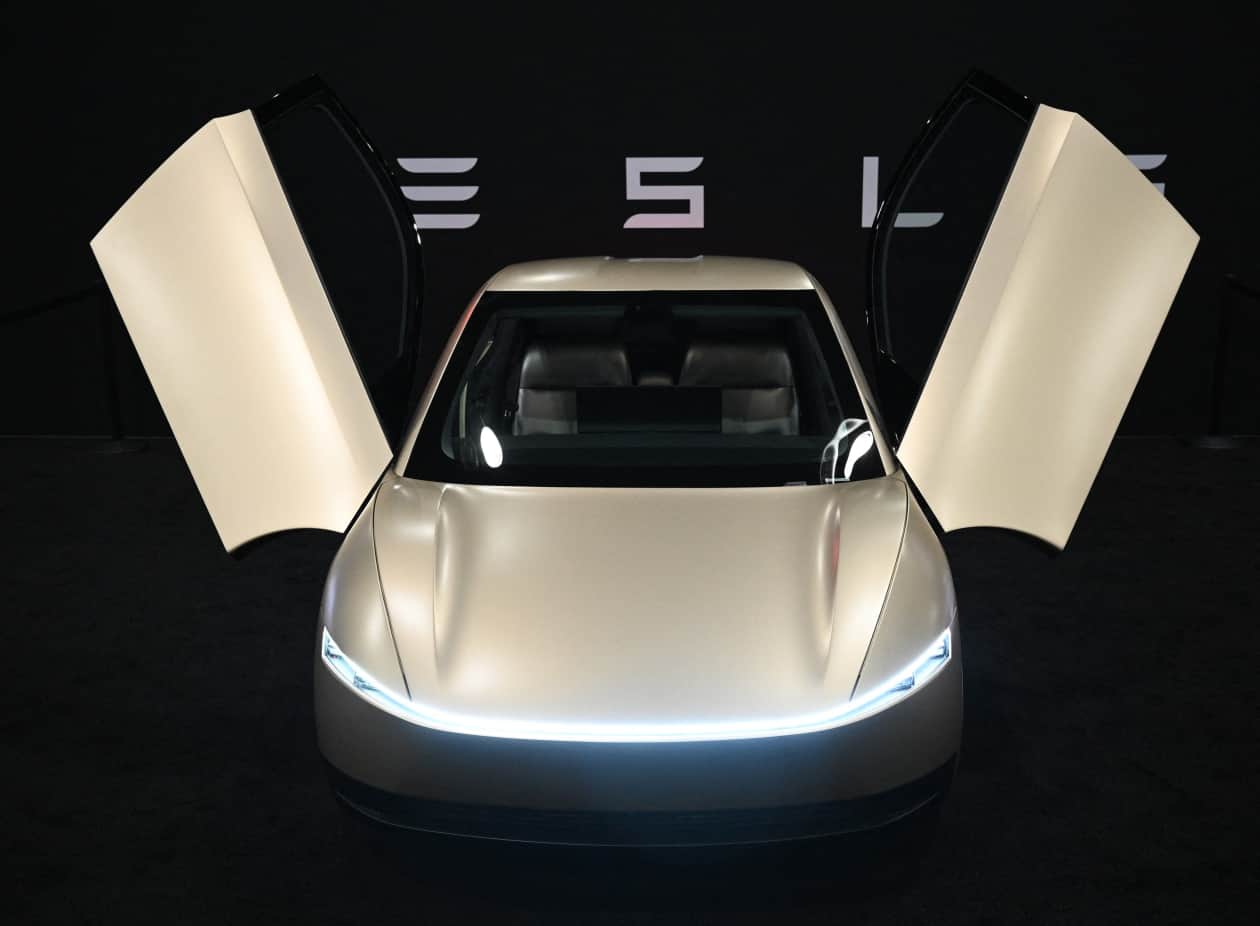
Tesla is reportedly developing a compact electric SUV that would be priced below the Model 3's U.S. starting price of $37,000 and has contacted suppliers about components, according to Reuters. The project is in early stages after a previously abandoned effort and, while it could intensify competition in the mass-market EV segment, the news is speculative and unlikely to move markets materially without confirmation or pricing/volume details.
A lower-priced, high-volume Tesla product would function as an industry-level cost benchmark rather than just a single new SKU — that benchmark will force a reset of ASP expectations and accelerate commoditization of key modules (cells, e-axles, ADAS compute). The immediate second-order victims are capital-starved challengers with unit economics that assume a premium ASP; even a modest $3k–$7k pricing delta materially lengthens their cash-payback and forces funding or consolidation decisions within 12–24 months.
On the supply side, volume-led deflation is a double-edged sword: it creates multi-year share gains for large, flexible cell manufacturers and miners but compresses cell-level margins as customers demand lower $/kWh and simplified chemistry (LFP-like mixes). Winners will be vertically integrated players and cell vendors with low incremental capex per GWh; losers will be specialty component vendors with low-volume, high-mix product lines facing order cancellations and renegotiated pricing within the next 6–18 months.
Key tail risks and catalysts are execution and timing: platform engineering, supplier qualification cycles, and new-factory commissioning mean material volume and cost gains are likeliest on a 18–36 month horizon, not quarters. Reverse triggers include raw-material price spikes, production yield shortfalls, or regulatory scrutiny of aggressive price behavior — any of which could flip a bullish supply / demand read to neutral in 3–6 months.
Contrarian read: market narratives that this is an immediate bear-case for Tesla’s earnings miss the capex and margin dilution required to get to “cheap at scale” — the move is more threatening to smaller OEMs than to Tesla’s own long-term margin profile. Short-term headline-driven positioning (1–3 months) will overreact; medium-term (12–36 months) positioning should instead focus on balance-sheet durability and supplier exposure to high-volume standardization.
AI-powered research, real-time alerts, and portfolio analytics for institutional investors.
Request DemoOverall Sentiment
mildly positive
Sentiment Score
0.12
Ticker Sentiment
