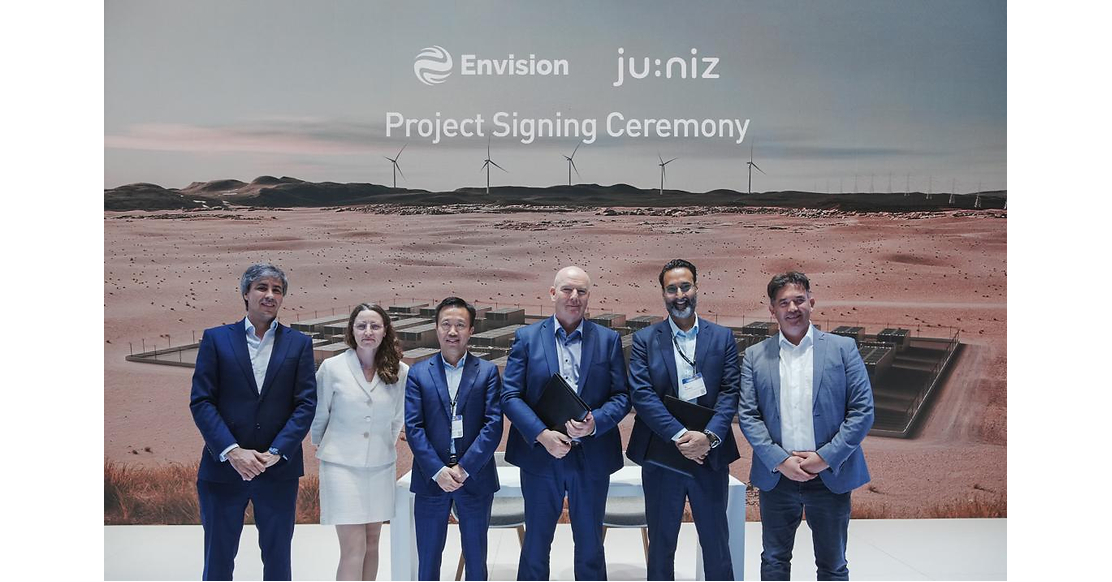
Envision Energy y ju:niz Energy entregan los primeros proyectos BESS de octava generación en Alemania por 140,6 MWh (88,4 MWh en Baindt y 52,2 MWh en Schöningen). La solución usa la plataforma BESS Gen 8 de Envision con duración de cuatro horas e integración en red, para mejorar la flexibilidad, resiliencia e impulsar la integración renovable. El anuncio sugiere impulso positivo para el despliegue de almacenamiento avanzado y una posible expansión futura en Europa, con impacto probablemente limitado en precios a corto plazo.
This is less a single-contract event than a validation point for 4-hour storage as a bankable grid asset in continental Europe. The first-order equity read-through is not to the project sponsors but to the ecosystem that monetizes intermittency: grid hardware, power electronics, controls, and financing platforms that can lower cost of capital as reference projects multiply. If German developers can underwrite these systems against merchant spreads plus ancillary services, the marginal winner is whoever can package performance guarantees and interconnection know-how, not simply whoever ships cells.
The more interesting second-order effect is competitive pressure on Western storage OEMs. A visible win for an Asian integrated system supplier in Germany raises the odds that European buyers increasingly source on price-performance and warranty terms, which can compress margins for subscale players that lack balance-sheet support. That is constructive for industrial names tied to grid buildout, but it is a warning sign for pure-play battery storage equities if they depend on a premium valuation for technological differentiation.
Time horizon matters: the immediate move is mostly sentiment, the 1-3 month catalyst is whether this turns into a pipeline of larger German awards or financing closes, and the 6-18 month thesis depends on whether storage revenue stacking remains stable as volatility, negative-price hours, and ancillary service saturation evolve. The main falsifiers are tighter market rules that reduce stackable revenues, slower interconnection, or a meaningful compression in power spreads that makes 4-hour assets less attractive. On that basis, the trade is more about picking picks-and-shovels beneficiaries than chasing storage beta.
AI-powered research, real-time alerts, and portfolio analytics for institutional investors.
Request DemoOverall Sentiment
mildly positive
Sentiment Score
0.35
