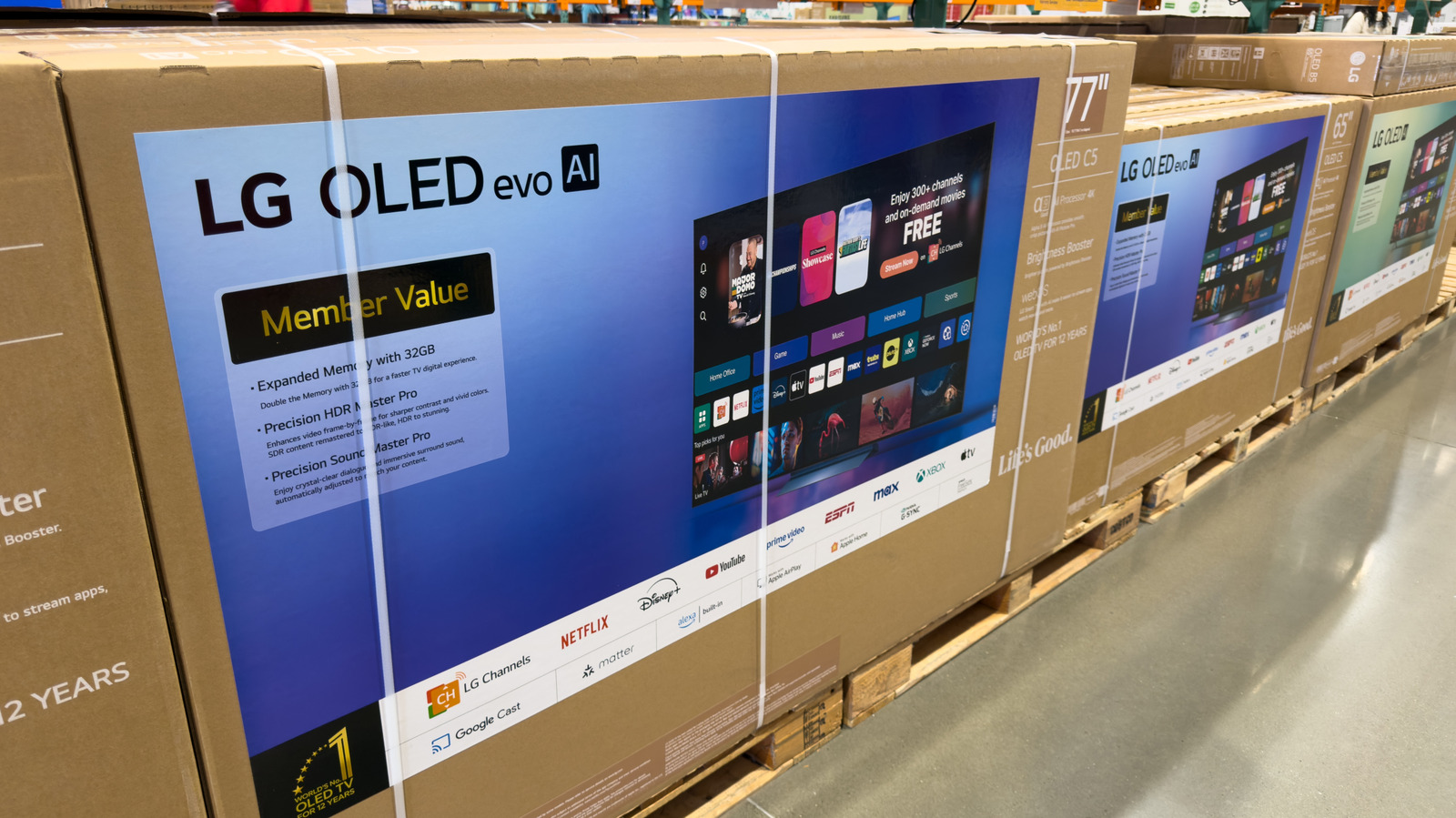
Amazon Prime Day is offering deep discounts on OLED TVs, including Samsung's 2026 S90H at $2,000 for the 65-inch model vs. a $2,698 list price, LG's 2025 C5 at $1,200 vs. $1,397 typical and $2,699 list, Samsung's 2025 S90F at $1,198 vs. $1,698 list, and LG's 2026 B6 at $1,800 vs. $2,000 list. The article highlights strong buyer ratings, gaming features, and premium display technologies, making the promotions attractive for consumers but unlikely to materially move broader markets.
This is less a single-product story than a short-duration demand pulse moving through the TV supply chain. The cleanest beneficiary is AMZN: Prime Day converts latent price sensitivity into basket expansion, and premium electronics are particularly effective at lifting GMV because the purchase is high-ticket, comparison-driven, and prone to cross-sell into mounts, warranties, and accessories. BBY gets a smaller but meaningful secondary benefit from its counter-programming sale, though the margin impulse is likely worse than Amazon’s because it is matching promotions rather than inventing demand.
The bigger second-order read is competitive positioning in premium display tech. The discounts suggest inventory normalization is happening in a category that had been supported by aspirational pricing; that usually pressures channel partners, but it can also accelerate adoption of higher-margin models by compressing the entry price to OLED. For panel makers and component suppliers, the near-term effect is mix shift rather than unit explosion: more premium units sold at lower ASPs, which is favorable for attach-rate economics but not necessarily for gross margin if promotions persist into back-to-school.
The contrarian point is that these events often front-load demand rather than create it. If consumers pull purchases forward into a four-day window, Q3 unit comps can look better while Q4 can disappoint, especially in discretionary categories where the replacement cycle is long. The risk to AMZN is that the headline engagement boost does not translate into durable share gains if shoppers treat Prime Day as a one-off arbitrage opportunity and then revert to comparison shopping at BBY or direct-to-consumer channels.
From a timing standpoint, this is a days-to-weeks trade, not a months-long fundamental re-rating unless there is evidence of unusually strong conversion in premium electronics. The key variable is whether discounting clears inventory without forcing deeper markdowns later; if not, the trade becomes a margin story rather than a demand story.
AI-powered research, real-time alerts, and portfolio analytics for institutional investors.
Request DemoOverall Sentiment
moderately positive
Sentiment Score
0.40
Ticker Sentiment
