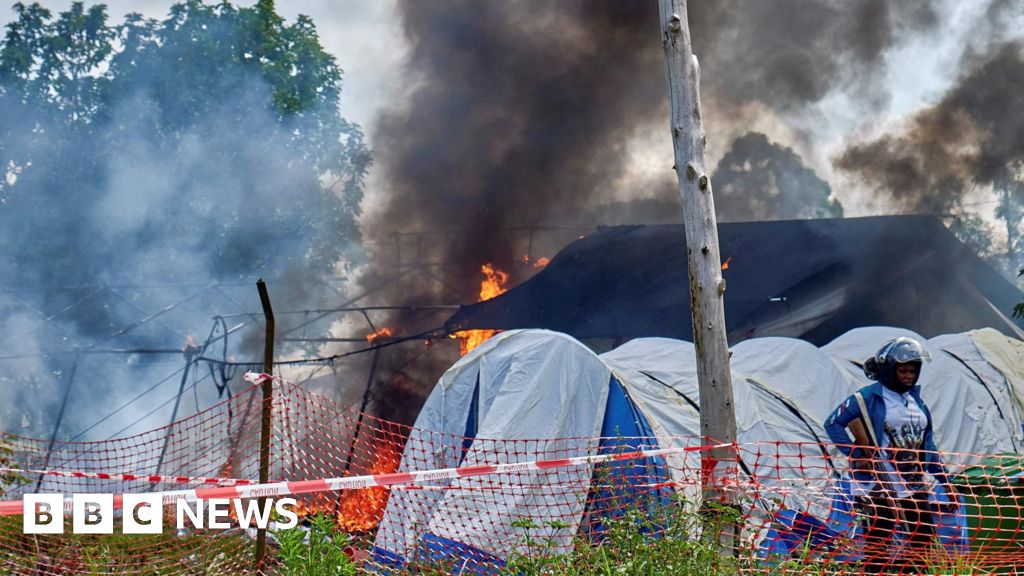
An angry crowd set fire to Ebola isolation tents at Rwampara General Hospital in eastern DR Congo after relatives were prevented from taking a body for burial, highlighting worsening public resistance to outbreak containment. The WHO says the outbreak has reached 139 reported deaths out of 600 suspected cases, while Congolese authorities cited 159 deaths and Uganda has already detected two cases. The unrest underscores rising operational and cross-border containment risk, including access challenges in M23-controlled areas.
This is less a direct healthcare equity event than a confidence shock that can prolong the outbreak's economic drag. The key second-order effect is behavioral: once communities conclude treatment centers are coercive or politically motivated, case isolation and safe burial compliance deteriorate, which materially raises the reproduction risk over the next 2-8 weeks. That pushes the problem from a contained public-health response toward a quasi-security operation, raising execution costs for all external actors and increasing the odds of intermittent shutdowns, localized violence, and border friction.
The most exposed assets are not listed Ebola beneficiaries but broader eastern Congo risk proxies: cross-border logistics, small-cap transport exposure in Uganda/DRC, and any NGO-dependent service providers whose operating environment becomes less predictable. Border suspensions and checkpoint tightening can hit informal trade flows quickly, while formal operators face slower customs clearances and higher insurance/security costs over the next 1-3 months. If the outbreak remains clustered in conflict zones, the market may underprice the probability that aid delivery, staffing, and surveillance are impaired even as headline case counts stabilize.
The contrarian view is that the worst headlines may be front-loaded relative to financial damage. Ebola scares often create sharp but brief regional dislocations; unless the disease escapes to denser commercial corridors, the macro hit to EM indices should remain contained and more visible in local transport and consumer names than in global healthcare. The bigger upside surprise is for public-health contractors and diagnostic/logistics vendors if donors accelerate funding, but that benefit is usually delayed by procurement cycles and political fragmentation.
AI-powered research, real-time alerts, and portfolio analytics for institutional investors.
Request DemoOverall Sentiment
strongly negative
Sentiment Score
-0.60
