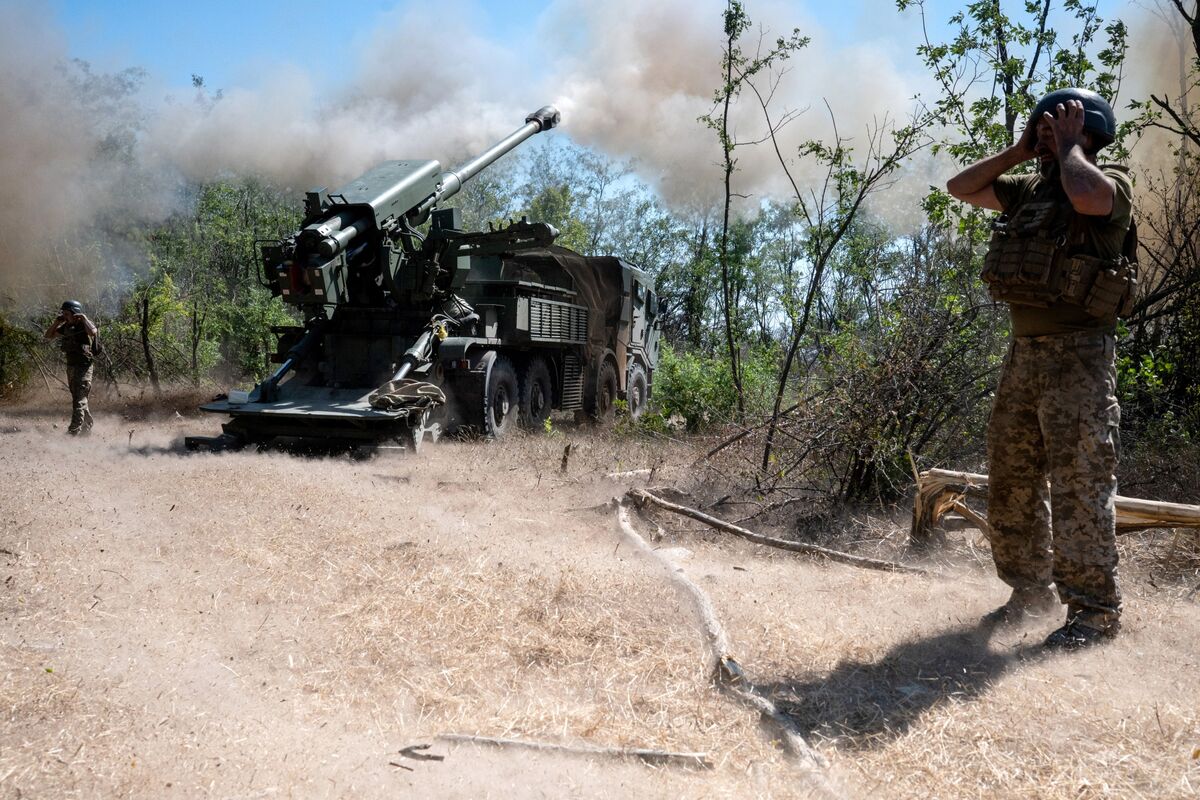
Former President Donald Trump, in a social media post, suggested Ukraine should "play offense" by directly attacking Russia, arguing that victory is impossible without such action. This proposition emerges amidst White House efforts to compel Russian President Vladimir Putin into a direct meeting with Ukrainian President Volodymyr Zelenskiy. The statement signals a potential escalation in rhetorical pressure on Russia and a shift in strategic thinking regarding the conflict.
Former President Donald Trump has publicly advocated for Ukraine to conduct offensive military operations within Russian territory, framing it as a prerequisite for victory. This statement emerges while the current White House administration is pursuing diplomatic channels to arrange a meeting between the Russian and Ukrainian presidents, highlighting a potential divergence in strategic approach. While the immediate market impact is assessed as very low (0.1) with a neutral sentiment, the comment introduces a significant variable into the long-term geopolitical risk calculus. As a leading political figure, Trump's position signals a potential departure from current US strategy and could foreshadow a more escalatory American foreign policy stance, impacting sectors sensitive to geopolitical instability. The key takeaway is not an immediate market event but an indicator of heightened political uncertainty and the potential for future strategic shifts regarding the Russia-Ukraine conflict, situated at the intersection of geopolitics and US domestic politics.
AI-powered research, real-time alerts, and portfolio analytics for institutional investors.
Request DemoOverall Sentiment
neutral
Sentiment Score
0.00
