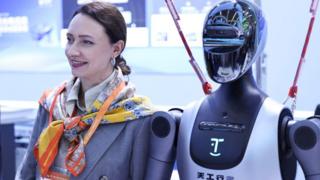
The 10th China-Russia Expo in Harbin features 1,500+ enterprises from 46 countries and regions, 55,000 square meters of exhibits, and more than 100 supporting events aimed at industrial matchmaking and investment promotion. The event is showcasing new products and cooperation opportunities in high-tech manufacturing, smart agriculture, healthcare devices, energy equipment, and digital technologies, with nearly 300 Russian firms participating. Since 2014, the expo has hosted 7,200+ enterprises and 1.05 million business visitors, with cumulative transactions exceeding 300 billion yuan.
The important signal here is not the expo itself, but the coordination lane it opens between China’s industrial overcapacity and Russia’s import substitution needs. That combination tends to favor suppliers that can sell “good-enough” equipment quickly into regions where Western capital goods are constrained, especially in healthcare devices, agricultural machinery, industrial automation, and logistics. The second-order winner is not just the exhibitors, but also the local distributors, after-sales service networks, and cross-border logistics providers that can monetize recurring maintenance and spare parts flows.
For markets, the near-term read-through is positive for niche Chinese medtech and smart-equipment names with export readiness, but the larger medium-term implication is margin pressure for domestic Russian alternatives and for multinational OEMs absent from the channel. The expo’s emphasis on new products and procurement activity suggests deal conversion could show up over 3-9 months rather than immediately, which matters for positioning: this is more a pipeline event than an earnings event. The likely path is small initial orders followed by service contracts, which creates a slower but stickier revenue stream than headline transactions imply.
The key risk is policy friction. Any tightening of sanctions enforcement, cross-border payment constraints, or logistics bottlenecks would reduce the tradeability of these opportunities even if demand remains intact. A more subtle risk is that the market may overestimate the pace of Russia revenue translation; in practice, certification, localization, and maintenance capacity can delay meaningful P&L impact by 12-24 months. That makes the current setup more attractive for selective long exposure than for broad thematic beta.
Contrarian view: the event may be less about incremental Russia demand and more about China using Russia as a test bed for exportable industrial tech in constrained markets. If so, the real upside is optionality into Belt and Road geographies beyond Russia, where addressable markets are larger and sanctions risk is lower. Investors should therefore prefer names with diversified export channels and service-heavy models over pure Russia-exposed plays.
AI-powered research, real-time alerts, and portfolio analytics for institutional investors.
Request DemoOverall Sentiment
mildly positive
Sentiment Score
0.18
