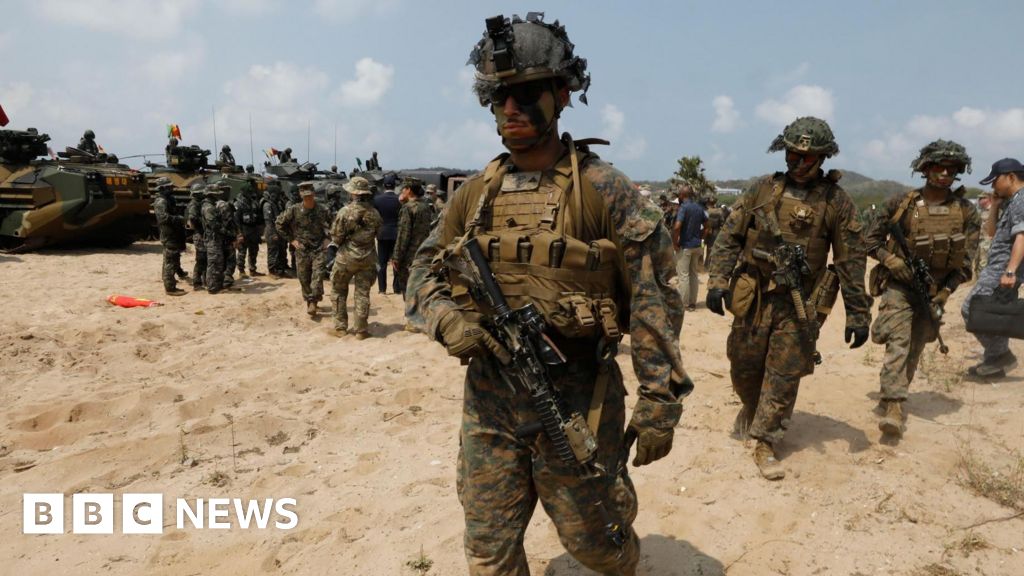
Approximately 5,000 US sailors and Marines (an amphibious ready group/Marine expeditionary unit centered on the USS Tripoli) are expected to deploy to the Middle East, with US Central Command requesting reinforcements and Defense Secretary approval. The Pentagon says it has struck 6,000 Iranian targets over two weeks; Iran’s new supreme leader vowed to continue blocking the Strait of Hormuz, and retaliatory strikes have disrupted international air travel and driven oil prices higher. The US is also relocating parts of a South Korea–based missile-defence system to the region, indicating further military escalation and near-term risk-off pressure on oil, shipping, and broader markets.
Markets will treat this as a supply-disruption shock with a heavy short-term risk premium priced into oil, freight and insurance; expect war-risk premiums on tanker hulls and P&I insurance to spike by multiples in days, not weeks, driving time-charter rates for VLCCs and Suezmaxes materially higher as owners avoid the Strait. Rerouting via the Cape of Good Hope adds 10–20 days roundtrip for Persian Gulf–to-East Asia voyages, inflating voyage costs and creating an immediate positive volume/cashflow shock for owners with open positions or spot exposure.
Defense capex is the stealth beneficiary: relocating and augmenting defensive systems compresses procurement lead times and validates follow-on FMS sales to regional allies, supporting multi-quarter revenue visibility for prime contractors. Conversely, global air travel and premium leisure demand face near-term revenue-at-risk from reroutings, cancellations and elevated fuel pass-through, pressuring airline unit revenues for the next 30–90 days.
Catalysts to monitor are binary and fast: a credible escort program or diplomatic backchannel that unlocks the Strait would collapse insurance premia within days and arrest a crude surge; a broadened regional strike vector (shipping, Gulf ports, or major chokepoints) would push oil above $100 and force broader macro policy responses. The consensus risk-off price action looks appropriate near-term, but it likely overshoots in both directions — use tight time-bound option structures to capture asymmetric moves rather than one-way equity bets.
AI-powered research, real-time alerts, and portfolio analytics for institutional investors.
Request DemoOverall Sentiment
strongly negative
Sentiment Score
-0.75
