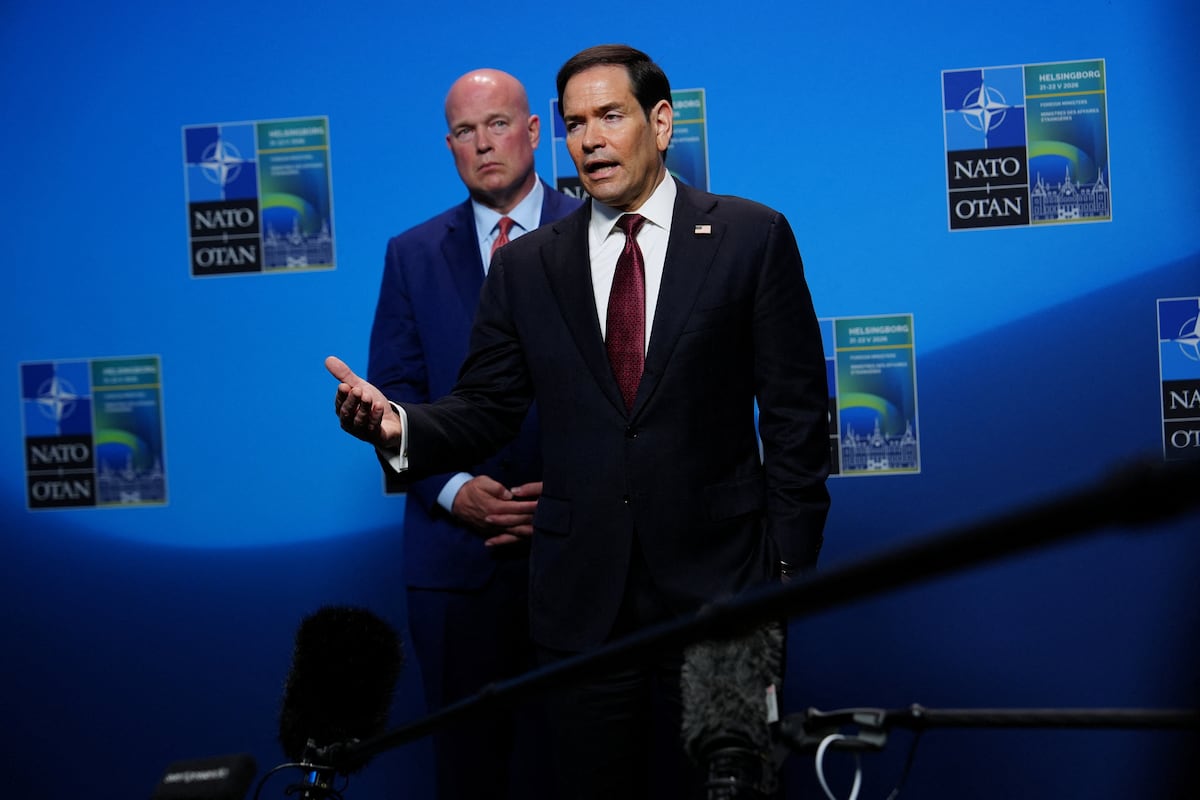
Secretary of State Marco Rubio signaled fresh doubts about NATO’s relevance after allies declined to support U.S. operations tied to the war in Iran and refused access to bases on their soil. Trump said NATO allies have not provided enough assistance and confirmed the alliance dispute will be addressed at the next leaders’ summit in Turkey in July. The article also notes a shift in U.S. force posture in Europe, including an announced deployment of 5,000 additional troops to Poland after planned withdrawals from Germany.
This is less about NATO’s formal utility and more about a repricing of U.S. reliability as an alliance manager. The second-order effect is a structural premium for countries that can convert political loyalty into hard security commitments, which should keep defense capex and basing negotiations bid under select Central/Eastern European beneficiaries while making legacy Western European defense assumptions look less stable. The immediate market read-through is not a broad “defense up” move, but a relative-value shift toward countries and contractors exposed to front-line rearmament, prepositioning, air defense, and munitions stockpiles.
The bigger catalyst is force-posture uncertainty over the next 1-3 months. Even if troop changes are framed as routine, mixed signals around Poland versus Germany raise the probability that procurement decisions accelerate before the July summit, especially for missiles, integrated air defense, drones, and logistics infrastructure. That benefits firms with near-term production capacity and hurts programs reliant on long-cycle European consensus; the bottleneck is not demand, it is industrial throughput, so the winners are the names that can convert headline risk into backlog conversion quickly.
The contrarian angle is that markets may overestimate the likelihood of an outright NATO break and underestimate how often this kind of rhetoric is used to extract concessions. If the July summit produces even symbolic burden-sharing language or a modest basing reaffirmation, the most politically exposed trades will mean-revert fast. The highest-risk tail is not alliance collapse; it is a gradual, disorderly reallocation of U.S. assets that creates procurement volatility, margin pressure for overextended prime contractors, and intermittent spikes in European defense equities on every headline.
In the near term, the setup argues for buying volatility rather than a linear directional bet, because the path dependency is driven by summit headlines and deployment announcements rather than fundamentals. Any sharp rally in European defense on “security premium” should be treated as a candidate for fade if it runs ahead of actual budget votes or signed contracts. Conversely, if the administration confirms additional withdrawals from Germany or signals more permanent basing shifts, the trade should extend beyond defense into FX and sovereign spread implications for the most exposed host countries.
AI-powered research, real-time alerts, and portfolio analytics for institutional investors.
Request DemoOverall Sentiment
mildly negative
Sentiment Score
-0.15
