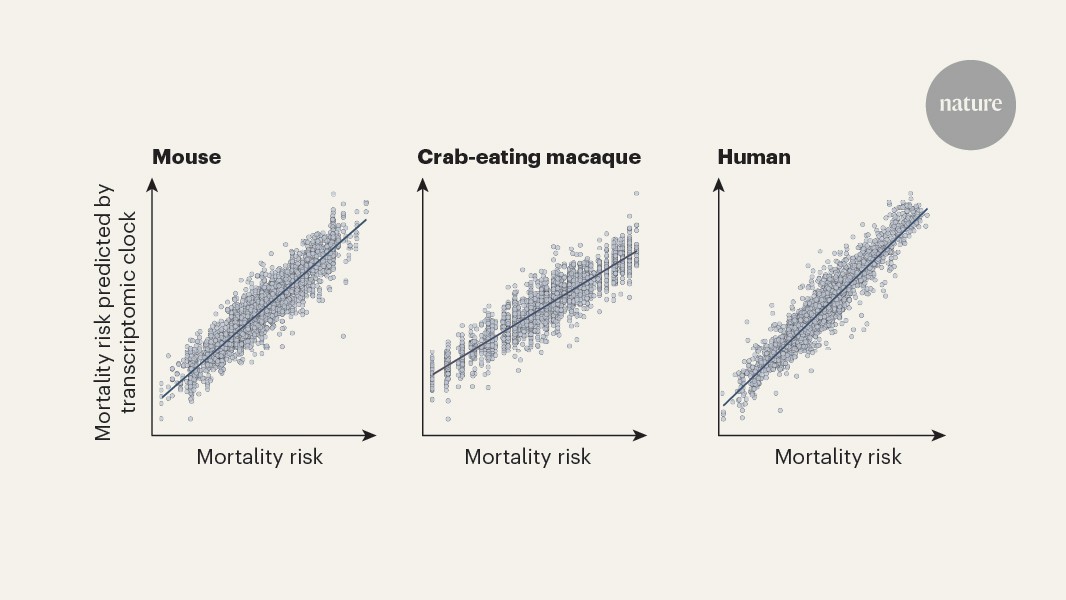
The article reports that gene-expression patterns can be used to estimate mortality risk and chronological age, highlighting a scientific advance in aging research. It cites prior and current Nature research, but does not describe a commercial event, regulatory action, or financial results. The content is informational and likely has limited direct market impact beyond interest in longevity and biotech research.
This is less a single-product breakthrough than a data-infrastructure step toward turning aging into an auditable biometric signal. The investable implication is that risk scoring shifts from slow, phenotype-heavy endpoints to cheap, repeatable molecular readouts, which should compress development cycles for longevity, oncology-adjacent, and chronic-disease prevention programs. The first-order winners are platform companies that can own assay collection, model training, and longitudinal datasets; the second-order winners are insurers, employers, and trial CROs that can use the signal to stratify populations and reduce noise in outcome studies. The competitive moat is likely not the model itself but the proprietary cohort data needed to calibrate it across tissues, ancestries, and comorbidity states. That creates a barbell outcome: a few large platforms with biobank access and clinical distribution can compound advantage, while smaller “clock” vendors risk commoditization as the feature set becomes standardized. If the signal proves robust enough for individual-level decisioning, it could also pressure the traditional wellness-testing niche, where low-conviction consumer products are vulnerable to a shift toward clinically validated risk tools. Near-term catalysts are mostly scientific and regulatory, not revenue-based: independent replication, prospective validation, and whether the biomarker improves trial enrichment or therapy selection. The main tail risk is false precision—strong cross-sectional correlation but weak out-of-sample predictive power once deployed across real-world populations, which would cap monetization for 12–24 months. Longer term, if payers accept it as a surrogate for risk adjustment, the commercial runway expands materially; if not, the market may overprice a discovery that remains mostly academic for several years. The contrarian view is that the market may overestimate how quickly “aging clocks” become reimbursable. The harder problem is not prediction but actionability: unless an intervention moves the biomarker and downstream outcomes together, the tool remains descriptive rather than decision-making infrastructure. That said, any company with existing longitudinal health data and clinical distribution has an underappreciated option on becoming the default scoring layer for preventative medicine.
AI-powered research, real-time alerts, and portfolio analytics for institutional investors.
Request DemoOverall Sentiment
neutral
Sentiment Score
0.15
