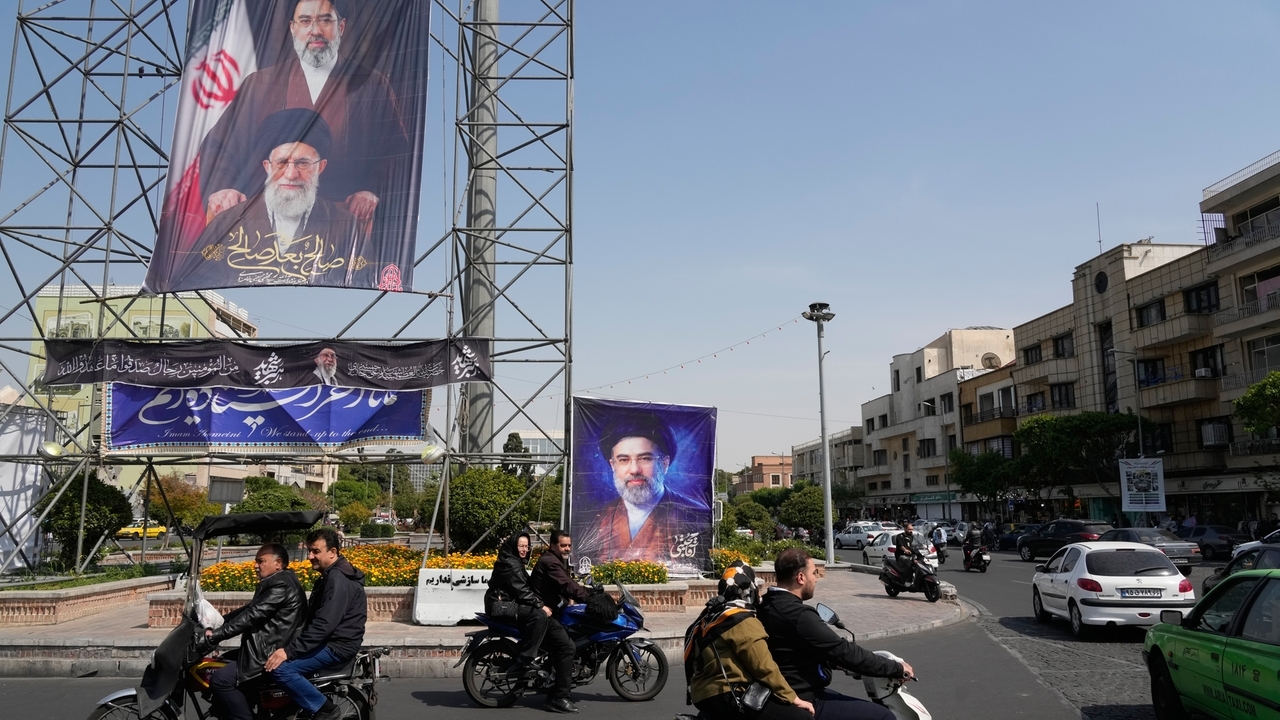
Trump announced a 10-day ceasefire between Israel and Lebanon set to begin at 5 p.m. Eastern, after more than a month of fighting involving Hezbollah. The article also says the U.S. and Iran are seeking to extend their ceasefire, with key sticking points including Iran’s nuclear program, the Strait of Hormuz and wartime compensation. The developments are highly market-relevant given the risks to regional security, oil flows and global shipping, though the situation remains fragile and unresolved.
The market implication is not the ceasefire headline itself, but the asymmetry in sequencing: even a fragile pause lowers the near-term tail risk premium embedded in energy, shipping, and regional credit while leaving the upside from an actual durable settlement relatively capped. That creates a classic “volatility collapse first, fundamentals later” setup, where oil and freight can mean-revert faster than analysts can mark through earnings estimates. The biggest second-order effect is on logistics: if Gulf/Red Sea routing normalizes even partially, a lot of the recent insurance, bunkering, and inventory precaution premium unwinds before physical trade volumes fully recover.
The more interesting risk is that the ceasefire window becomes a bargaining chip rather than a resolution, which means markets may price relief too early. If talks stall on nuclear terms, the Strait of Hormuz, or sanctions relief, the path back to higher-risk pricing is likely sharp because positioning will have rebalanced toward de-escalation. That argues for treating any rally in defensives and any selloff in energy as tactical unless there is evidence of enforceable monitoring or verifiable maritime normalization over multiple weeks.
For equities, the winners are less the obvious commodity proxies and more the assets with embedded geopolitical discount: global shippers, insurers with Middle East exposure, and certain industrials that rely on stable freight and input pricing. The losers are the incremental beneficiaries of “higher-for-longer crisis pricing” — short-cycle energy names and military suppliers tied to immediate escalation assumptions may give back some of the move if headlines keep improving. The contrarian read is that the most mispriced outcome is not peace, but a prolonged low-grade freeze that compresses oil volatility without restoring full trade flows, which is typically bearish for realized vol sellers but mixed for industrial cyclicals.
The key catalyst window is the next 1-3 weeks, not months: if the ceasefire extension is formalized and shipping resumes, markets can rerate quickly; if talks fail, risk reverses with a much steeper gamma move than the initial relief rally. The right posture is to fade extremes, not make a binary macro bet.
AI-powered research, real-time alerts, and portfolio analytics for institutional investors.
Request DemoOverall Sentiment
neutral
Sentiment Score
-0.10
