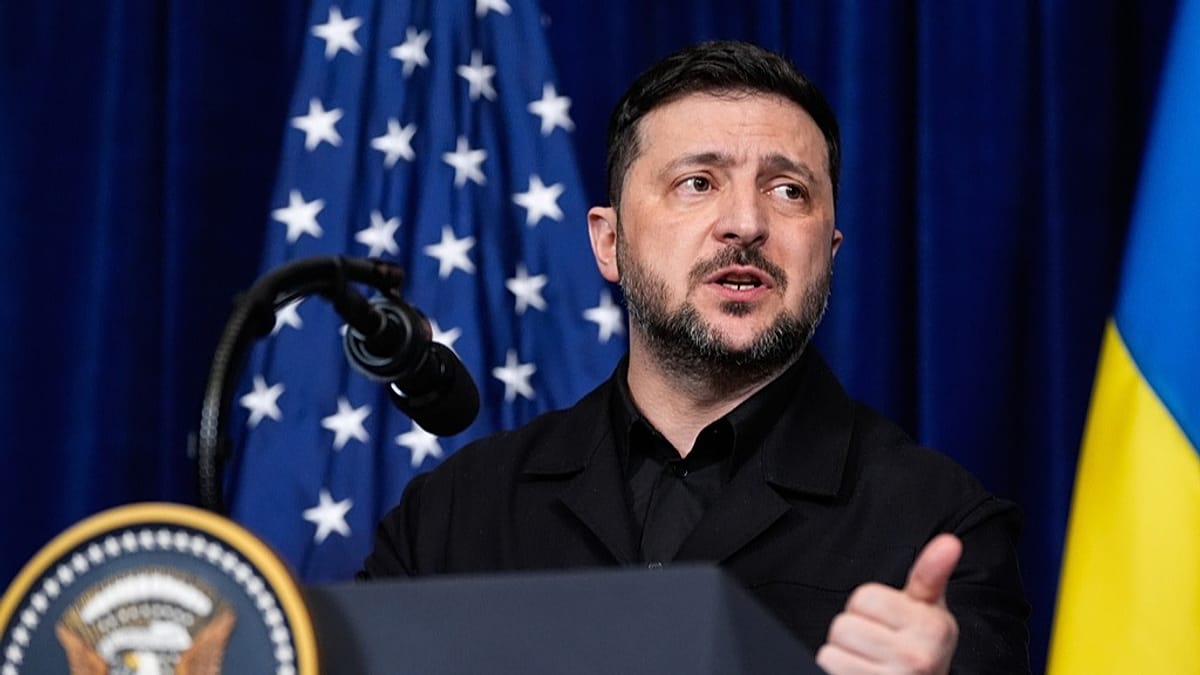
Ukrainian President Volodymyr Zelenskyy announced a series of high-level meetings in early January to advance peace talks and security guarantees, including a Jan. 3 meeting of national security advisers in Kyiv (15 countries plus EU/NATO representation, US joining virtually), a Jan. 5 chiefs-of-staff session on security guarantees, and a Jan. 6 leaders’ meeting of European states and the 'Coalition of the Willing' in France. The announcements come amid continued Russian strikes — Zelenskyy said the Kremlin launched more than 200 drone attacks targeting civilian and energy infrastructure — and a call for accelerated air-defence deliveries, implying continued upside pressure on defense procurement and elevated geopolitical risk to European energy and markets.
Market structure: Short-term winners are air‑defense and defense primes (RTX, LMT, NOC) and LNG exporters (Cheniere LNG) as governments accelerate AD deliveries and European gas risk premia rise; losers include Russian equities (RSX), Ukrainian utilities, and regional travel/leisure stocks where demand/operations are disrupted. Pricing power shifts toward firms supplying scarce interceptors and munitions; expect 5–15% premium expansion in defense contractors if confirmed orders materialize within 30–90 days. Cross‑asset: risk‑off flows will bid US Treasuries and Gold (GLD) while pressuring RUB and European sovereigns; Brent upside of $5–15/bbl and TTF-equivalent gas spikes are credible if strikes persist. Risk assessment: Tail risk includes a major Russian offensive or targeted strikes on European LNG terminals (10–20% probability next 3 months) causing >30% gas price jumps and systemic energy rationing in EU winter. Immediate (days): volatility spikes and flight to safety; short term (weeks–months): defense capex announcements and order flow matter; long term (quarters+): outcome of security‑guarantee talks (Jan 3–6) determines re‑risking. Hidden dependencies: US aid appropriations, NATO delivery pipelines, winter weather, and insurance cover for maritime cargoes; any bottleneck amplifies price moves. Trade implications: Favor concentrated, time‑boxed exposure to Tier‑1 defense names and LNG exporters while hedging geopolitical event risk with VIX or gold. Use options to express asymmetric upside (3‑6 month call spreads) rather than outright long to limit drawdowns; add short exposure to RSX/Russian banks and select European travel names if gas price shocks persist. Key catalysts to watch: Jan 3–6 meetings, publicized order announcements, and US congressional funding votes within 30–45 days. Contrarian angles: Consensus underprices scenario where successful diplomatic progress reduces kinetic risk within 60 days—this would compress defense multiples 15–25%; don’t carry large unhedged long-term defense positions through a clear peace signal. Conversely, market complacency on LNG supply resilience is underdone—a single major terminal outage could force 20–40% rerating of LNG exporters; asymmetric option positioning captures that.
AI-powered research, real-time alerts, and portfolio analytics for institutional investors.
Request DemoOverall Sentiment
moderately negative
Sentiment Score
-0.45
