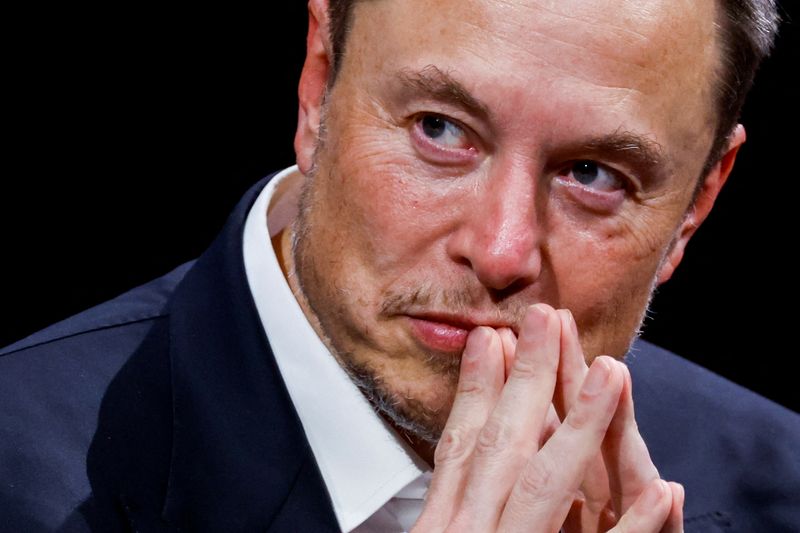
Elon Musk has reportedly discussed combining SpaceX with Tesla, a potential structural move that could reshape how the two firms share capital, talent, and AI compute resources. The article also highlights extensive intercompany ties, including Tesla’s $2 billion investment in xAI, $697 million of Tesla Megapacks bought by SpaceX, and $131 million of Cybertrucks purchased in 2025. Tesla shares traded slightly higher after hours on the report, but the news is more strategic than immediately financial.
The market is likely underpricing how much a formal combination would change Tesla’s narrative from a cyclical auto name to a capital-allocation vehicle for a broader Musk ecosystem. If governance actually moves toward consolidation, the key beneficiaries are not just TSLA holders but the private-market capital stack around SpaceX/xAI: a public-market re-rating of Tesla could become the cheapest financing rail for adjacent compute, energy storage, and launch capex. That creates a second-order bull case where Tesla’s multiple expands even if auto unit economics do not, because investors start valuing it like an operating holding company with embedded option value.
The near-term winner is probably Tesla equity volatility rather than directionally higher spot alone. Any credible merger talk tends to compress perceived governance discount only if accompanied by clearer capital allocation discipline; otherwise it can widen the discount by reviving concerns about related-party transactions and cross-subsidization. In practice, the next 1-3 months are about narrative and disclosure, while the real economic impact would take 6-18 months through improved financing flexibility and resource sharing across power, storage, and AI infrastructure.
The main risk is that the market extrapolates synergy before regulators, independent directors, or minority shareholders bless any structure. A combination could trigger scrutiny over valuation fairness, board overlap, and transfer pricing, which would cap the re-rating and potentially pressure the stock if the process drags. The contrarian view is that the setup may actually be less about M&A than about signaling: Musk is monetizing optionality by keeping a corporate umbrella story alive, and if so the move in TSLA may be overdone relative to the still-unsolved core issue of automotive growth deceleration.
AI-powered research, real-time alerts, and portfolio analytics for institutional investors.
Request DemoOverall Sentiment
mildly positive
Sentiment Score
0.15
Ticker Sentiment
