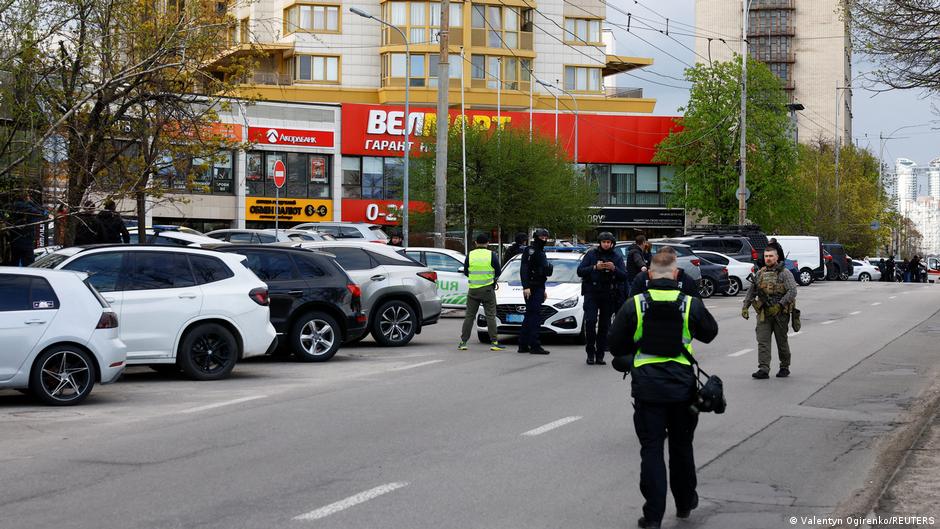
A gunman killed six people and wounded 14 others in a shooting spree in Kyiv's Holosiivskyi district before being shot dead by security forces after a 40-minute standoff. Authorities said the assailant took hostages, fired at police, and may have set fire to his apartment before the attack. Ukraine's SBU has designated the incident a terrorist act.
This is not a macro shock by itself, but it is a signal that the domestic security premium in Ukraine remains unstable and can reprice quickly on headline risk. The immediate market channel is less about direct asset damage and more about a higher probability of localized disruption to retail footfall, insured losses, and municipal budget pressure, which can matter for already fragile reconstruction timelines. The key second-order effect is political: incidents like this strengthen the case for tighter internal security spending, deeper surveillance infrastructure, and a more militarized state posture, all of which can redirect procurement away from purely civilian rebuild priorities.
The bigger implication is for foreign capital formation. Every episodic security event raises the discount rate on greenfield projects, pushes contractors toward higher force-majeure clauses, and delays final investment decisions in logistics, retail, and light industrial assets with domestic consumer exposure. Over months, this tends to favor companies with hard-asset, government-backed, or defense-adjacent revenue streams over names reliant on stable local traffic or discretionary spend.
The contrarian take is that the market may over-interpret isolated violence as a broad deterioration in national security, when in reality the direct economic impact is usually contained unless it triggers copycat incidents or a policy overreaction. The more durable trade is not on the event itself but on the budget reallocation it likely accelerates: internal security, border control, cyber, and critical infrastructure hardening should see incremental demand. If the incident is quickly framed as terrorism, expect a temporary risk-off spike in Ukraine-sensitive assets, but that should fade unless investigators uncover organizational links that broaden the threat narrative.
AI-powered research, real-time alerts, and portfolio analytics for institutional investors.
Request DemoOverall Sentiment
extremely negative
Sentiment Score
-0.85
