


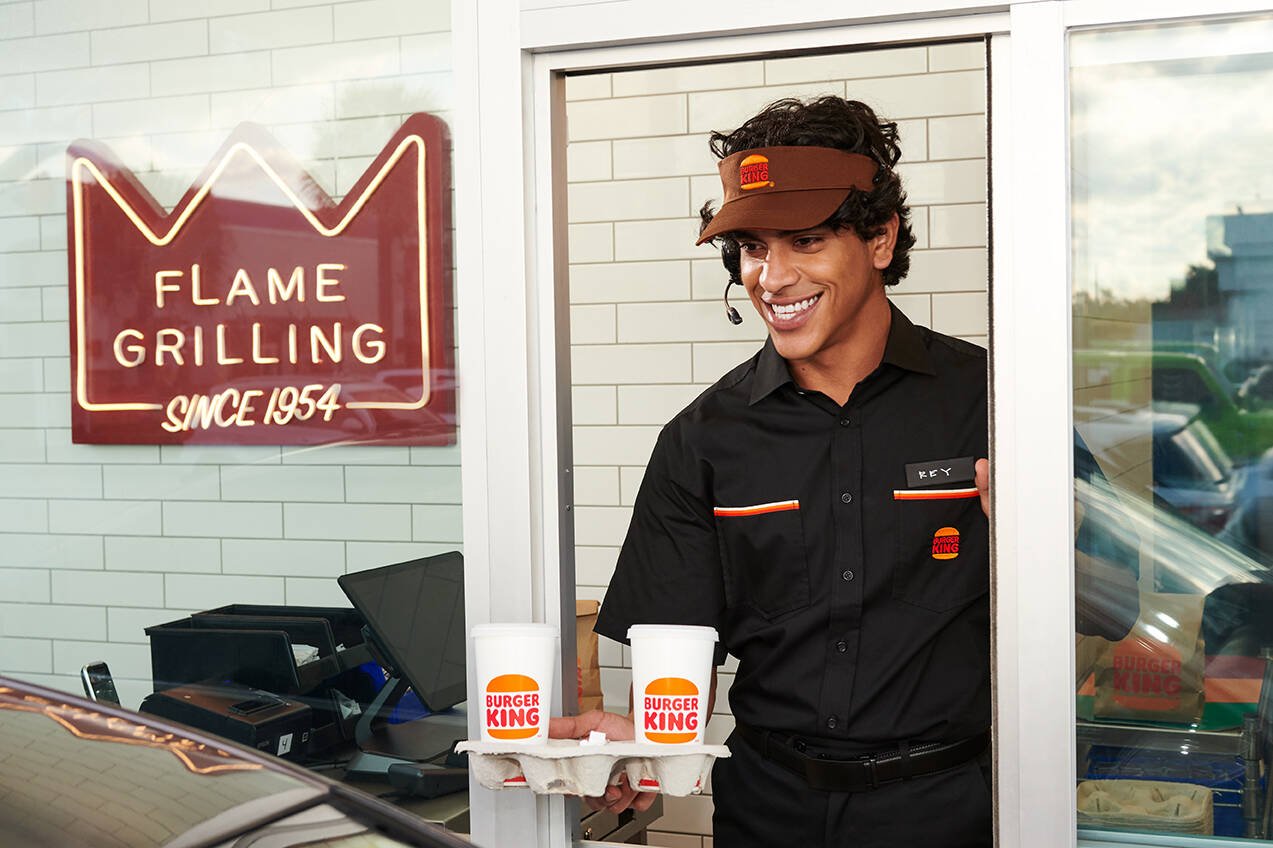
Burger King (parent RBI) unveiled an employee-facing AI, BK Assistant with a frontline module dubbed "Patty," currently testing in ~500 U.S. stores and targeted to be available across all 7,000 U.S. Burger Kings by end-2026. The system consolidates POS, kitchen equipment, inventory and digital ordering on proprietary BK architecture atop an OpenAI base model and surfaces operational metrics including aggregated "friendliness" signals; the company says it is a coaching tool and not intended to track individuals. The rollout presents operational efficiency potential but raises reputational and employee-privacy risks that could affect consumer perception and labor relations rather than near-term financials.
Market structure: RBI (QSR) is the direct beneficiary if BK Assistant meaningfully cuts labor hours or boosts check-through upsells; conservatively model 0.5–1.0% AUV lift and 30–80 bps EBIT margin improvement by end-2026 if rollout reaches 7,000 US stores. Vendors of speech analytics and workforce-management AI also stand to win; hourly-wage suppliers and frontline employee sentiment are losers, creating potential short-term brand risk. Bond markets could tighten QSR credit spreads 10–25 bps on visible margin gains, while options vol on QSR/MCD may spike around pilot KPI releases.
Risk assessment: Tail risks include multi-state privacy litigation, new state surveillance laws, or union-driven wage hikes that could erase estimated margin gains (worst-case SSS hit -1% to -3% and legal costs >$50–100M). Immediate (days–weeks) risk is PR/employee backlash and filings; short-term (3–12 months) is litigation and integration outages; long-term (12–36 months) is realized labor-cost delta and OpenAI pricing shocks. Hidden dependencies: reliance on OpenAI base models, POS/kitchen integration failure modes, and potential customer-brand sentiment shifts that management guidance may not capture.
Trade implications: Take a tactical, size-constrained approach: asymmetric long exposure to QSR with defined downside protection and modest relative shorts in legacy automation laggards. Use 6–18 month options to express views around pilot KPI cadence (next 90–180 days) rather than outright large cap-weighted bets; rotate incremental beta from full-service restaurants (SBUX) into quick-service names if pilots show >2% labor-hour reduction. Monitor catalysts: pilot KPI releases, state regulatory announcements, and any reported class actions within 30–90 days.
Contrarian angle: The market underestimates implementation costs and model-dependency, so near-term enthusiasm is overdone but medium-term upside is underpriced if RBI achieves 3–5% hourly labor reduction plus 0.5–1% AUV lift, which could materially expand free cash flow by 2026–2027. Historical parallels (Starbucks pullback, McDonald’s drive-through failures) show early customer-facing AI often backfires; however, employee-assist orientation reduces downside and creates optionality. Unintended consequences include accelerated unionization or litigation that would create high-probability, high-impact drawdowns—hence hedged, phased exposure is optimal.
AI-powered research, real-time alerts, and portfolio analytics for institutional investors.
Request TrialOverall Sentiment
mildly negative
Sentiment Score
-0.25
Ticker Sentiment
